 Admin
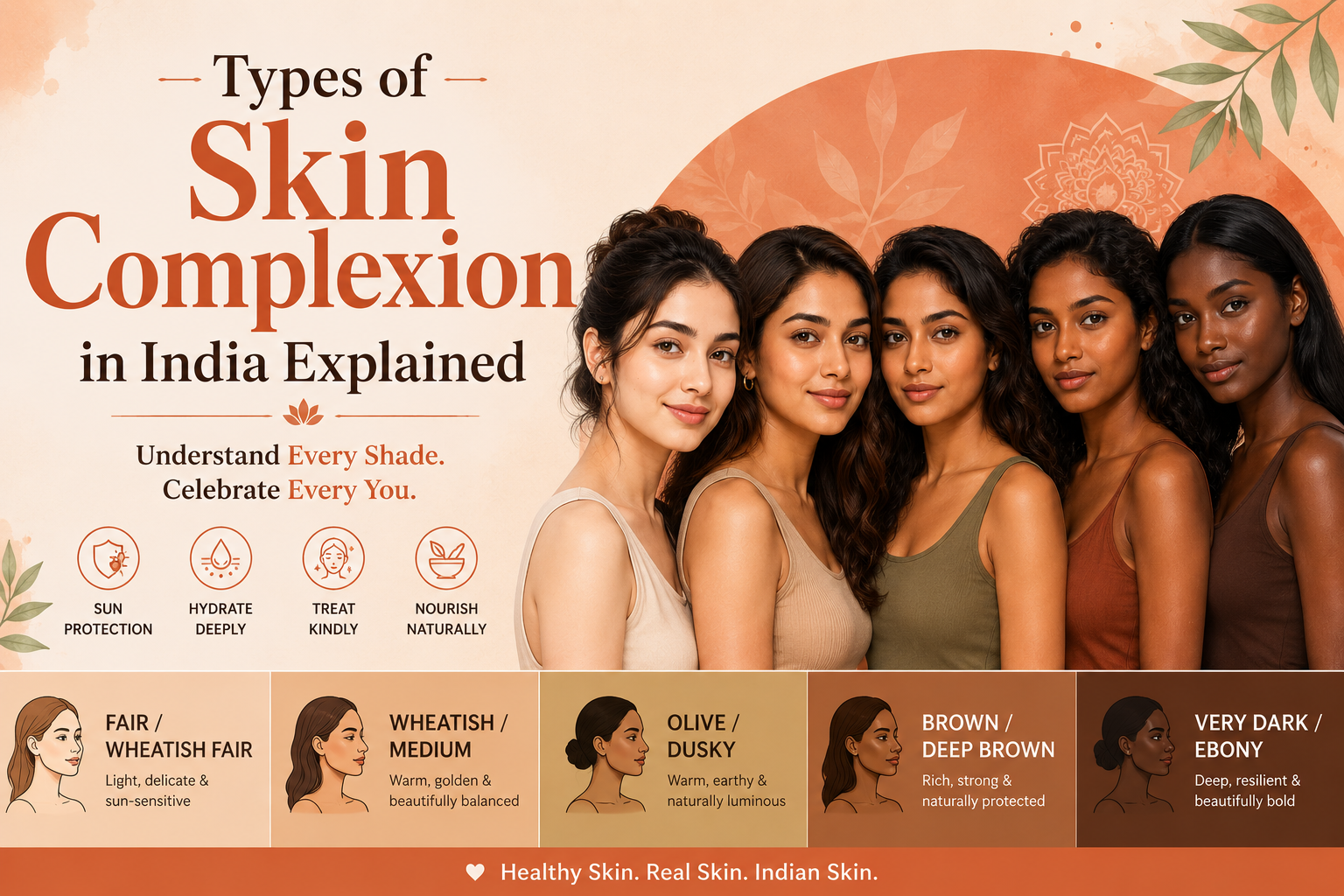
Admin Types of Skin Complexion in India Explained
India is one of the most beautifully diverse countries in the world — and that diversity reflects brilliantly in our skin. From the fair-toned skin of Kashmir to the deep, rich tones of Tamil Nadu and everything in between, Indian skin complexions are unique, warm, and full of character. Yet many of us grow up confused about our skin type, what products to use, or how to care for our specific complexion.
In this guide, we break down the different types of skin complexion found in India, what makes each one beautiful and distinct, and how you can build a skincare routine that truly works for you. Let’s celebrate every shade!
1. What is Skin Complexion?
Skin complexion refers to the natural tone, color, and appearance of your skin. It is determined primarily by melanin — a pigment produced by special cells called melanocytes. The more melanin your skin produces, the darker your complexion. Melanin production is influenced by genetics, geography, sun exposure, hormones, and even climate conditions.
Complexion is not just about color — it also includes factors like undertones (warm, cool, or neutral), radiance, texture, and how your skin reacts to sunlight and skincare products. Understanding your complexion helps you choose the right foundation shade, skincare products, and treatments that will actually work for your skin instead of causing irritation or pigmentation.
Indian skin is incredibly diverse because India itself has different climates, food habits, genetic backgrounds, and environmental conditions. People living in humid coastal cities often experience oilier skin and tanning, while those living in colder northern regions may deal with dryness and sensitivity. Pollution, heat, UV exposure, and humidity also affect how Indian skin behaves on a daily basis.
QUICK FACT : India’s population spans skin complexion types III through VI on the Fitzpatrick Scale, making it one of the most diverse skin complexion spectrums in the world — all within a single country.
2. The Fitzpatrick Scale and Indian Skin
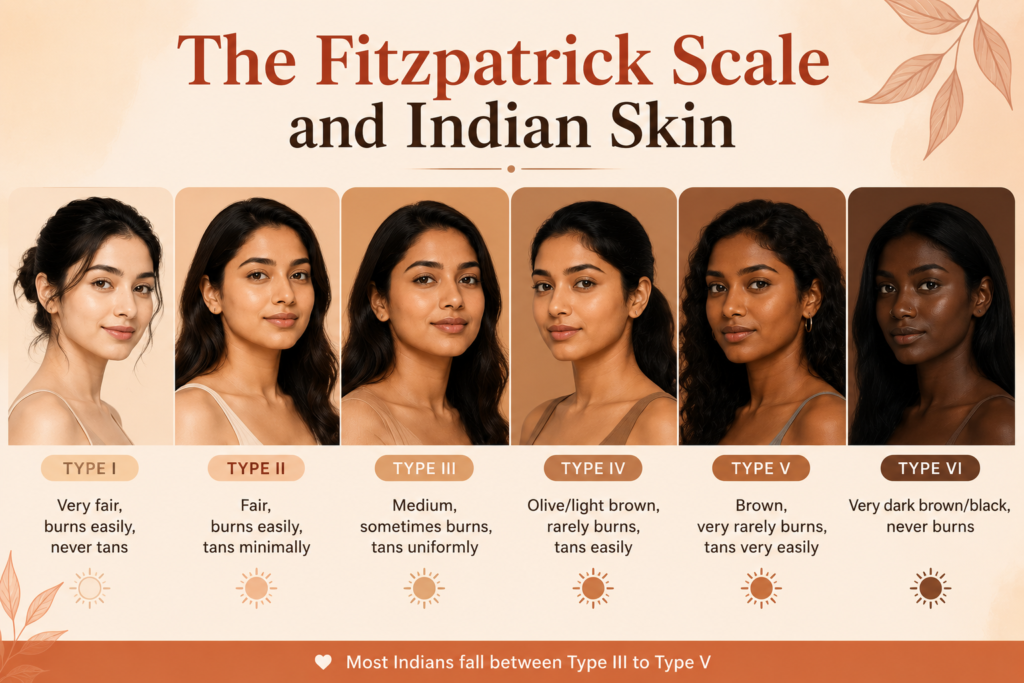
The Fitzpatrick Skin Type Scale, developed in 1975 by dermatologist Thomas Fitzpatrick, classifies human skin into six categories based on its response to UV exposure. It remains one of the most widely used tools in dermatology.
Fitzpatrick TypeDescriptionCommon in India?Type IVery fair, burns easily, never tansRareType IIFair, burns easily, tans minimallyRare (some northern regions)Type IIIMedium, sometimes burns, tans uniformlyCommon (North India)Type IVOlive/light brown, rarely burns, tans easilyVery CommonType VBrown, very rarely burns, tans very easilyVery Common (South, East India)Type VIVery dark brown/black, never burnsPresent (some regions)
Most Indians fall between Type III and Type V, but within this range lies an incredibly wide spectrum of beautiful shades that vary not just by state, but by family lineage, sun exposure, and environmental conditions.
Indian skin behaves differently from many Western skin types because melanin-rich skin reacts strongly to inflammation, acne, sun exposure, and harsh skincare products. Even small pimples or irritation can leave behind stubborn dark marks that take weeks or months to fade. This is why pigmentation, tanning, and uneven skin tone are some of the most common concerns among Indians.
At the same time, Indian skin also has certain advantages. Higher melanin levels provide better natural protection against UV-induced aging, meaning wrinkles and fine lines often appear later compared to lighter skin types. However, this does not mean Indian skin is immune to sun damage. Daily sunscreen is still essential for preventing pigmentation and maintaining an even complexion.
Read this: Skin Type Test at Home
3. Types of Skin Complexion in India
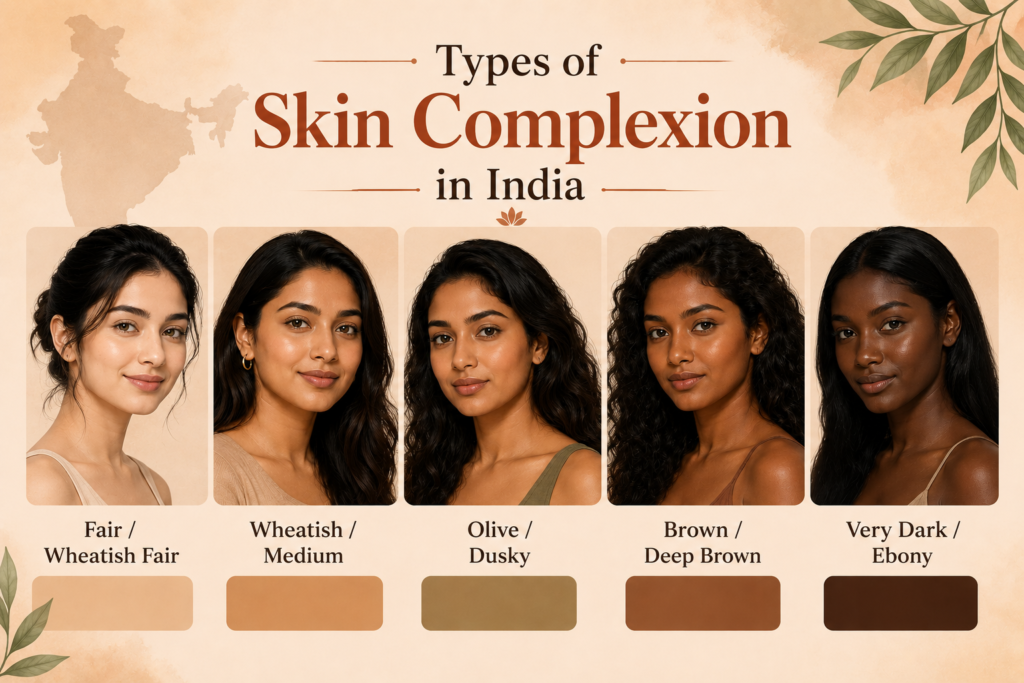
While there are no rigid categories, Indian skin complexions can broadly be grouped into the following types based on tone and undertone. Each is equally beautiful and comes with its own unique characteristics.
Fair / Wheatish Fair: Light beige tone, common in northern states like Kashmir, Himachal Pradesh, and Punjab. Features warm golden undertones and is the most sensitive to sun exposure.
Wheatish / Medium: The most common Indian complexion. Warm golden-brown tones found across North, West, and Central India. Tans quickly and evenly with great sun exposure.
Olive / Dusky: Warm olive or light-brown tone prevalent in South India, Maharashtra, and parts of Bengal. Often has a natural luminosity and an inherent warmth.
Brown / Deep Brown: Rich dark-brown tones predominant in Tamil Nadu, Telangana, Kerala, and tribal regions. Deep melanin-rich skin with natural sun protection.
Very Dark / Ebony: Deep ebony complexion seen in some communities of South India and the Andaman Islands. Naturally sun-resilient with the highest melanin concentration.
India’s regional diversity is one of the biggest reasons behind this wide range of skin tones. Northern regions commonly feature fair to wheatish complexions with pink or golden undertones, while southern states are known for rich brown and deep melanin-rich skin tones. Western India often has olive and warm beige tones, while eastern regions show a mix of neutral, golden, and dusky undertones. Northeastern Indians may have lighter beige or yellow-neutral tones influenced by East Asian ancestry.
Even within the same family, complexion differences are completely normal. Indian beauty cannot be defined by one single shade because diversity itself is the true identity of Indian skin.
Read this: Korean Beauty Tips for Glowing Skin
Understanding Undertones in Indian Skin
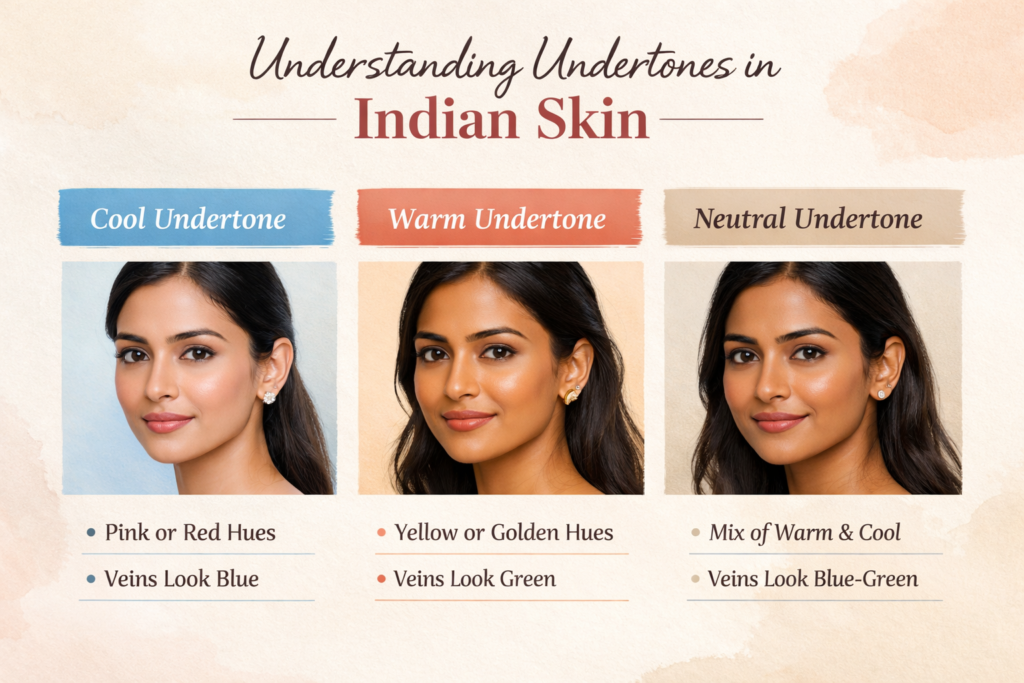
Beyond the surface complexion, every Indian skin tone has an undertone — the subtle hue beneath the surface that doesn’t change even when you tan or lighten. Indian skin undertones fall into three categories.
Warm undertones feature golden, peachy, or yellowish hues and are the most common in Indian skin. Cool undertones have pink, red, or bluish hues and are less common but still present, especially in some eastern and northeastern Indians. Neutral undertones are a balanced mix of warm and cool tones.
Knowing your undertone helps you pick the right foundation, blush, lipstick, and even clothing colors that make your skin appear naturally healthy and radiant. Many people accidentally buy the wrong makeup shade because they focus only on skin color and ignore undertones.
If your veins appear greenish under natural light, you likely have warm undertones. If they look bluish or purple, you may have cool undertones. If you notice both blue and green tones, your undertone is probably neutral. Jewelry can also help identify undertones — gold usually flatters warm undertones better, while silver complements cool undertones beautifully.
4. Skin Concerns by Complexion
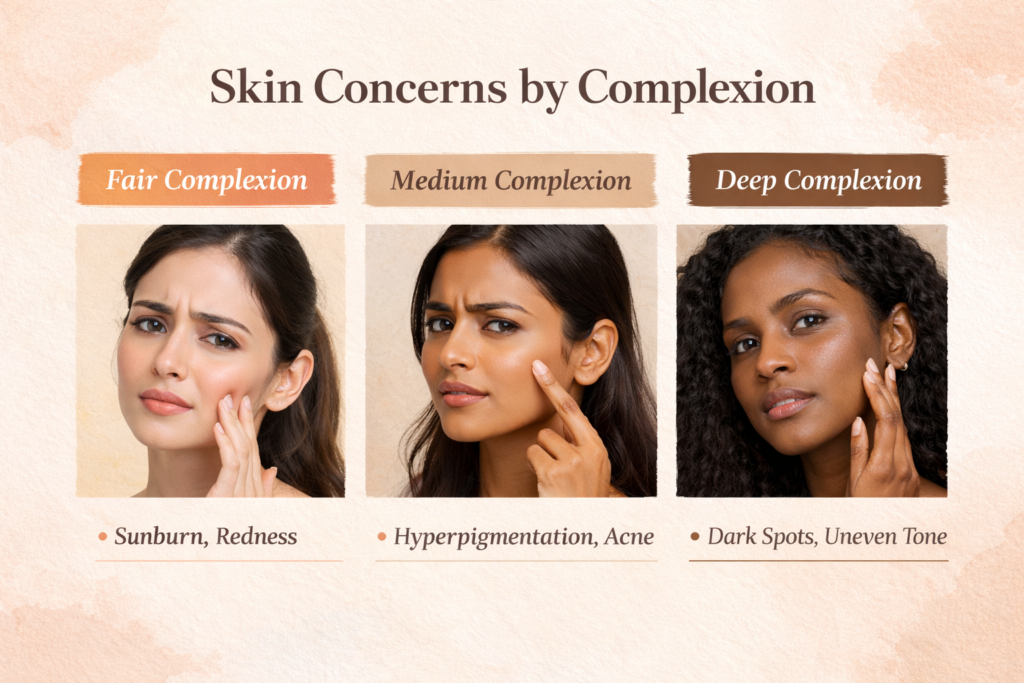
Different Indian skin complexions come with different skin concerns, largely due to how melanin behaves in each tone.
Fair / Wheatish Fair Skin
Those with lighter Indian complexions may be more prone to sunburn, redness, sensitivity, and early UV damage. Despite having less melanin, sun exposure can still trigger pigmentation around the eyes, forehead, and mouth area. Fine lines may also appear slightly earlier compared to deeper skin tones.
Wheatish / Medium Skin
This is the classic “mixed blessing” skin in India. It tans quickly and evenly but is also highly prone to uneven skin tone, tan lines, and post-inflammatory hyperpigmentation after acne. Dark patches around the mouth, cheeks, and forehead are especially common in this complexion type.
Olive / Dusky Skin
Olive-toned Indian skin tends to be slightly oilier and is often prone to melasma, especially after sun exposure or hormonal fluctuations. However, dusky skin usually ages gracefully because higher melanin levels naturally slow visible signs of aging.
Brown / Deep Brown Skin
Deeply pigmented Indian skin is naturally resilient and beautifully rich in tone, but inflammation can easily trigger stubborn pigmentation. Dehydration may cause the skin to appear ashy or grey, especially if moisturization is ignored. Keloid scarring is also more common in darker skin tones.
Very Dark / Ebony Skin
Ebony Indian skin rarely burns and has the strongest natural UV protection. However, concerns like ashiness, dryness, uneven tone, and white-cast sunscreens are common challenges. Choosing hydrating skincare and invisible-finish sunscreens becomes especially important for maintaining healthy-looking skin.
Indian skin overall is constantly exposed to pollution, dust, sweat, humidity, and harsh sunlight. These environmental stressors weaken the skin barrier and contribute heavily to dullness, acne, and pigmentation. This is why proper cleansing, hydration, and sun protection are extremely important regardless of complexion type.
Read this: How to Repair Your Skin Barrier
5. Best Ingredients for Each Complexion
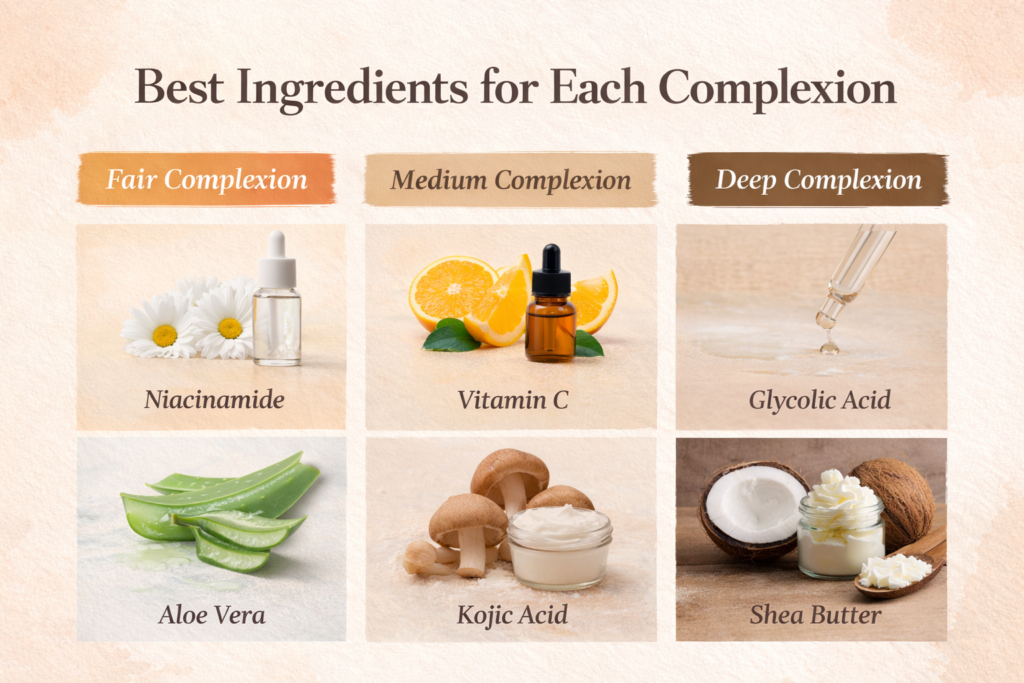
The right ingredients can make a world of difference. Here’s what actually works for Indian skin tones:
Concern / Skin NeedRecommended IngredientsAll ComplexionsSPF 30-50 sunscreen (mineral or hybrid)HyperpigmentationNiacinamide, Alpha Arbutin, Vitamin CMelasmaTranexamic Acid, Kojic Acid, Azelaic AcidDark SpotsRetinol, Glycolic Acid, Mandelic AcidEven Skin ToneLicorice Root Extract, TurmericDeep HydrationHyaluronic Acid, Ceramides, SqualaneOily SkinSalicylic Acid (BHA), NiacinamideDry / Ashy SkinShea Butter, Glycerin, Bakuchiol
DAILY SKIN GLOW PRO TIP: Niacinamide and Vitamin C are the two powerhouse ingredients for Indian skin. They target pigmentation, brighten uneven tone, and strengthen the skin barrier — without the irritation that harsher acids can cause. Start with 5% niacinamide if you’re a beginner.
Indian skin usually responds best to ingredients that improve pigmentation while maintaining a healthy skin barrier. Overusing strong acids or harsh scrubs can damage melanin-rich skin and make dark spots worse instead of better. This is why gentle skincare is often more effective than aggressive treatments.
Hydration is another important factor many people ignore. Dehydrated skin can appear dull, patchy, rough, and tired regardless of complexion. Ingredients like ceramides, glycerin, squalane, and hyaluronic acid help maintain softness, elasticity, and glow.
Read this: Best Skin Care Tips and Routine for Glowing & Healthy Skin
6. Common Myths About Indian Skin Complexion
Let’s bust some deeply rooted myths that have done more harm than good to Indian women and men for decades.
Myth 1: Darker skin doesn’t need sunscreen
False. While darker complexions have more natural melanin protection, they are still susceptible to UV damage, hyperpigmentation, and even skin cancer. Sunscreen is non-negotiable for every Indian skin complexion, every single day.
Myth 2: Fair skin is healthier skin
Absolutely not. Skin health has nothing to do with complexion. Deep brown and ebony skin tones often show fewer wrinkles and age spots due to their natural melanin protection. Every complexion can be healthy, glowing, and beautiful.
Myth 3: Fairness creams can permanently change your complexion
No over-the-counter cream can permanently change your natural skin complexion, which is determined by genetics. Many fairness creams contain harmful ingredients that damage the skin barrier over time.
Myth 4: Natural remedies like besan and turmeric always work
Traditional ingredients like besan and turmeric may offer mild benefits, but they cannot replace a proper skincare routine for concerns like acne, melasma, or hyperpigmentation.
Myth 5: Dusky skin cannot glow
Completely false. Glow comes from healthy skin, not lighter skin. Deep and dusky complexions often look naturally radiant because melanin-rich skin reflects light beautifully when it is hydrated and nourished properly.
Modern skincare is slowly helping people move away from unhealthy fairness standards and focus more on healthy, balanced skin instead.
Read this: Acne vs Pimples: Key Differences, Causes & Best Treatment
7. Daily Skincare Tips for Indian Skin
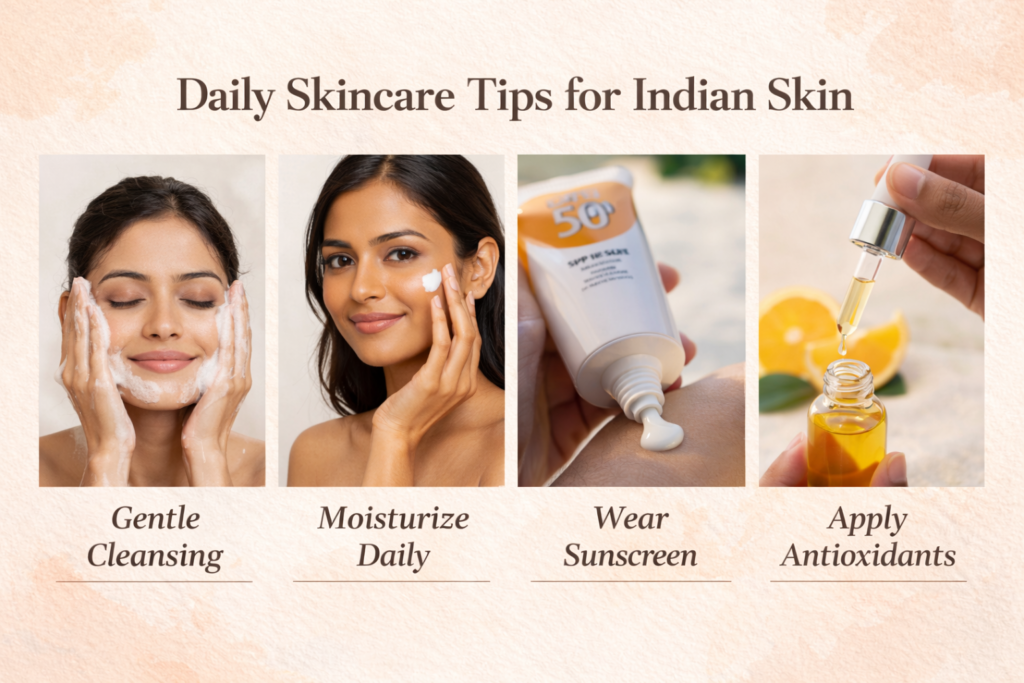
Regardless of your complexion type, a consistent, simple routine works best for Indian skin.
Cleanse twice daily with a gentle, pH-balanced cleanser to remove pollution, sweat, oil, and sunscreen buildup. Moisturize daily even if you have oily skin because dehydrated skin often produces even more oil. Apply sunscreen every morning without fail, including indoors and during cloudy weather.
Exfoliation should be done carefully using mild chemical exfoliants instead of harsh physical scrubs. Address pigmentation early with ingredients like niacinamide or Vitamin C before dark spots become stubborn.
Hydration also plays a major role in maintaining healthy-looking skin. Drinking enough water, sleeping properly, managing stress, and eating nutrient-rich foods all contribute to natural glow from within.
Consistency matters more than expensive skincare products. Most skincare ingredients need several weeks to show visible results, especially on Indian skin. Constantly changing products or overusing active ingredients can weaken the skin barrier and worsen pigmentation issues.
For stubborn concerns like melasma, acne scarring, or severe pigmentation, professional guidance from a dermatologist is always the safest option.
Read this: Best Skin Care Routine For Oily Skin in Summer
Final Thoughts
Indian skin is beautifully diverse, resilient, and unique. Understanding your complexion, undertone, and skin concerns helps you build a skincare routine that actually works for your skin instead of blindly following trends or fairness standards.
Whether your complexion is fair, wheatish, olive, dusky, brown, or deep ebony, healthy skin always looks beautiful. The real goal of skincare should never be changing your natural shade — it should be protecting your skin, maintaining balance, and helping your natural glow shine through.
Every Indian complexion deserves celebration because beauty exists in every shade.idant use from an early age can significantly slow skin aging.

 Admin
Admin
[…] Read this: Types of Skin Complexion in India Explained […]
[…] Read this: Types of Skin Complexion in India Explained […]
[…] Read this: Types of Skin Complexion in India Explained […]