 Admin
Admin Introduction
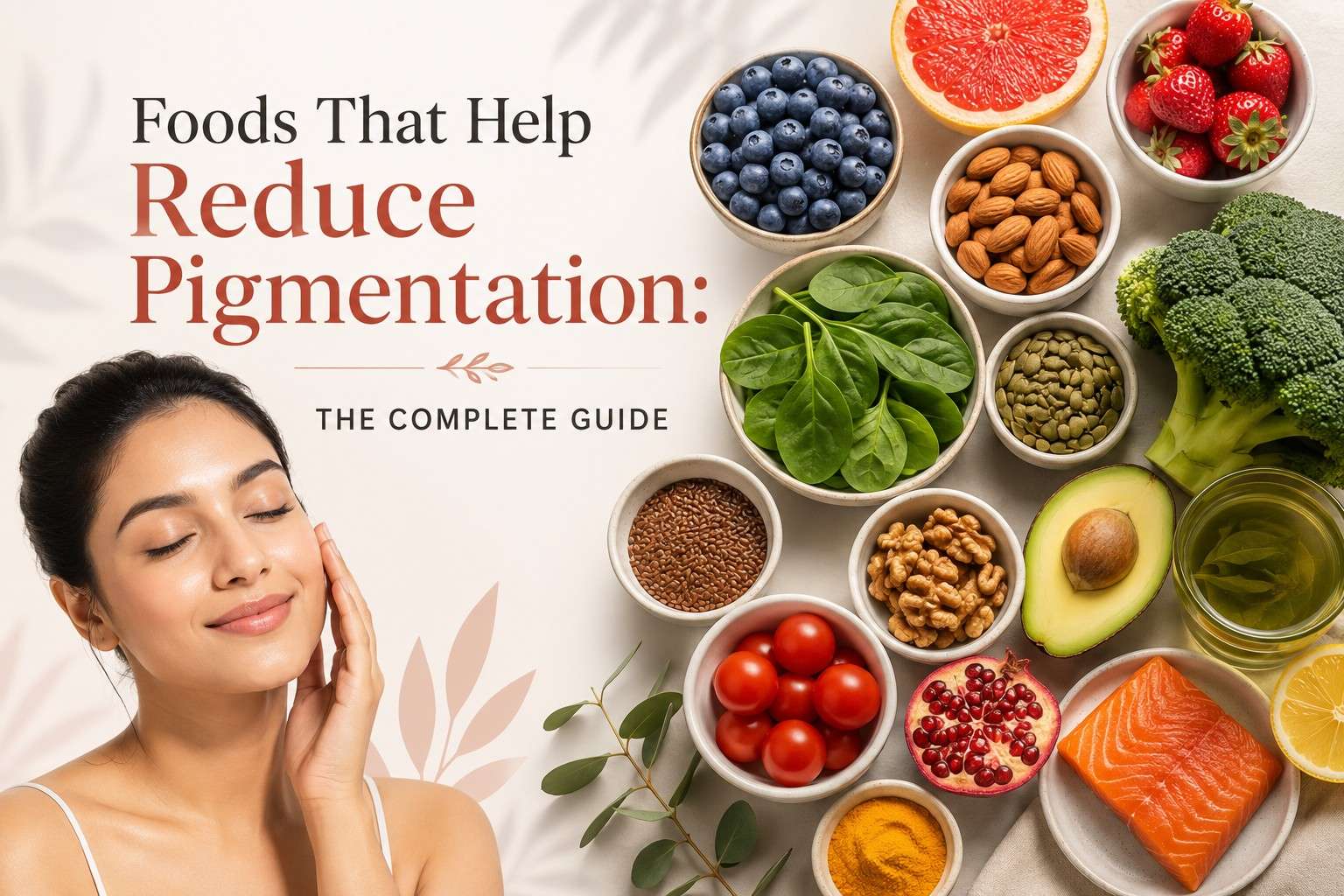
Pigmentation not too uncommon among Indian readers is one of pores and skin issues, displayed as dark patches, uneven tones, highlight zits, or persistent tanning that does not fade despite ordinary use of lotions and serums What you consume does a real, measurable job of how your pores and skin manage pigmentation from the inside out. That’s why foods that help reduce pigmentation have become a matter worthy of thorough knowledge instead of just ignoring any other wellness trend.
It’s important to be premature about something that many articles stay away from quoting the truth: no diet will erase current dark spots in a day, and a weight-loss plan can’t replace sunscreen or pigmentation-targeted skin-care treatments I personally can. What a weight-loss plan can obviously do is guide your pores and skin’s natural restoring strategy, reduce internal inflammation that worsens pigmentation, and provide antioxidants that equally help protect against UV-induced damage, a big concern given India’s intense year-long sun exposure.
In this booklet, we cover real science combining nutrition and dyes, unique foods to add to your day-to-day diet, not unusual nutritional errors that quietly worsen pores and skin tone, and dermatologist-assisted guidance on the way to combine food regimens with your existing skincare routine for easy-to-see, long-lasting effects Let’s discover it.
What foods help reduce pigmentation?
Foods rich in Diet C, which include mangoes, citrus fruits and bell peppers, together with antioxidant-rich components like tomatoes, inexperienced tea and berries help reduce pigmentation by reducing oxidative stress and supporting collagen restoration Vitamin E, Omega-3 fatty acids, OK hydration Foods containing f further help the skin’s herbal ability to manage and fade pigmentation over the years
Table of Contents
- What Causes Pigmentation in the First Place
- How Diet Genuinely Affects Skin Pigmentation
- Top Foods That Help Reduce Pigmentation
- Foods That May Worsen Pigmentation
- Diet Alone vs Diet Combined with Skincare
- Common Mistakes People Make
- Myths vs Facts About Food and Pigmentation
- Expert Tips for Best Results
- Who Should Be Extra Careful
- Conclusion
- FAQs
What Causes Pigmentation in the First Place
Pigmentation occurs when the skin produces excess melanin, the pigment responsible for skin color, in specific areas, creating visibly darker patches compared to the surrounding skin. Understanding why this happens helps explain why certain foods can genuinely support improvement, rather than treating diet as an unrelated, separate factor from skincare.
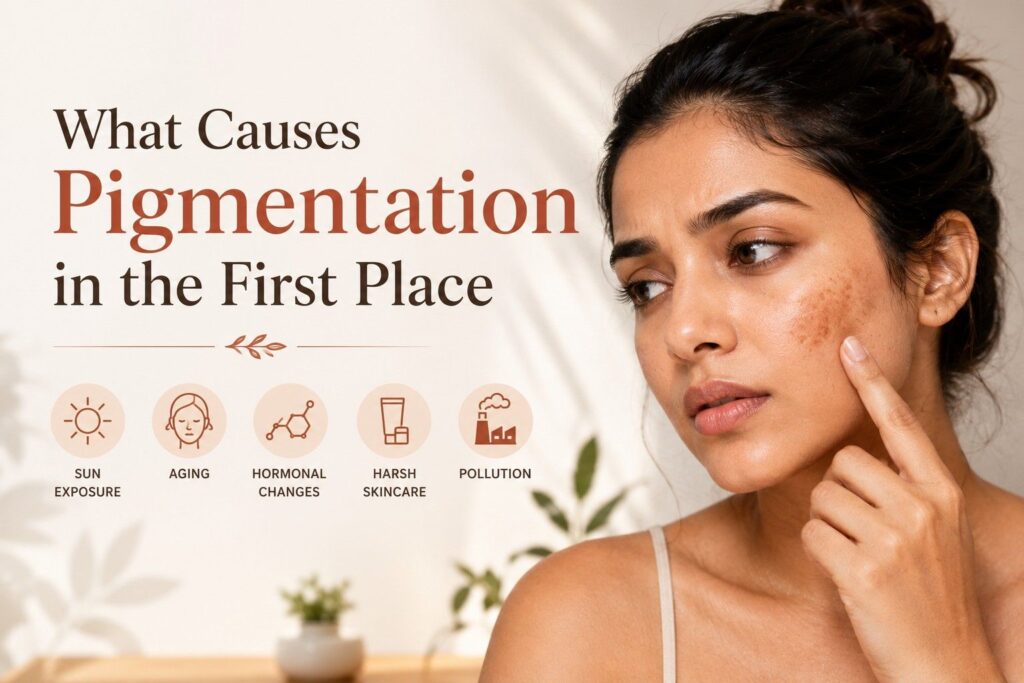
The most not uncommon trigger, especially for Indian skin, is the ultraviolet promotion. When pores and skin are unveiled to daylight, melanocytes, the cells responsible for producing melanin, increase formation as a natural shield response against UV loss India’s year-round sun exposure repeated, unprotected solar promotion, not too uncommon, results in melanin overproduction in specific areas There is parchment, solar spots and odd patches.
Post-inflammatory hyperpigmentation is another main cause, following pimples, insect bites, or small pores and skin injuries. When the skin experiences an infection, it is able to produce excess melanin near recovery as part of the body’s restorative response, leaving genuine pimples on the back or dark marks that last long after injury treatment, a common frustration surely for many Indian readers coping with acne-sensitive skin.
Hormonal elements, especially conditions like melasma, which frequently affect women throughout pregnancy or with hormonal contraceptive use alone, represent a third overwhelming objective Melasma has symmetrical, frequently stubborn dark patches, often on cheeks and forehead are driven through, although the Sun’s hype has spoiled its appearance appreciably
Read this: How Diet Affects Skin Health
How Diet Genuinely Affects Skin Pigmentation
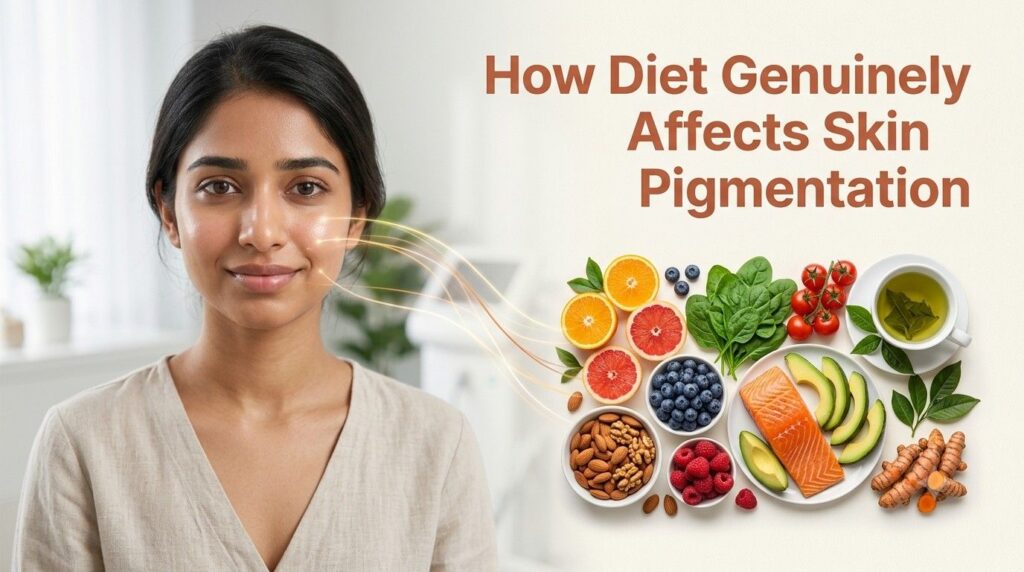
Diet influences pigmentation primarily through two interconnected mechanisms: managing internal inflammation and providing antioxidants that counteract oxidative stress, both of which directly affect how much excess melanin your skin produces and how quickly existing pigmentation fades.
Chronic low-grade infection within the frame, regularly driven by using a diet high in refined sugars, processed foods, and unhealthy fats, is associated with accelerated melanocyte activity in therapeutics, meaning an inflammatory weight-loss plan may actually contribute to pigmentation worsening over the years without involving the dyeing method.
Climax, vegetables, nuts, positive spices and abundant observed antioxidants, work to neutralize unbound particles, volatile molecules and pollutants generated by UV exposure that harm skin cells and cause excess melanin formation as part of pores and skin’s defensive response An antioxidant-rich weight loss program basically provides your pores and skin with extra internal support to counteract this damage, supplementing with some topical antioxidant, like a vitamin C serum, which you already use externally.
Nutrient deficiencies also play an important role. Vitamin C as an example is not just a popular skin care; It’s an important nutrient your body wants for proper collagen synthesis and a well-documented job of inhibiting tyrosinase, the enzyme responsible for producing melanin Diets lacking enough vitamin C, common among those who skip climax and rely heavily on processed foods, truly your pores and skin’s ability to control pigment effectively It can restrict, regardless of what number of topical items you track .
Finally, proper hydration supports ordinary skin barrier function, and a nicely hydrated, healthy pores and skin barrier heals extra efficiently from ordinary microscopic damage and infection, reducing the likelihood of unnoticed photoinflammatory marks forming or lingering longer than is important
Top Foods That Help Reduce Pigmentation
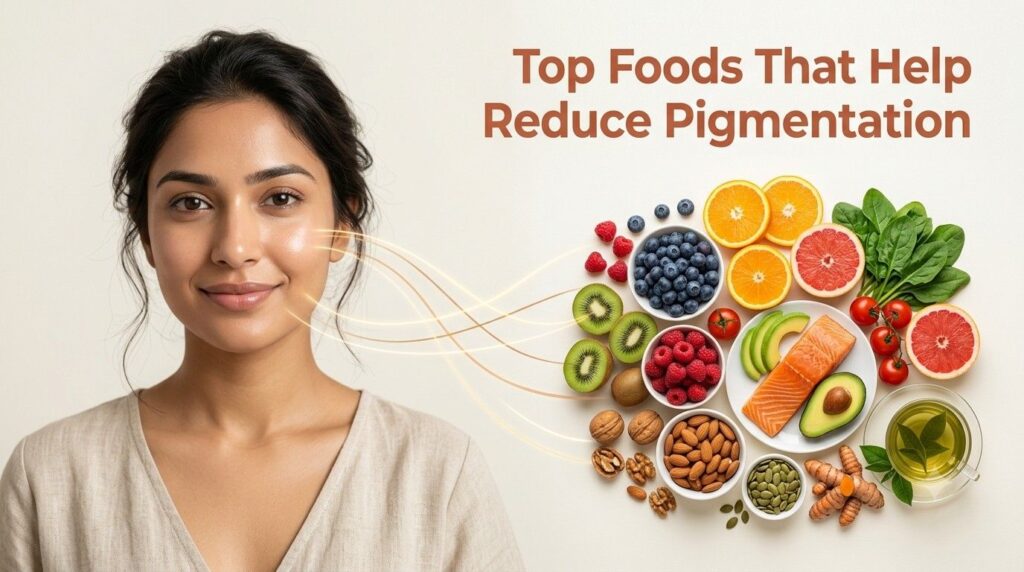
Certain foods, widely available and affordable across Indian kitchens, offer genuinely supportive nutrients for managing pigmentation when eaten consistently as part of a balanced diet.
1. Amla and Citrus Fruits for Vitamin C
Amla or Indian gooseberry is one of the richest herbal sources of dietary C available, containing appreciably more vitamin C in line with parrot than orange Eating mango regularly, whether fresh, juice, or jam, gives great nutritional C to help collagen synthesis and extra melanin through its tyrosinase-inhibiting habitats can inhibit production.
Citrus climaxes like orange, mosambi, and lemon additionally provide meaningful vitamin C content, and incorporating a blend of those fruits into your every day eating regimen, which includes having an orange or squeezing hot water lemon as a mid-morning snack, for this essential nutrient without needing to rely entirely on dietary supplements Provides a stable, herbal source
2. Tomatoes and Watermelon for Lycopene
Tomatoes and watermelons contain lycopene, an effective antioxidant carotenoid that research has proven often provides meaningful protection against UV-brought skin damage by eating Interestingly, cooked tomatoes, which are used in Indian curries and pulses, in addition to raw tomatoes Bio-available lycopene is actually included, because cooking breaks down cellular walls and makes this antioxidant less difficult for the frame to take.
This makes everyday Indian cooking, which often uses a tomato-mainly based base for curries, a virtually convenient way to consume lycopene on a regular basis without dramatic nutritional changes or buying specificity components
3. Green Tea for Polyphenols
Green tea contains catechins, a group of polyphenol antioxidants, which have been significantly studied for skincare households, with some evidence suggesting they help reduce UV-caused pigmentation and skin repair of normal pores It gives a simple, realistic way to control the day to day habit in the already familiar Indian.
4. Nuts and Seeds for Vitamin E
Almonds, sunflower seeds and walnuts provide food E, an antioxidant that works in synergy with food C to protect skin cells from oxidative damage A small daily handful of soaked almonds, already a common exercise in many Indian families, gives an important, consistent source of this helpful nutrient.
5. Fatty Fish and Flaxseeds for Omega-3
For vegan readers, in addition to botanical assets such as flaxseed and walnuts, omega-tri-fatty acids determined in fatty fish like salmon and mackerel help reduce systemic irritation within the frame as infection immediately worsens bag pimples dye, frequently With omega-3-rich ingredients it just might help those damn dark marks fade faster over the years
Read this: Skincare Routine for Beginners
Foods That May Worsen Pigmentation
Just as certain foods support pigmentation improvement, others may work against your skin’s ability to manage excess melanin, primarily through their inflammatory effects on the body.
| Food Category | Potential Effect on Pigmentation | Better Alternative |
| Refined sugar and sweets | Increases inflammation, worsens acne marks | Fresh fruit for natural sweetness |
| Deep-fried and processed snacks | Promotes oxidative stress | Roasted nuts, homemade snacks |
| Excess dairy (for acne-prone skin) | May worsen acne in some individuals | Plant-based milk alternatives |
| Alcohol | Dehydrates skin, impairs repair | Herbal teas, coconut water |
| High-sodium processed foods | Contributes to inflammation and puffiness | Fresh, home-cooked meals |
It’s worth clarifying that these foods don’t need to be eliminated entirely, and occasional indulgence in festive sweets or fried snacks, a natural part of Indian celebrations and social life, won’t single-handedly cause pigmentation. The genuine concern lies in consistently high, daily consumption of these inflammatory foods over months and years, which gradually contributes to a more inflammatory internal environment that makes managing pigmentation, particularly post-acne marks, noticeably more difficult.
Dairy specifically deserves a nuanced mention, since research on dairy and acne remains somewhat mixed, with some studies suggesting a link between milk consumption and acne severity in certain individuals, while others show no significant connection. For readers who notice a personal pattern between dairy intake and breakouts, moderating consumption may indirectly help reduce new post-acne pigmentation, though this isn’t a universal rule applicable to everyone.
Diet Alone vs Diet Combined with Skincare
Understanding the realistic role diet plays alongside topical skincare helps set accurate expectations, since relying on food alone, without proper sunscreen and targeted treatment, is unlikely to meaningfully improve existing pigmentation.

Diet in general acts as a helpful, internal foundation, providing your pores and skin with the antioxidants, nutrients, and anti inflammatory nutrients it wants to successfully repair itself and in addition withstand UV-caused damage. However, weight loss plans cannot undo years of accumulated sun damage or deep-seated melasma on their own, nor update the targeted, focused action of nutrition C serum, niacinamide, or prescription remedies such as topical products together with hydroquinone or tranexamic acid more deeply without delay and do the work .
A helpful weight loss plan in combination with daily topical and ordinary, most importantly, daily sunscreen use produces substantially more, more lasting results than either approach alone For example, someone regularly eating antioxidant-rich food yet skipping sunscreen will likely experience new pigmentation from ongoing solar hype, basically them It will undo much of the internal support for the diet offering.
A real realistic expectation is to see dietary modification as a multi-month funding that supports faster recovery and reduces the chance of recent pigmentation build-up, while topical treatments and sunscreen currently remain your primary means for addressing dark spots at once and UV-brought stop on melanin production alike.
Read this: Coconut Water for Skin
Common Mistakes People Make
Several recurring dietary mistakes reduce the effectiveness of nutrition-based approaches to managing pigmentation, often without people realizing the connection.

The now not uncommon mistake is to anticipate small results from nutritional adjustments, occasionally leaving a pattern of excess mail intake after the most effective one or every week when visible increases will not manifest immediately. In truth, dietary results of tanning generally require 8 to twelve weeks of deskbound behavior to uncover a sizeable, seen effect, considering that pores skin mobile change and restorative techniques take time to reflect internal nutritional changes.
Another daily mistake is relying heavily on dietary supplements, which include nutrient C drugs, completely neglecting whole foods Although dietary supplements can help prevent real deficiencies, whole elements like bitter satter withdrawn items provide additional beneficial compounds, along with fiber and various micronutrients shine synergistically and are generally better absorbed through frames compared to distant food supplements.
Many people skip nutritional sunscreen and maintain, mistakenly think that taking it nicely for my part has adequate protection against UV damage As noted earlier, weight loss plan aids inner repair and antioxidant protection, yet sunscreen cannot update the direct, physiological UV-blocking movement it provides Mixing is important.
Lastly, a few people unnecessarily skip entire food groups, alongside reducing all milk sugars or all fruit sugars primarily based entirely on incomplete line records, without actual scientific or dietary guidance. This can aim at pointless nutrient intervals without providing proportionate paint benefits, generally enhancing a balanced, modest technique that is additionally durable and powerful.
Myths vs Facts About Food and Pigmentation
Given how widely nutrition and skin health are discussed online, several exaggerated or inaccurate claims deserve honest clarification.
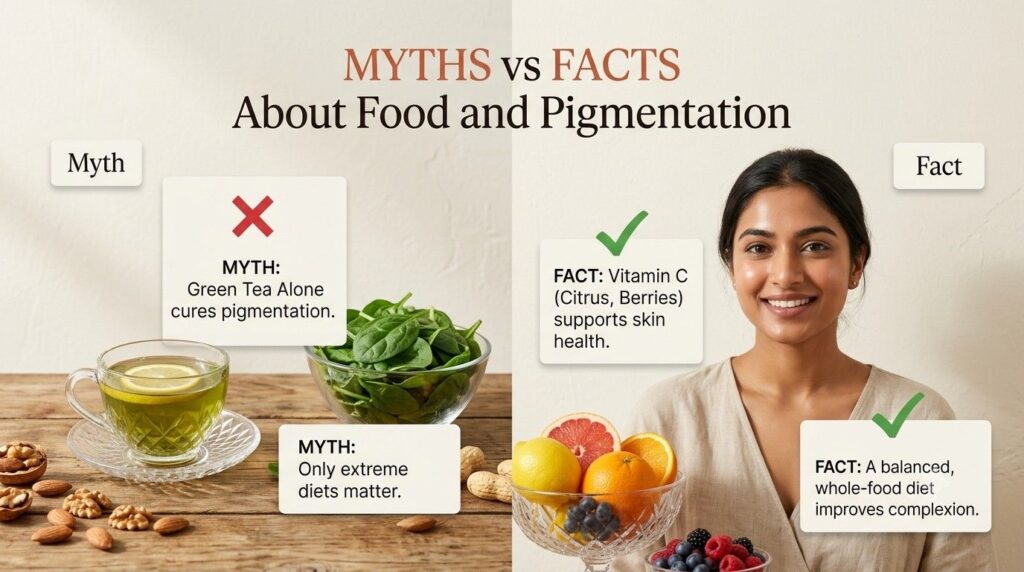
Myth 1: Eating vitamin C-rich foods works as fast as applying a vitamin C serum. Fact: Topical vitamin C delivers a concentrated dose directly to the skin’s surface, while dietary vitamin C supports overall skin health more gradually through internal absorption, making the two complementary rather than interchangeable.
Myth 2: Cutting out all sugar completely clears pigmentation. Fact: While reducing excessive sugar intake supports lower inflammation, pigmentation is influenced by multiple factors, including sun exposure and genetics, meaning diet alone won’t completely resolve existing dark spots.
Myth 3: Turmeric consumed daily bleaches pigmentation from within. Fact: Turmeric contains curcumin, which has anti-inflammatory properties that may modestly support skin healing, but it does not have a bleaching or skin-lightening effect when consumed as food.
Myth 4: All dairy products worsen pigmentation for everyone. Fact: The dairy-acne connection varies significantly between individuals, and moderate dairy consumption doesn’t universally worsen pigmentation for most people.
Myth 5: Diet changes show results within a few days. Fact: Meaningful dietary impact on skin pigmentation typically requires eight to twelve weeks of consistent habits, aligning with the skin’s natural repair and turnover cycle.
Read this: Manage Dryness and Flaking in Sensitive Skin
Expert Tips for Best Results
Dermatologists and nutrition professionals generally support a balanced, realistic approach while planning weight loss that helps with pigment management along with proper skin care.
Not specializing in a “miracle” food, not specializing in a “miracle” diet, prioritizing whole, colorful climax vegetables, gives a broad spectrum of antioxidants and micronutrients, due to the fact distinctive colored products usually have distinctive useful compounds that pictures collectively any of my self portray more efficiently than bachelorette parties
Pairing C-rich foods in the diet with iron-rich ingredients, including mango with spinach-based dishes, supplement iron absorption to circumferentially support healthier pores and skin by improving normal circulation and nutrient transport in pores and skin cells, a connection often left out of standard skin care recommendations .
There is Maintaining daily sunscreen use stands the single most necessary supplement reliance next to any nutritional change, when you consider that no amount of antioxidant-rich food can quite counteract constant, unprotected UV exposure, which remains the number one driving force behind new pigmentation for most Indian skin types |.
Finally, tracking your growth with month-by-month pics in regular light, in preference to daily checks, gives a more accurate, much less discouraging photo of slow improvement, as the effects of diet build pigment gradually over months to produce amazing, dramatic changes
Who Should Be Extra Careful
While dietary improvements generally benefit most people, certain groups should approach specific recommendations with additional care or professional guidance.

Individuals with diagnosed melasma, experiencing hormonal fluctuations primarily from pregnancy or contraceptive use, need to integrate dietary support with dermatologist-directed topical treatment, because melasma often requires more focused intervention beyond food regimen and to control efficiently Priority skin care is required.
People with current health conditions including diabetes or kidney concerns should seek advice from their doctor before making good-size dietary modifications, who may also want adjustments based on character medical issues, considering certain tips such as extended fruit intake, aimed at improving skin health .
Those with acknowledged food hypersensitivity reactions or sensitivities must avoid the specific foods outlined in this guide with nuts for people with nut hypersensitivity reactions, and can consult a nutritionist for suitable alternative sources of the same beneficial nutrients
Conclusion
Foods that help reduce pigmentation are great as a supportive, long-term foundation rather than a standalone brief repair, providing your pores and skin with vital antioxidants, vitamin C, and anti-inflammatory nutrients that aid in herbal repair and help counteract UV-induced damage. Amla, citrus fruits, tomatoes, inexperienced tea, nuts, and omega-3-rich foods are all authentic, research-supported blessings when always eaten over several months however, the food plan works most effectively when mixed with day-to-day sunscreen-focused topical treatments I can’t fully update proper sun protection or focused skincare actives.
Read this: Skin Type Test at Home
FAQs
1. What foods help reduce pigmentation the fastest?
No food provides instant results, but vitamin C-rich foods like amla and citrus fruits, combined with consistent daily intake over eight to twelve weeks, offer the most reliably supportive results.
2. Can eating amla daily remove dark spots?
Amla supports collagen synthesis and provides antioxidant protection, which may gradually support skin repair, but it works best alongside proper sunscreen and topical treatment rather than as a standalone solution.
3. Does turmeric help with pigmentation when eaten regularly?
Turmeric’s curcumin content offers anti-inflammatory support that may modestly aid skin healing, but it does not have a direct skin-lightening effect when consumed as food.
4. Is dairy bad for pigmentation and acne marks?
The connection varies by individual; some people notice improved skin with reduced dairy intake, while others experience no significant change, making it a personal factor to observe rather than a universal rule.
5. How long does it take for diet to improve pigmentation?
Meaningful, visible improvement from dietary changes typically requires eight to twelve weeks of consistent habits, aligning with the skin’s natural repair and turnover cycle.
Looking for a complete Indian diet plan for naturally glowing skin? This detailed guide covers the best foods, hydration tips, and daily eating habits that support healthy, radiant skin from within. Explore the full article to build a skin-friendly diet that fits the Indian lifestyle.

 Admin
Admin
Выбор керамической плитки считается серьёзным шагом при отделке помещения.
При подборе необходимо обращать внимание на размер, цвет, фактуру и материал плитки.
Также важно продумать стиль оформления, дабы материал сочетался с общей атмосферой.
Для каждого разных зон рекомендуются свои виды изделий — к примеру, для санузла — водостойкую, а для напольного покрытия — износостойкую с противоскользящим слоем.
http://baugruppe.cz/forum/index.php?action=vthread&forum=3&topic=73808&page=4#msg1776759
Responsible gambling is a framework that encourages users to keep discipline over their playing activity while noticing the attendant dangers.
https://joomlaprofi.ru/news/789-sravnenie-sweet-casino-s-drugimi-onlayn-kazino-plyusy-i-minusy/
Mindful gaming is an approach that ensures participants to sustain oversight over their betting activity while acknowledging the possible harms.
https://energia-group.ru/full/2026-06-02-yuridicheskie-aspekty-raboty-sweet-casino-v-raznykh-stranakh.html
Responsible gambling is a framework that ensures users to keep discipline over their betting activity while recognising the attendant dangers.
https://mpcclub.ru/item/2026-07-13-apple-obvinyaet-openai-v-sistematicheskom-prisvoenii-kommercheskikh-tayn/
Prudent betting is a methodology that facilitates players to exercise oversight over their wagering decisions while understanding the attendant dangers.
https://pbase.com/ivanbabak2026/image/176474752
Responsible gambling is a framework that facilitates users to exercise discipline over their gambling decisions while noticing the potential risks.
https://energia-group.ru
Mindful gaming is a framework that promotes players to exercise balance over their gaming decisions while identifying the associated dangers.
https://www.intensedebate.com/people/IvanBorov2026
Safe wagering is a methodology that supports participants to sustain oversight over their gambling engagement while being aware of the possible harms.
https://telegra.ph/RandX-platforma-kotoraya-perevernula-moyo-predstavlenie-ob-onlajn-kazino-06-30
Prudent betting is an approach that aims for participants to sustain mastery over their gaming actions while understanding the attendant dangers.
https://schoolido.lu/user/IvanGorov2026/
Prudent betting is a set of principles that encourages participants to keep mastery over their playing engagement while being aware of the possible harms.
https://www.gamerlaunch.com/community/users/blog/6779135/
Responsible gambling is an approach that supports users to maintain management over their gambling actions while identifying the possible harms.
https://pbase.com/ivankotov2026/image/176456806
На данном портале есть возможность почерпнуть немало практичной материалов.
https://labdiz.ru/full/566-platinovaya-kletchataya-rubashka-glavnyy-osenniy-must-have-po-odobreniyu-tracee-ellis-ross.htm
A generic drug is a medication that has the equivalent active ingredient as the brand-name drug.
It is formulated to match the brand medication in dosage form, quality, and efficacy.
After the intellectual property rights on the brand-name product runs out, other manufacturers can produce and distribute generic alternatives at a reduced price.
fildena and grapefruit
A generic drug is a medication that has the same active substance as the original product.
It is formulated to match the brand medication in dosage form, quality, and efficacy.
When the intellectual property rights on the original drug ends, other companies can make and market generic copies at a more affordable rate.
what time to take tadacip
Трейдинг — это деятельность, заключающийся в покупке и продаже финансовых активов с целью прибыли на колебаниях их стоимости.
Эффективный трейдинг нуждается в глубоком анализе конъюнктуры, создании плана и контроле риск-менеджменте.
Это способен приносить регулярный доход, однако подразумевает самоконтроля и регулярного повышения квалификации.
MarketRoute отзывы
На этом сайте можно обнаружить немало практичной сведений.
https://tltrock.ru/material/2026-07-23-lavrov-slova-putina-i-trampa-s-ankoridzhskogo-sammita-khranyatsya-v-serdtse-diplomata.html
Концепция разумного риска — это регламент, ориентированный на укрепление контроля по отношению к финансовыми расходами и исключение потенциальных проблем.
https://techguru.femalemoda.ru/Q8DNoAr1EJY1/
Осознанный гемблинг — это практика, предназначенный на сохранение меры над игровым поведением и понимание опасностей, сопутствующих с участием в ставках, при одновременном акценте на досуг как основную цель участия.
https://randx-super.ru/
Здоровый подход к азарту — это комплекс мер, направленный на поддержание контроля в отношении финансовыми расходами и минимизацию рисков.
https://kart1na.ru/entry/102-dibrov-opustil-stoimost-svoey-elitnoy-villy-na-75-mln-rubley-velikodushie-bez-otklika/
На данном сайте можно обнаружить обилие практичной материалов.
https://kart1na.ru/entry/374-na-ulitse-lenina-v-stavropole-netrezvyy-voditel-bez-prav-vrezalsya-v-marshrutku/
Онлайн-слоты — являются одни из самых известные развлечения в казино.
https://ecoactivist.egomoda.ru/MWi0StB6yFPo/
[…] Read this: Foods That Help Reduce Pigmentation […]