 Admin
Admin How to Repair Your Skin Barrier
Your skin suddenly feels dry even after applying moisturiser. Face wash burns for no reason. Makeup looks patchy, your skin feels rough, and even expensive skincare products stop giving results. If this sounds familiar, your problem may not actually be your skin type. In many cases, the real culprit is a damaged skin barrier.
Today, skin barrier repair has become one of the most important topics in skincare because dermatologists now understand that healthy skin always begins with a strong barrier. Whether your concern is acne, pigmentation, sensitivity, dullness, dehydration, redness, tanning, or uneven texture — almost every skin problem becomes worse when the skin barrier is weak.
For Indian skin, this issue is even more common because our environment constantly stresses the skin. Pollution, harsh sunlight, humidity, sweat, hard water, dust, air conditioning, and seasonal weather changes continuously weaken the skin barrier over time. On top of that, many people unknowingly damage their skin further by overusing exfoliating acids, scrubs, retinol, and strong skincare products.
The biggest mistake people make is trying to “fix” damaged skin with even more products. In reality, healing your skin barrier is not about doing more. It is about giving your skin the right environment to recover naturally.
The good news is that your skin barrier can absolutely heal with proper care, gentle skincare, and consistency. Once your barrier becomes healthy again, your skin starts looking calmer, smoother, brighter, and naturally glowing.
This complete guide explains everything you need to know about skin barrier repair, including:
- What the skin barrier actually is
- Signs of damaged skin barrier
- Main causes of skin barrier damage
- Best ingredients for skin barrier repair
- Best skincare routine for damaged skin
- Mistakes to avoid
- Diet and lifestyle tips for healthy glowing skin
What Is the Skin Barrier?
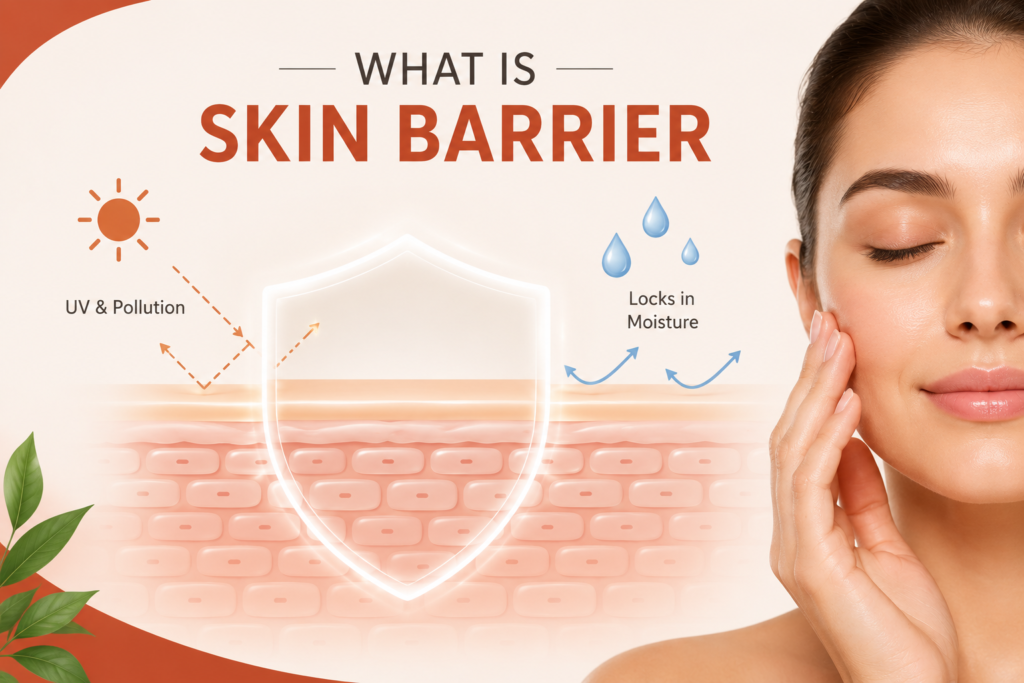
The skin barrier, scientifically known as the stratum corneum, is the outermost protective layer of your skin. Think of it as your skin’s natural shield that protects your face from environmental damage while keeping hydration locked inside.
Your skin barrier is made up of:
- Skin cells
- Ceramides
- Cholesterol
- Fatty acids
These components work together like bricks and cement. The skin cells act as bricks, while ceramides and lipids hold everything together. This protective structure helps maintain healthy, balanced skin.
A healthy skin barrier performs several extremely important functions. It prevents water loss from the skin, protects against pollution and bacteria, reduces inflammation, supports healing, and helps maintain softness and elasticity. When the barrier is functioning properly, your skin feels comfortable, hydrated, smooth, and naturally radiant.
However, when the skin barrier becomes damaged, tiny cracks begin forming in this protective layer. Moisture escapes much faster, while external irritants penetrate the skin more easily. This leads to dehydration, inflammation, redness, irritation, acne, and sensitivity.
This is why people with damaged skin often complain that their face feels both oily and dry at the same time. The skin tries to compensate for dehydration by producing more oil, but because the barrier itself is weak, the underlying dryness remains unresolved.
A damaged skin barrier also affects how skincare products work. Even expensive serums and treatments may stop showing results because compromised skin struggles to absorb and tolerate active ingredients properly.
That is why dermatologists consider skin barrier health the foundation of every effective skincare routine.
Read this: Skin Type Test at Home
Why Skin Barrier Damage Is So Common in India
Indian skin faces unique environmental stress almost every single day. Unlike countries with relatively stable climates, Indian weather conditions constantly fluctuate between intense heat, high humidity, monsoon moisture, dry winters, and air-conditioned indoor environments.
During summer, strong UV rays increase inflammation and oxidative stress inside the skin. Sweat, heat, and pollution combine to weaken the skin barrier further. Pollution particles settle on the skin daily and trigger irritation, dullness, pigmentation, and sensitivity.
Monsoon season creates another challenge. High humidity increases sweating and oil production, while fungal acne and clogged pores become more common. Then suddenly, air-conditioned environments remove moisture from the skin again, creating imbalance.
Hard water is another major reason behind skin barrier damage in India. Water containing high mineral content can disrupt the skin’s natural pH balance and strip away protective oils. Many people notice dryness, irritation, and rough texture worsening after washing their face because of this reason.
Apart from environmental factors, modern skincare habits are also damaging the skin barrier faster than ever before. Social media skincare trends encourage excessive use of active ingredients without understanding whether the skin can tolerate them.
Many people use:
- Strong exfoliating acids daily
- Harsh face scrubs
- Multiple serums together
- Retinol without proper guidance
- DIY remedies like lemon on the skin
- Alcohol-heavy toners
All these habits slowly weaken the skin barrier and increase inflammation.
As a result, damaged skin barrier symptoms have become extremely common among Indian skincare users today.
Signs of a Damaged Skin Barrier
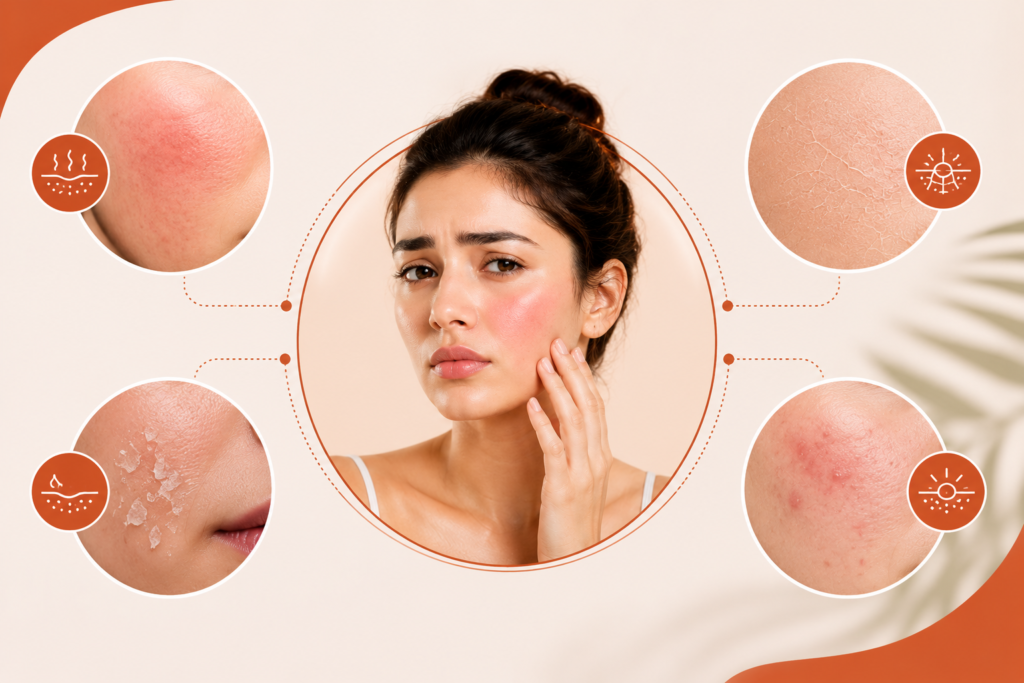
One of the biggest reasons people struggle with skin barrier issues is because they fail to recognise the symptoms early. Barrier damage usually develops gradually rather than overnight, so many people assume these signs are simply part of their permanent skin type.
One of the earliest signs is persistent tightness after cleansing. Healthy skin should feel fresh and comfortable after washing, not stretched or dry. If your face immediately feels uncomfortable after cleansing, your skin barrier may already be compromised.
Another major symptom is burning or stinging while applying skincare products. Products that never irritated your skin before may suddenly start causing discomfort. Even moisturisers or sunscreens can sting when the barrier becomes damaged because the skin turns more reactive and sensitive.
You may also notice excessive dryness and flaking despite using moisturiser regularly. This happens because damaged skin loses water faster than it can retain it. No matter how much moisturiser you apply, the skin still feels dehydrated underneath.
Redness and inflammation are also common symptoms. Small irritated patches around the cheeks, nose, or forehead often indicate barrier damage. Some people experience itching and increased sensitivity to sunlight, weather changes, sweat, or pollution.
Interestingly, oily skin can also suffer from barrier damage. When the skin becomes dehydrated, it may start producing extra oil in an attempt to protect itself. This creates a cycle of excessive oiliness, clogged pores, acne, and dehydration at the same time.
Another common symptom is dullness. Healthy skin reflects light naturally because of proper hydration and smooth texture. Damaged skin appears rough, uneven, textured, and lifeless no matter how many brightening products you use.
Acne breakouts may also become more frequent because a weak skin barrier struggles to defend itself from bacteria and inflammation effectively.
Read this: Best Skin Care Tips and Routine for Glowing & Healthy Skin
Main Causes of Skin Barrier Damage
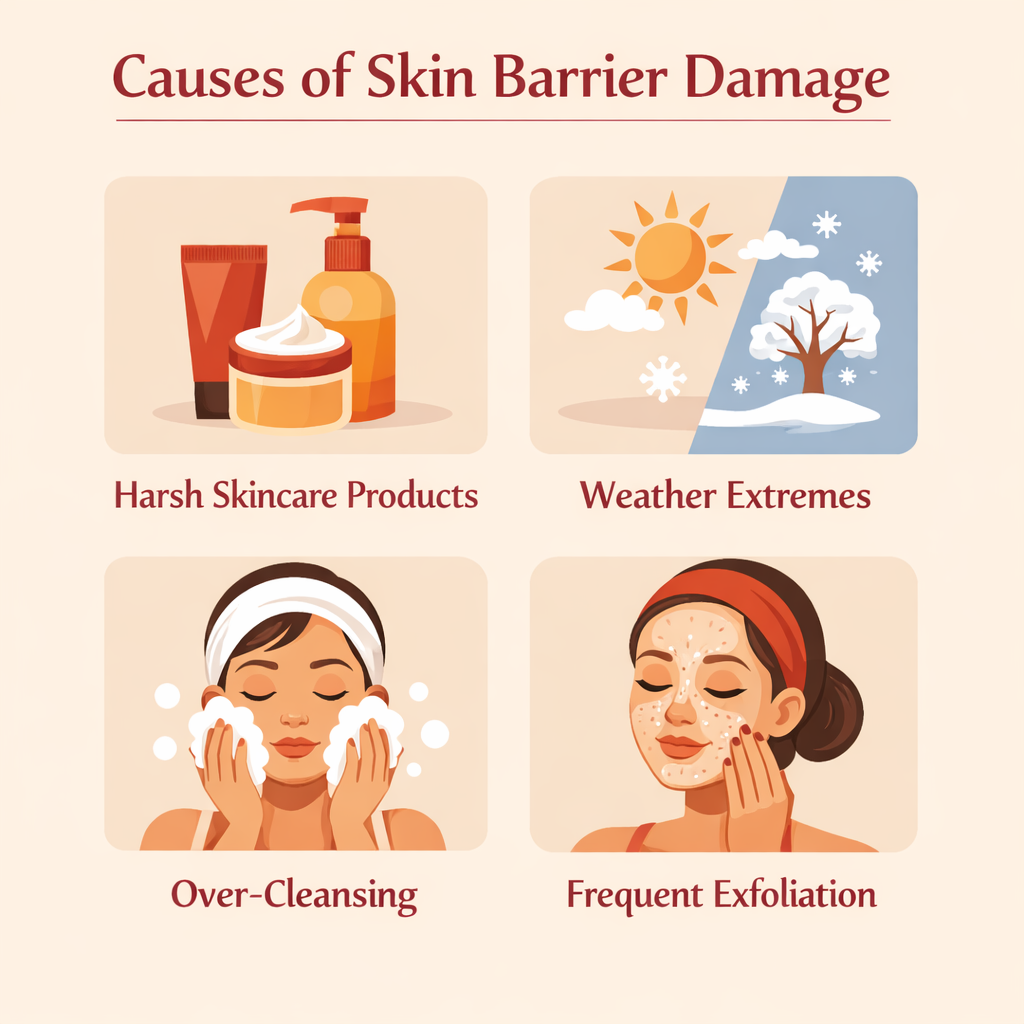
Understanding the causes of skin barrier damage is extremely important because healing the skin always begins with stopping the damage first.
One of the biggest reasons behind barrier damage today is over-exfoliation. Many people use physical scrubs, AHAs, BHAs, peels, and retinol too frequently without giving their skin enough recovery time. While these ingredients can improve skin when used correctly, excessive use weakens the protective barrier and increases sensitivity.
Harsh face washes are another major culprit. Cleansers containing sulfates or high-foam formulations strip away natural oils necessary for maintaining barrier health. That “squeaky clean” feeling after washing is actually a sign that your skin has been over-cleansed.
Sun exposure also plays a huge role in weakening the skin barrier. UV rays damage collagen, increase inflammation, and trigger pigmentation while slowing down the skin’s healing ability.
Pollution and dust increase oxidative stress and irritate the skin daily, especially in crowded urban environments. Smoking, lack of sleep, stress, dehydration, poor nutrition, and excessive skincare layering can also negatively affect barrier health over time.
In many cases, skin barrier damage is not caused by one single product or mistake. It usually happens slowly because of repeated stress and irritation.
10 Best Dry Skin Foundation Tips In India
How to Repair Your Skin Barrier Naturally
Healing your skin barrier naturally requires patience, consistency, and simplicity. Your skin already knows how to repair itself. The goal is simply to create the right conditions for healing.
The first and most important step is removing irritation. If your barrier is damaged, stop using strong active ingredients temporarily. This includes exfoliating acids, scrubs, peels, and harsh acne treatments. Continuing to irritate compromised skin only delays recovery.
Next, switch to a gentle cleanser that cleans without stripping away natural oils. Sulfate-free and pH-balanced cleansers work best because they maintain the skin’s natural protective environment.
Moisturising properly is essential for skin barrier repair. Ceramide-based moisturisers are especially effective because ceramides naturally exist inside the skin barrier and help rebuild damaged areas. Ingredients like cholesterol, fatty acids, panthenol, and squalane further improve hydration and support healing.
Hydration is another critical part of recovery. Ingredients like hyaluronic acid and glycerin help attract water into the skin and improve moisture retention. Niacinamide strengthens the skin barrier while reducing redness and oiliness. Centella asiatica helps calm inflammation and sensitivity.
Daily sunscreen is absolutely necessary during barrier repair. Without sun protection, UV exposure continues damaging the skin and slowing the healing process. Lightweight SPF 30 or higher sunscreen should be applied every morning, even indoors.
Perhaps the most important thing during skin barrier healing is simplifying your routine. You do not need complicated 10-step skincare routines. In most cases, a gentle cleanser, moisturiser, hydrating ingredients, and sunscreen are enough.
Best Ingredients for Skin Barrier Repair
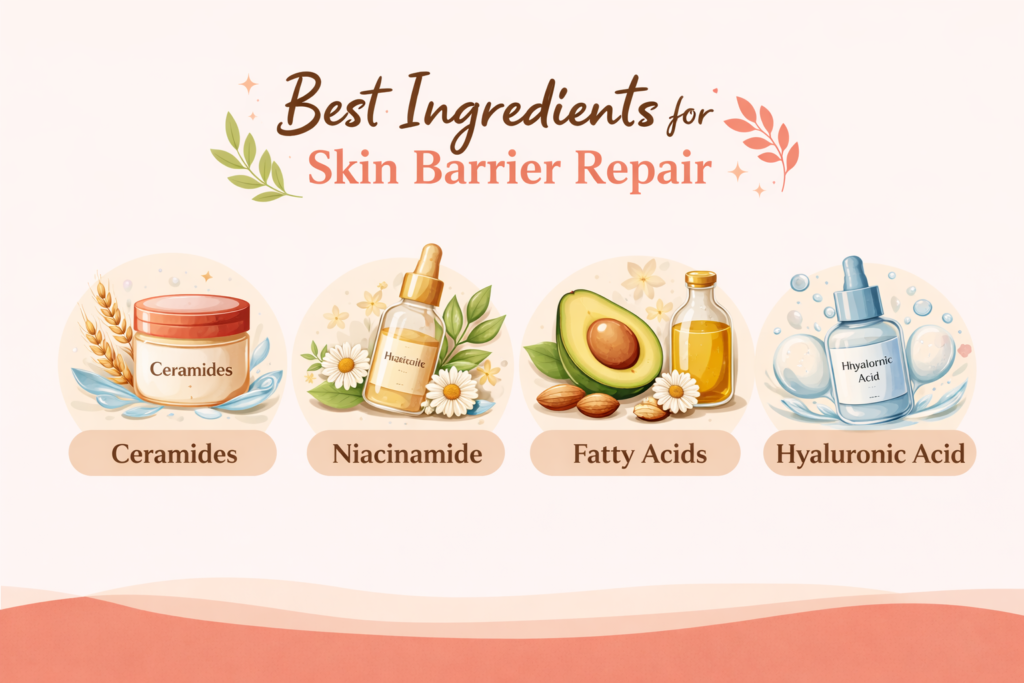
Some skincare ingredients are especially effective for strengthening and restoring the skin barrier.
Ceramides are considered the gold standard for skin barrier repair because they help rebuild the protective lipid layer responsible for preventing moisture loss.
Niacinamide improves barrier strength while reducing redness, sensitivity, and excess oil production. Hyaluronic acid deeply hydrates the skin and helps maintain softness and elasticity.
Panthenol, also known as Vitamin B5, calms irritation and supports skin healing. Centella asiatica reduces inflammation and soothes stressed skin.
Squalane prevents moisture loss without making the skin greasy, while glycerin provides long-lasting hydration. Colloidal oatmeal is particularly beneficial for very sensitive or inflamed skin because of its soothing properties.
When choosing products, focus on gentle formulations rather than aggressive treatments.
Read this: Best Skin Care Routine For Oily Skin in Summer
Best Skincare Routine for Damaged Skin Barrier
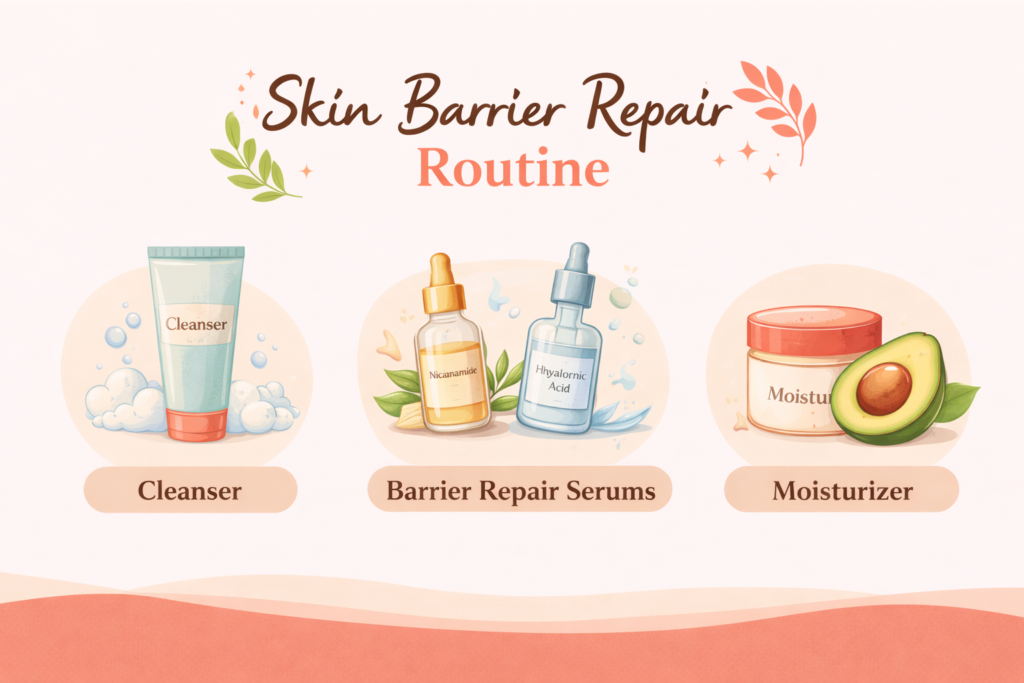
A simple and consistent routine works best during skin barrier repair.
Morning Routine
- Gentle cleanser
- Hydrating serum
- Ceramide moisturiser
- Sunscreen SPF 30+
Night Routine
- Gentle cleanser
- Moisturiser
- Barrier repair cream if needed
Avoid unnecessary products while your skin heals.
Mistakes to Avoid During Skin Barrier Repair
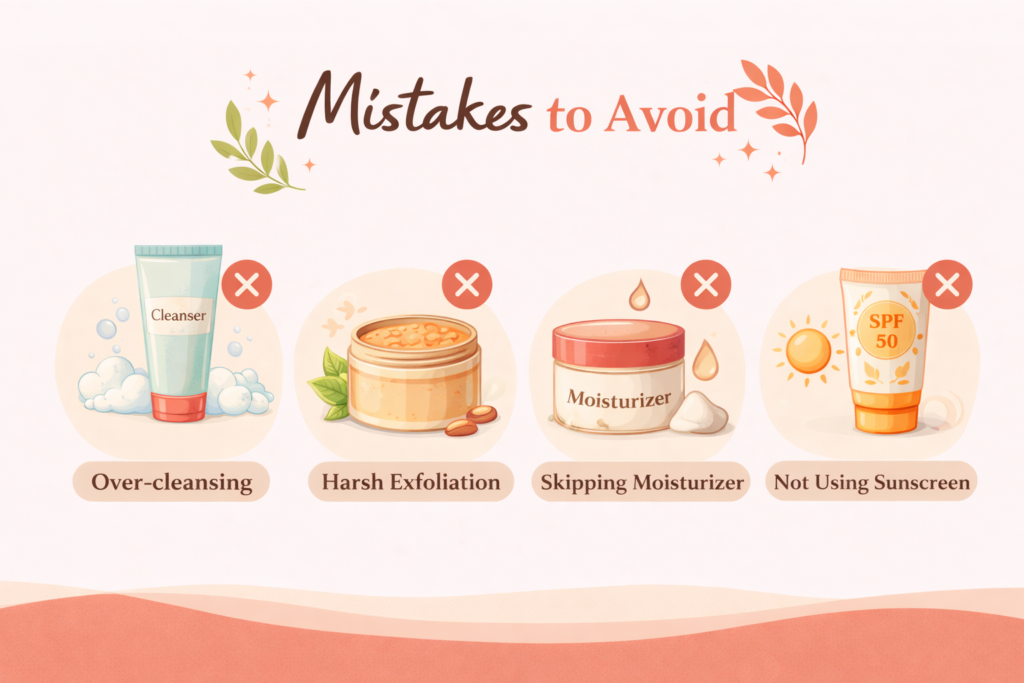
Many people unknowingly slow down their healing process by repeating harmful habits.
Avoid these common mistakes:
- Over-exfoliating the skin
- Using harsh scrubs
- Trying new products every few days
- Using lemon directly on the face
- Skipping moisturiser
- Not wearing sunscreen
- Washing face too often
- Using very hot water
- Layering too many active ingredients
- Sleeping with makeup
Consistency matters far more than aggressive treatments.
Read this: Acne vs Pimples: Key Differences, Causes & Best Treatment
How Long Does Skin Barrier Repair Take?
The healing time depends on how damaged your skin barrier is.
Mild barrier damage may begin improving within a few days once irritation is removed. Moderate damage usually requires around two to four weeks of consistent care, while severe barrier damage may take several months to fully recover.
The healing process also depends on:
- Sleep quality
- Stress levels
- Diet
- Sun exposure
- Product usage
- Hydration
Patience is extremely important because true skin healing takes time.
Diet Tips for Healthy Skin Barrier

Healthy skin is influenced not only by skincare but also by internal nutrition. A nutrient-rich diet helps improve the skin’s natural healing process and supports long-term barrier health.
Foods rich in omega-3 fatty acids, antioxidants, zinc, and vitamin E can strengthen the skin barrier and reduce inflammation.
Excellent foods for healthier skin include:
- Almonds
- Walnuts
- Seeds
- Coconut
- Green vegetables
- Fruits
- Curd
- Healthy fats
Drinking enough water daily is also extremely important, especially during Indian summers when dehydration becomes more common.
Reducing excessive sugar, processed foods, and fried foods may further help reduce inflammation and improve overall skin health.
Read this: 5 Homemade face packs for glowing skin in summer
Frequently Asked Questions (FAQs)
How can I repair my skin barrier naturally?
Use a gentle cleanser, ceramide-based moisturiser, hydrating ingredients, sunscreen, and avoid harsh exfoliants or overusing active ingredients.
What are the signs of a damaged skin barrier?
Dryness, redness, burning sensation, sensitivity, flaky skin, tightness, irritation, and sudden breakouts are common signs.
How long does skin barrier repair take?
Mild damage may heal within a few days, while moderate to severe skin barrier damage can take 2–8 weeks with proper care.
Which ingredients are best for skin barrier repair?
Ceramides, niacinamide, hyaluronic acid, panthenol, centella asiatica, glycerin, and squalane are highly effective for repairing the skin barrier.
Can over-exfoliation damage the skin barrier?
Yes. Excessive use of scrubs, acids, peels, and retinol can weaken the skin barrier and increase sensitivity and inflammation.
Is sunscreen necessary during skin barrier repair?
Yes. Daily SPF protects the skin from UV damage, reduces inflammation, and helps the skin barrier heal faster.
Final Thoughts
Your skin barrier is the foundation of healthy, glowing skin. Without it, even the best skincare products struggle to work properly.
If your skin constantly feels irritated, dehydrated, sensitive, oily, rough, or dull, focusing on skin barrier repair may completely transform your skin health.
Beautiful skin does not come from using the strongest products or following complicated routines. It comes from understanding your skin, protecting it consistently, and supporting its natural healing ability.
Once your skin barrier heals, your skin becomes calmer, smoother, stronger, healthier, and naturally radiant again.
For Indian skin especially, learning how to repair and protect the skin barrier naturally is one of the best long-term investments you can make for maintaining healthy glowing skin.
Read this: Korean Beauty Tips for Glowing Skin

 Admin
Admin
[…] Read this: How to Repair Your Skin Barrier […]
[…] Read this: How to Repair Your Skin Barrier […]
[…] Read this: How to Repair Your Skin Barrier […]