
 Admin
Admin Skin Type Test at Home
Understanding your skin type is the first and most important step in building a skincare routine that actually works. Many people buy expensive skincare products without knowing whether their skin is oily, dry, combination, sensitive, or normal. As a result, they often experience breakouts, dullness, irritation, excessive oiliness, or dryness.
The good news is that you do not need expensive dermatologist appointments or skin analysis machines to understand your skin. You can easily do a skin type test at home using simple household methods.
For Indian skin, identifying your skin type is even more important because weather conditions, pollution, humidity, heat, and lifestyle habits can affect the skin differently across seasons. Whether you live in humid Mumbai, dry Delhi, or hot Rajasthan, your skincare routine should match your skin type.
In this detailed guide, you will learn:
- What skin type actually means
- Why knowing your skin type matters
- The easiest skin type test at home
- Signs of every skin type
- Common mistakes people make
- Best skincare tips for Indian skin
- Home remedies according to skin type
- How seasons affect your skin
.
Why Knowing Your Skin Type Matters
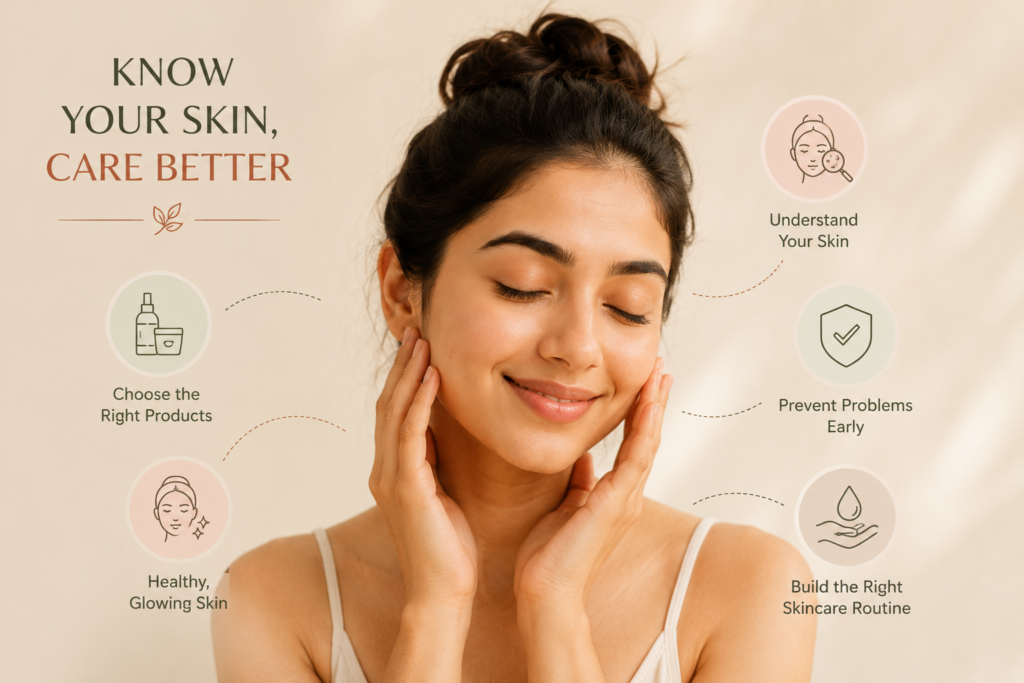
Before buying cleansers, moisturizers, serums, or sunscreens, you need to know what your skin truly needs. Every skin type reacts differently to skincare ingredients, weather, and lifestyle habits. A product that works amazingly for someone else may not work for your skin at all. That is why understanding your skin type helps you create a skincare routine that gives better results with fewer products and less irritation. When you choose skincare according to your skin type, your face looks healthier, brighter, and naturally glowing over time.
10 Best Dry Skin Foundation Tips In India
Using the wrong products can:
- Increase pimples
- Cause dryness and irritation
- Make your face look dull
- Damage your skin barrier
- Trigger excess oil production
- Cause redness and sensitivity
For example:
- Oily skin needs lightweight and oil-controlling products.
- Dry skin needs deep hydration.
- Sensitive skin requires gentle ingredients.
- Combination skin needs balanced care.
When you know your skin type, your skincare routine becomes more effective, affordable, and result-oriented.
What Determines Your Skin Type?
Your skin type is mainly determined by several internal and external factors. Many people think skin type depends only on skincare products, but in reality, your genes, weather, hormones, lifestyle, and age all work together to influence how your skin behaves every day.
Understanding these factors helps you take better care of your skin and choose products that actually suit your needs.
1. Genetics
Your genes play the biggest role in deciding whether your skin naturally produces more or less oil. If your parents have oily skin, there is a high chance that you may also experience oily or acne-prone skin. Similarly, dry or sensitive skin can also run in families.
Genetics mainly affect:
- Oil production
- Pore size
- Skin sensitivity
- Acne tendency
- Skin texture
- Early aging signs
While you cannot change your genetics, understanding them can help you choose the right skincare routine and avoid products that may damage your skin.
2. Climate
Climate has a major impact on Indian skin because weather conditions vary greatly across different regions. Hot summers, humidity, pollution, and dry winters can all change how your skin behaves.
For example:
- Humid weather increases sweating and oil production.
- Dry weather can make skin flaky and dehydrated.
- Pollution can clog pores and cause dullness.
- Strong sunlight may lead to tanning and sensitivity.
People living in coastal cities like Mumbai or Chennai may experience more oily skin due to humidity, while people living in colder regions may struggle more with dryness.
This is why your skincare routine should change according to the season and environment.
3. Hormones
Hormones strongly influence your skin condition and oil production. Hormonal changes can happen during:
- Puberty
- Menstrual cycles
- Pregnancy
- Stress
- PCOS
- Lack of sleep
These fluctuations can increase sebum production, making the skin more oily and acne-prone. Hormonal imbalance can also make the skin sensitive, dull, or dehydrated.
Many Indians notice sudden breakouts, especially around the jawline or chin area, due to hormonal changes.
Maintaining a healthy lifestyle and stress management can help improve hormonal skin issues naturally.
4. Lifestyle
Your daily habits directly affect your skin health and natural glow. Even the best skincare products may not work properly if your lifestyle is unhealthy.
Important lifestyle factors include:
- Diet
- Water intake
- Sleep quality
- Stress levels
- Exercise
- Smoking and alcohol
- Skincare habits
Eating too much junk food, sugary drinks, and oily food may trigger acne and dullness. Lack of sleep can make the skin look tired and dehydrated. High stress levels can increase breakouts and sensitivity.
On the other hand, drinking enough water, eating fruits and vegetables, exercising regularly, and following a simple skincare routine can improve your skin naturally.
5. Age
Skin changes naturally with age because oil production slowly decreases over time. Younger skin usually produces more oil, while mature skin becomes drier and thinner.
As you grow older, you may notice:
- Dryness
- Fine lines
- Loss of elasticity
- Uneven texture
- Reduced natural glow
Collagen production also decreases with age, which affects skin firmness and smoothness.
This is why skincare needs change over time. Teenagers usually focus more on oil control and acne, while mature skin requires hydration, nourishment, and anti-aging care.
Understanding age-related skin changes helps you adapt your skincare routine according to your skin’s current needs instead of following random trends.
The Most Accurate Skin Type Test at Home
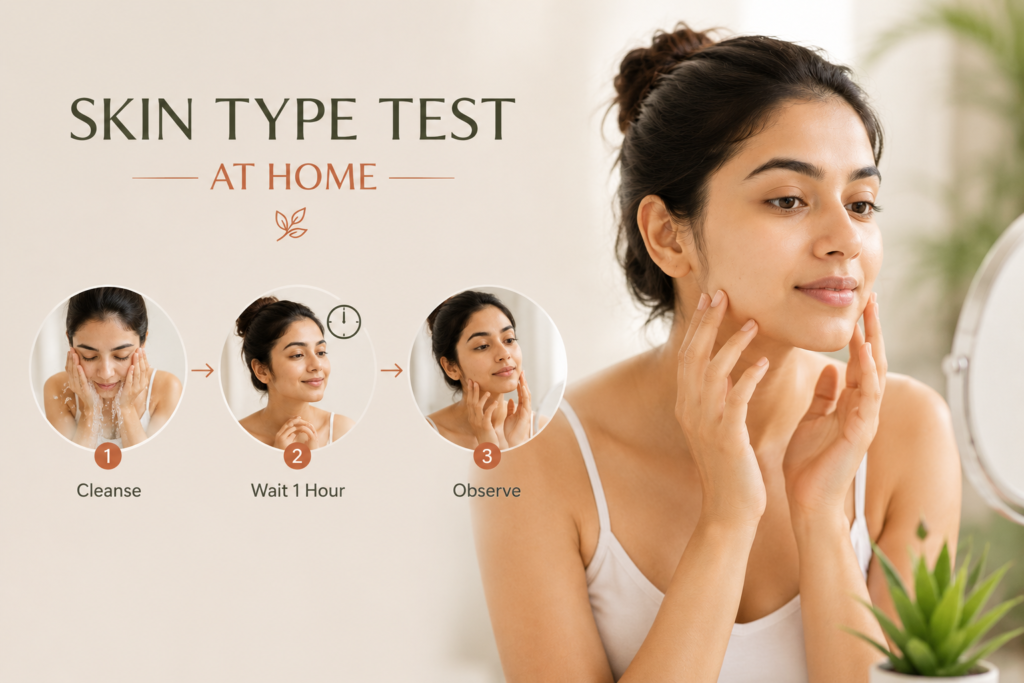
Finding your skin type at home is much easier than most people think. You do not need expensive skincare tools or professional machines to understand your skin. With the right method and careful observation, you can identify whether your skin is oily, dry, combination, sensitive, or normal within a short time.
The best part is that this method is beginner-friendly, affordable, and highly effective for Indian skin types. Since Indian weather conditions include heat, humidity, pollution, and seasonal dryness, understanding your skin properly can help you avoid unnecessary skincare mistakes.
Many people use random products after watching social media trends, but skincare works best only when it matches your actual skin type. That is why doing a proper skin type test at home is the foundation of healthy, glowing skin.
The easiest and most reliable method is the Bare Face Method.
Step-by-Step Skin Type Test at Home
Step 1: Wash Your Face
Use a gentle face wash to clean your face.
Avoid:
- Harsh scrubs
- Strong soaps
- Makeup removers with alcohol
Pat your skin dry with a soft towel.
Step 2: Do Not Apply Anything
Do not apply:
- Moisturizer
- Toner
- Serum
- Sunscreen
- Face oil
Leave your skin completely bare.
Step 3: Wait for 1 Hour
Stay indoors if possible.
Avoid sweating, sun exposure, or touching your face repeatedly.
Step 4: Observe Your Skin
This is the most important part of the skin type test at home. Carefully observe how your skin feels and looks naturally without any skincare products.
Stand near natural light and check different areas of your face closely. Your skin will usually show clear signs that help identify its true type.
Notice whether your face feels:
- Oily or greasy
- Dry or tight
- Soft and balanced
- Sensitive or irritated
- Different in separate areas
Pay extra attention to your T-zone because this area usually produces the most oil.
You should also observe whether your skin feels comfortable or uncomfortable after staying bare for one hour.
People with oily skin generally notice shine quickly, while dry skin often feels stretched or rough. Combination skin shows mixed signs, and sensitive skin may react with redness or irritation.
Now compare your observations below.
After one hour, look carefully at:
- Your T-zone (forehead, nose, chin)
- Cheeks
- Skin texture
- Shine level
- Tightness
- Redness
Now compare your observations below.
1. Oily Skin
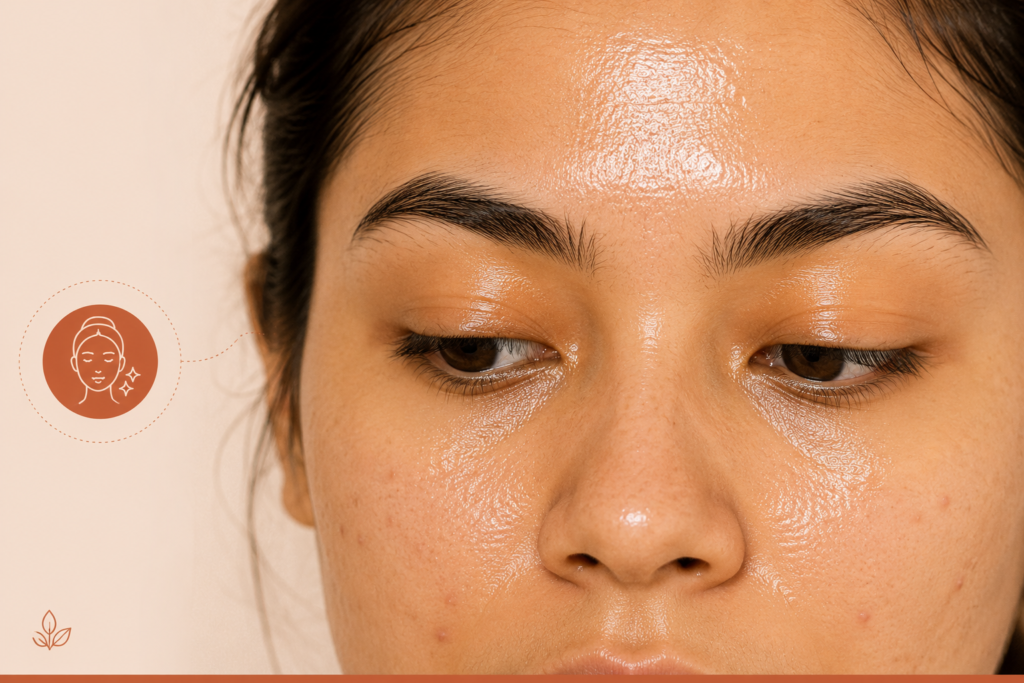
Oily skin is one of the most common skin types among Indians because hot temperatures, humidity, and pollution often increase sebum production. Sebum is the natural oil produced by your skin to keep it moisturized, but when excess oil is produced, it can lead to acne, clogged pores, and unwanted shine.
Many people with oily skin feel their face becomes greasy only a few hours after washing. Makeup may slide off easily, and dust or pollution tends to stick to the skin faster.
Best Skin Care Routine For Oily Skin in Summer
Signs of Oily Skin
You likely have oily skin if your face starts looking shiny within an hour after washing. The T-zone, especially the forehead and nose area, usually becomes greasy very quickly. People with oily skin often experience pimples, acne, blackheads, and visible pores because excess oil easily traps dirt and pollution. Makeup may not stay fresh for long and can melt faster in humid weather. During Indian summers, oily skin often feels sticky and uncomfortable because heat and humidity increase sweat and oil production.
Oily skin is extremely common among Indians because of hot climate conditions and humidity.
Common Problems with Oily Skin
- Acne
- Blackheads
- Whiteheads
- Open pores
- Excess shine
Best Ingredients for Oily Skin
Look for:
- Niacinamide
- Salicylic acid
- Tea tree
- Clay
- Gel-based moisturizers
Ingredients to Avoid
- Heavy oils
- Thick creams
- Harsh alcohol-based products
Home Remedies for Oily Skin
Multani Mitti Face Pack
Mix:
- 2 spoons multani mitti
- Rose water
Apply for 10 minutes.
This helps absorb excess oil and refresh the skin.
Ice Cubes
Rubbing ice cubes gently can temporarily reduce oiliness and tighten pores.
2. Dry Skin
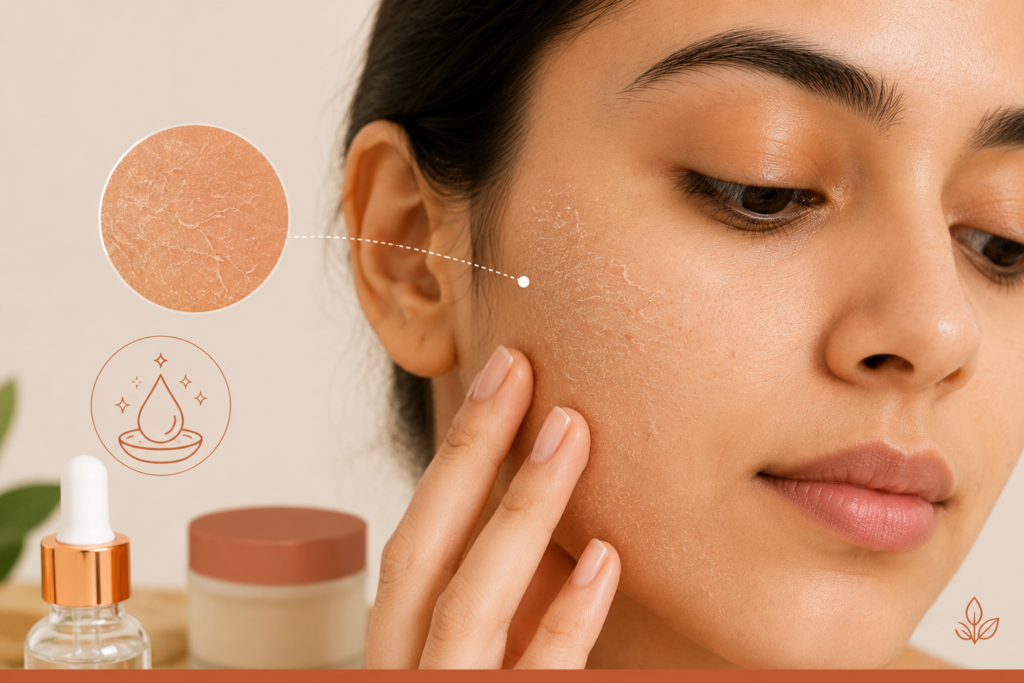
Dry skin lacks sufficient natural oils, which makes the skin feel rough, tight, and dehydrated. People with dry skin often struggle with flakiness, dullness, and irritation, especially during winter or in air-conditioned environments.
Indian skin can become even drier due to harsh soaps, over-cleansing, hot water, and environmental pollution. If dry skin is not cared for properly, it may lose its natural glow and develop premature fine lines over time.
Signs of Dry Skin
You may have dry skin if your face feels stretched or tight after cleansing. The skin may look rough, flaky, or dull, especially around the cheeks and mouth area. Makeup often appears patchy because dry areas absorb products unevenly. Many people with dry skin also notice that fine lines become more visible when the skin lacks hydration. During winter or in air-conditioned rooms, dry skin can feel itchy, uncomfortable, and lifeless if proper moisturization is not maintained.
Dry skin often becomes worse in air-conditioned rooms and winter weather.
Common Problems with Dry Skin
- Flakiness
- Itching
- Dullness
- Premature aging
- Skin irritation
Best Ingredients for Dry Skin
Choose products with:
- Hyaluronic acid
- Ceramides
- Shea butter
- Glycerin
- Aloe vera
Ingredients to Avoid
- Harsh foaming cleansers
- Alcohol-heavy toners
- Over-exfoliation
Home Remedies for Dry Skin
Honey and Milk Pack
Mix:
- 1 spoon honey
- 2 spoons raw milk
Apply for 15 minutes.
This deeply hydrates and softens the skin.
Aloe Vera Gel
Fresh aloe vera helps calm dryness and improve hydration.
3. Combination Skin
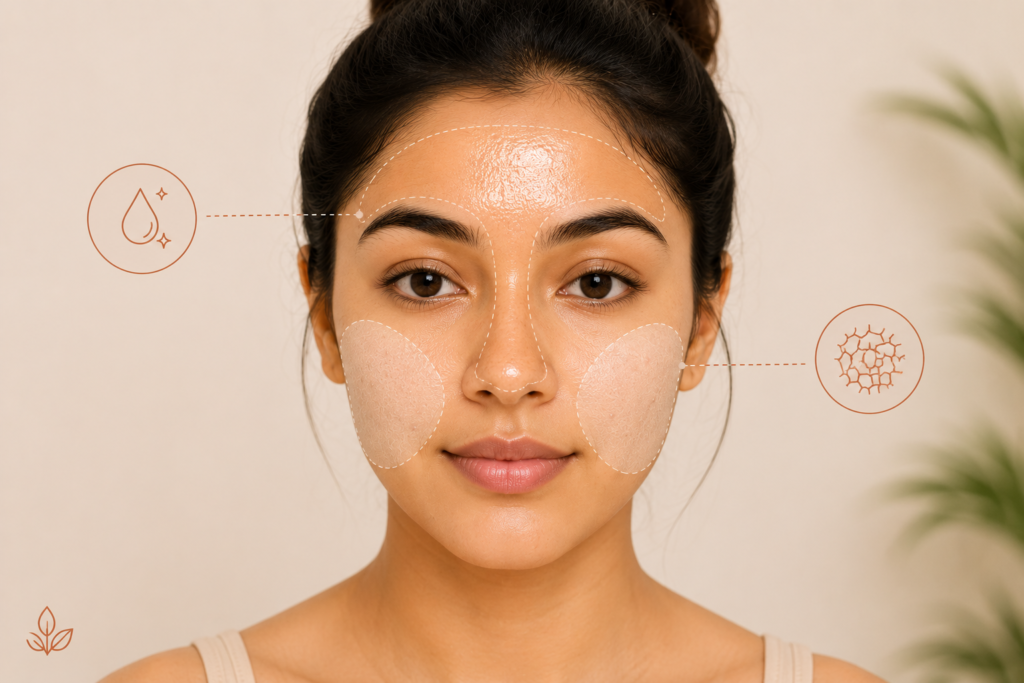
Combination skin is one of the trickiest skin types because different parts of the face behave differently. Usually, the T-zone becomes oily while the cheeks remain dry or normal.
This skin type is extremely common in India due to changing weather conditions and humidity levels. Many people with combination skin feel confused while choosing skincare products because products for oily skin may dry out the cheeks, while rich moisturizers may make the T-zone greasy.
Signs of Combination Skin
Combination skin means your face has both oily and dry areas at the same time. Usually, the forehead, nose, and chin become oily while the cheeks remain normal or slightly dry. People with combination skin often notice that pimples mainly appear around the T-zone, while other parts of the face may feel balanced or dehydrated. This mixed skin behavior can make skincare confusing because one product may not suit the entire face equally.
Combination skin is one of the most common skin types in India.
Common Problems with Combination Skin
- Uneven texture
- Confusing skincare needs
- Seasonal imbalance
- Breakouts in oily areas
Best Ingredients for Combination Skin
- Lightweight moisturizers
- Niacinamide
- Gel creams
- Gentle cleansers
Home Remedies for Combination Skin
Curd and Besan Pack
Mix:
- 1 spoon curd
- 1 spoon besan
Apply for 10 minutes.
This balances oil while keeping skin soft.
Cucumber Juice
Cucumber naturally refreshes oily areas without drying the skin.
5 Homemade face packs for glowing skin in summer
4. Sensitive Skin
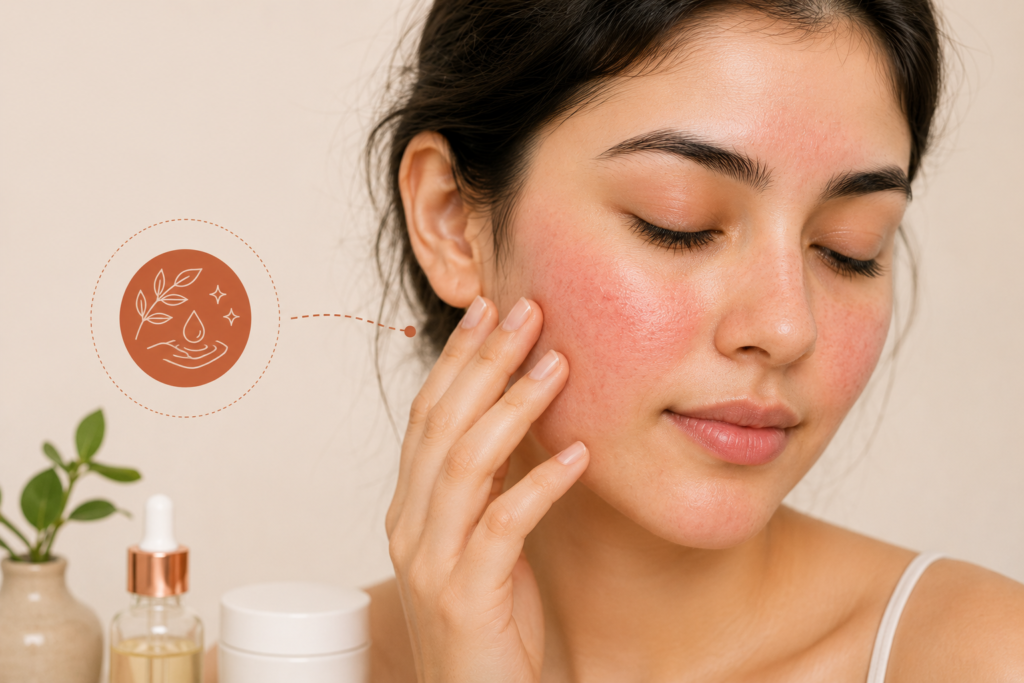
Sensitive skin requires extra care because it reacts easily to skincare products, weather changes, pollution, or harsh ingredients. People with sensitive skin often experience redness, itching, burning, or irritation after using unsuitable products.
Sensitive skin is not always a separate skin type. You can have oily-sensitive skin, dry-sensitive skin, or combination-sensitive skin.
Indian skin is often exposed to strong sunlight, dust, and pollution, which can worsen sensitivity and damage the skin barrier over time.
Signs of Sensitive Skin
Sensitive skin reacts very quickly to external factors like skincare products, sunlight, dust, pollution, or weather changes. If your skin frequently feels itchy, irritated, red, or uncomfortable after trying new products, there is a strong possibility that your skin is sensitive. Fragrance-based products and harsh exfoliants can easily trigger burning or stinging sensations. Indian weather conditions, especially heat and pollution, can further weaken the skin barrier and increase sensitivity.
Sensitive skin can exist with oily, dry, or combination skin.
Common Triggers
- Strong fragrances
- Alcohol-based skincare
- Harsh exfoliants
- Pollution
- Sun exposure
Best Ingredients for Sensitive Skin
Look for:
- Centella asiatica
- Aloe vera
- Oat extract
- Ceramides
- Panthenol
Ingredients to Avoid
- Artificial fragrance
- Strong acids
- Harsh scrubs
- Excess essential oils
Home Remedies for Sensitive Skin
Oatmeal Paste
Mix oats with water to create a calming paste.
This helps reduce irritation and redness.
Chilled Aloe Vera Gel
Aloe vera cools and soothes inflamed skin naturally.
5. Normal Skin
Normal skin is considered balanced, healthy, and naturally comfortable. It is neither too oily nor too dry and usually has fewer skin concerns compared to other skin types.
People with normal skin generally have smooth texture, small pores, and a healthy natural glow. However, this does not mean normal skin can be ignored. Proper skincare is still important to maintain hydration, brightness, and long-term skin health.
Signs of Normal Skin
Normal skin usually feels balanced, comfortable, and healthy throughout the day. It does not become extremely oily or excessively dry, and breakouts are generally less common. The skin texture often looks smooth with smaller pores and a natural glow. People with normal skin usually do not experience major irritation or sensitivity unless harsh products are used. However, maintaining proper skincare is still important to keep the skin healthy in the long run.
How to Maintain Normal Skin
Even normal skin needs care.
Focus on:
- Hydration
- Sunscreen
- Gentle cleansing
- Healthy diet
- Consistent skincare
Best Home Remedies for Normal Skin
Tomato and Honey Pack
This helps maintain natural brightness.
Rose Water Mist
Rose water refreshes and balances the skin.
The Tissue Paper Skin Type Test
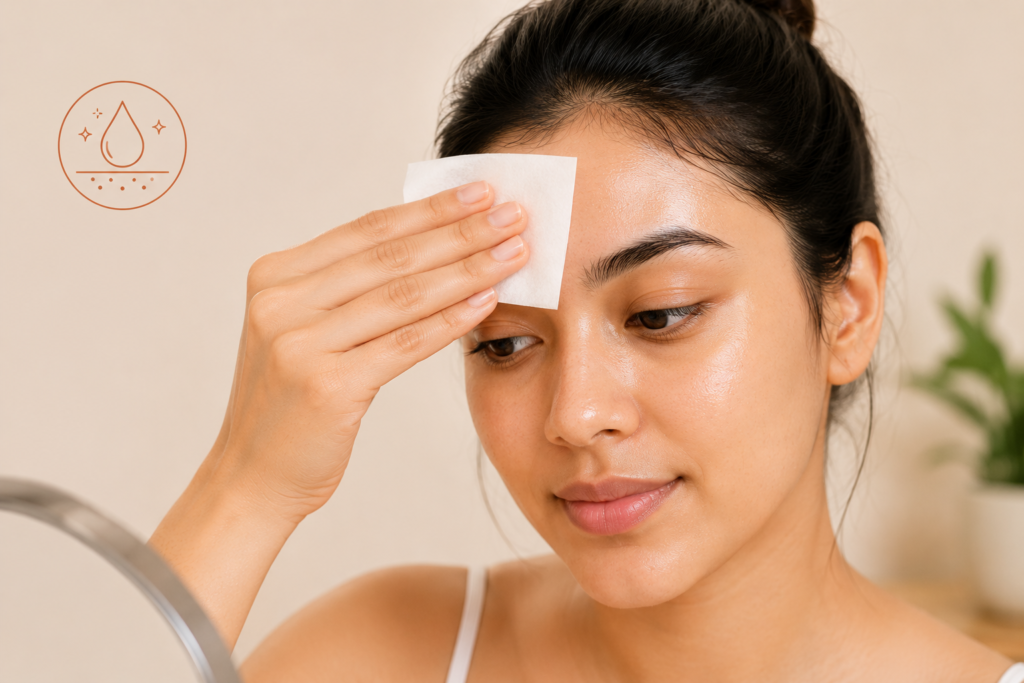
If you want another quick and simple method, the tissue paper test is also very effective. This method helps identify how much oil different areas of your face produce naturally.
It is especially useful for beginners who feel confused between oily, dry, and combination skin types.
Another easy method is the tissue paper test.
How to Do It
Step 1
Wash your face and wait for one hour.
Step 2
Press tissue paper on different areas of your face.
Results
- Excess oil everywhere = Oily skin
- Oil only on T-zone = Combination skin
- Little to no oil = Dry or normal skin
- Redness or irritation = Sensitive skin
This method is simple and useful for beginners.
How Indian Weather Affects Your Skin Type
Indian weather plays a huge role in changing skin behavior throughout the year. Your skin may not feel the same in summer, winter, or monsoon because temperature, humidity, and pollution levels continuously affect oil production and hydration.
This is why many people notice that their skin becomes oily during summer but dry during winter.
Understanding seasonal skin changes can help you adjust your skincare routine more effectively and maintain healthy glowing skin all year round.
Indian climate changes can temporarily affect skin behavior.
Summer
- More sweating
- Increased oil production
- Frequent acne
- Sun tanning
Monsoon
- Sticky skin
- Fungal infections
- Blocked pores
Winter
- Dryness
- Flaky skin
- Tightness
- Dehydration
Because of seasonal changes, your skincare routine should also change.
Common Mistakes While Identifying Skin Type
Many people incorrectly identify their skin type because they test their skin the wrong way or misunderstand certain skin conditions. As a result, they end up using unsuitable products that worsen acne, dryness, irritation, or dullness.
Avoiding these common mistakes can help you understand your skin more accurately and choose better skincare products.
Many people incorrectly identify their skin because of these mistakes.
1. Testing Immediately After Washing
Skin naturally feels dry after cleansing.
Wait at least one hour.
2. Using Harsh Face Wash
Strong cleansers temporarily remove oil and confuse results.
3. Ignoring Seasonal Changes
Your skin may behave differently in summer and winter.
4. Overusing Skincare Products
Too many active ingredients can damage the skin barrier.
5. Confusing Dehydrated Skin with Dry Skin
Dehydrated skin lacks water, while dry skin lacks oil.
Even oily skin can become dehydrated.
Acne vs Pimples: Key Differences, Causes & Best Treatment
Difference Between Dry and Dehydrated Skin
Many Indians confuse dry skin with dehydrated skin, but they are completely different conditions.
Dry skin is a permanent skin type that naturally produces less oil, while dehydrated skin is a temporary condition caused by lack of water in the skin.
Even people with oily skin can experience dehydration due to weather changes, excessive face washing, lack of water intake, or overuse of active ingredients.
Understanding this difference is important because treating dehydrated skin like dry skin can sometimes worsen breakouts or oiliness.
Many Indians confuse these two conditions.
Dry Skin
- Permanent skin type
- Produces less oil
- Needs nourishing products
Dehydrated Skin
- Temporary condition
- Lacks water
- Can happen to any skin type
Signs of Dehydrated Skin
- Tightness
- Dullness
- Fine lines
- Tired appearance
Drink enough water and use hydrating skincare.
Best Daily Skincare Routine According to Skin Type
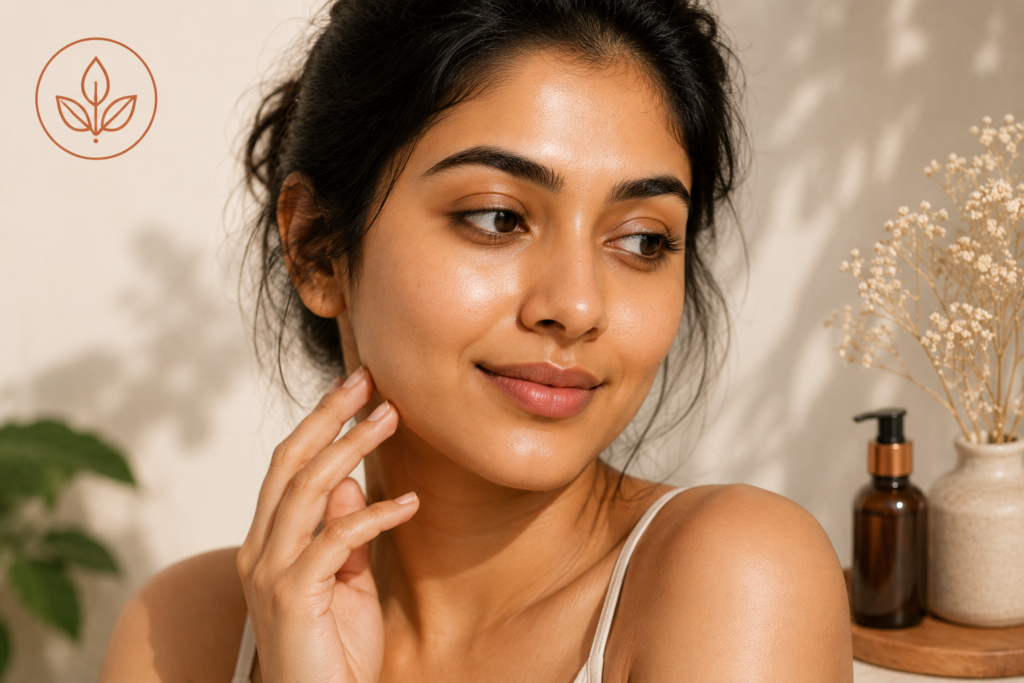
Once you identify your skin type, building the right skincare routine becomes much easier. A proper skincare routine helps maintain balance, prevents common skin issues, and improves your natural glow over time.
The key is to keep your routine simple, consistent, and suitable for your skin’s specific needs.
Below are beginner-friendly skincare routines according to different skin types.
Best Skin Care Tips and Routine for Glowing & Healthy Skin
For Oily Skin
Morning
- Gentle cleanser
- Niacinamide serum
- Gel moisturizer
- Sunscreen
Night
- Face wash
- Salicylic acid (2-3 times weekly)
- Lightweight moisturizer
For Dry Skin
Morning
- Cream cleanser
- Hydrating serum
- Thick moisturizer
- Sunscreen
Night
- Gentle cleanser
- Ceramide cream
- Face oil if needed
For Combination Skin
Morning
- Mild cleanser
- Lightweight moisturizer
- Sunscreen
Night
- Gentle cleanser
- Hydrating gel cream
For Sensitive Skin
Morning
- Fragrance-free cleanser
- Soothing moisturizer
- Mineral sunscreen
Night
- Gentle cleansing
- Barrier repair cream
Foods That Support Healthy Skin
Healthy glowing skin is not only created by skincare products. Your daily diet also plays a major role in improving skin texture, hydration, and brightness.
Many skin issues like acne, dullness, dehydration, and inflammation are often connected to unhealthy eating habits.
Eating nutrient-rich foods helps your skin repair itself naturally and maintain a fresh glow from within.
Beautiful skin is not only about skincare products.
Eat More
Try adding more fresh fruits, cucumber, coconut water, nuts, yogurt, and green vegetables to your daily diet because these foods help improve hydration and support healthy glowing skin naturally. Foods rich in vitamins, antioxidants, and healthy fats can make the skin look fresher and healthier over time.
Avoid Excess
Too much fried food, sugary drinks, processed snacks, and junk food can trigger acne, dullness, and inflammation. Excess dairy may also worsen breakouts for some people. Maintaining a balanced diet can significantly improve your skin’s overall appearance and texture.
Healthy eating improves your natural glow from within.
When Should You Visit a Dermatologist?
Home skin type tests are useful, but you should consult a dermatologist if you experience:
- Severe acne
- Continuous irritation
- Skin allergies
- Painful breakouts
- Sudden pigmentation
- Persistent redness
Professional advice can help prevent long-term skin damage.
Final Thoughts
Understanding your skin type is one of the smartest skincare decisions you can make. Once you know whether your skin is oily, dry, combination, sensitive, or normal, choosing the right products becomes much easier and more effective.
A proper skin type test at home can help you avoid wasting money on unsuitable products and protect your skin from unnecessary irritation.
The best skincare routine is not the most expensive one — it is the one that suits your skin properly.
With the right care, consistency, healthy habits, and suitable products, achieving naturally glowing skin becomes much more realistic.
Doing a skin type test at home is simple, free, and extremely important for building an effective skincare routine.
Once you understand your skin type, you can:
- Choose the right products
- Avoid skin irritation
- Improve your natural glow
- Prevent acne and dryness
- Save money on unnecessary products
Indian skin faces unique challenges like heat, humidity, pollution, and tanning, so personalized skincare matters more than trends.
Remember that your skin can change over time due to weather, hormones, stress, and lifestyle. Recheck your skin type every few months and adjust your skincare routine accordingly.
Healthy skin is not about using expensive products. It is about understanding what your skin truly needs.
Korean Beauty Tips for Glowing Skin
Frequently Asked Questions (FAQs)
1. What is the most accurate skin type test at home?
The bare face method is considered one of the easiest and most reliable ways to identify your skin type at home. In this method, you wash your face with a gentle cleanser, leave it completely product-free for about one hour, and then observe how your skin behaves naturally. If your face becomes greasy, your skin is likely oily, while tightness and flakiness usually indicate dry skin. This method works well because it allows your natural oil production to become visible without interference from skincare products.
2. Can skin type change over time?
Yes, your skin type and skin condition can change over time due to factors like age, weather, hormones, stress, lifestyle, and skincare habits. For example, many teenagers experience oily skin because of hormonal activity, while skin often becomes drier with age. Seasonal changes can also affect your skin temporarily. Your face may feel oily during summer but dry during winter. That is why it is important to observe your skin regularly and adjust your skincare routine accordingly.
3. Which skin type is most prone to acne?
Oily skin is generally more prone to acne because excess oil can mix with dirt, sweat, and dead skin cells, leading to clogged pores. This often results in blackheads, whiteheads, pimples, and acne breakouts. However, acne can also occur on combination or sensitive skin if the skin barrier becomes damaged or pores remain blocked for long periods.
4. Is sensitive skin a separate skin type?
Sensitive skin is usually considered a skin condition rather than a completely separate skin type. You can have oily-sensitive skin, dry-sensitive skin, or combination-sensitive skin. Sensitive skin reacts easily to harsh ingredients, weather changes, fragrances, and pollution. Redness, itching, burning, or irritation are common signs of sensitivity.
5. Which skin type is most common in India?
Combination skin and oily skin are extremely common among Indians because of hot temperatures, humidity, sweating, and pollution. Many people experience an oily T-zone while the cheeks remain normal or slightly dry. Indian weather conditions can also make the skin behave differently in different seasons.
6. How often should I test my skin type?
You should ideally check your skin type every few months or whenever you notice major skin changes. Seasonal weather, hormonal fluctuations, stress, or changes in skincare products can affect your skin’s behavior over time. Regular observation helps you update your skincare routine according to your skin’s current needs.
7. Can I use home remedies daily?
Gentle home remedies like aloe vera gel, rose water, cucumber juice, or honey can usually be used regularly in moderation. However, strong DIY treatments containing lemon, baking soda, or excessive exfoliation should not be used daily because they may damage the skin barrier and increase sensitivity.
8. How do I know if my skin is dehydrated or dry?
Dry skin naturally produces less oil, while dehydrated skin lacks water. Dehydrated skin often feels tight, dull, and tired even if it becomes oily during the day. Drinking enough water and using hydrating products can help improve dehydration.
9. Can oily skin skip moisturizer?
No, oily skin still needs moisturizer. Skipping moisturizer can actually make oily skin produce even more oil to compensate for the lack of hydration. Lightweight gel-based moisturizers work best for oily skin.
10. Why does my skin type feel different in every season?
Weather changes directly affect oil production and hydration levels. During summer, heat and humidity can increase oiliness and sweating, while winter often causes dryness and dehydration. This seasonal shift is completely normal and is one reason why your skincare routine should change throughout the year.

 Admin
Admin
[…] Read this: Skin Type Test at Home […]
[…] Read this: Skin Type Test at Home […]
[…] Read this: Skin Type Test at Home […]
[…] Read this: Skin Type Test at Home […]
[…] Read this: Skin Type Test at Home […]
[…] If you are confused about your skin type before trying home remedies, first read our guide on: Skin Type Test at Home […]
[…] Read this: Skin Type Test at Home […]