 Admin
Admin Introduction
Walk past any beach shack in Goa or a roadside stall in Chennai all summer long, and you will find coconut water bought because the refreshment of closing to the Indian heat. But in previous years, this humble beverage has passed hydration and found its way into skincare exercises in Indian pharmacies, DIY face masks, or even on the shelves of branded cosmetics. This raises the real, sane question: Does coconut water really work for pores and skin, or is there some other social media trend that is clearly driving the natural, healthy image of coconut?
The answer lies somewhere between exaggerated claims and complete withdrawal. Coconut water obviously does contain useful nutrients — electrolytes, cytokinins, and small amounts of vitamin C — which give real, albeit modest, blessings when used effectively on the skin It’s not always a miracle remedy for acne or aging, yet additionally not just hype; Information precisely what it can and cannot do enables you to handle it sensitively in preference to predicting outcomes it was by no means able to fit.
This guide covers the real technology behind coconut water for pores and skin, realistic methods for humans to use it for domestic and common mistakes, and what dermatologists honestly think about incorporating the herbal aspect of Indian skin care, simple control, heat, humidity and sun exposure divides
Is coconut water good for skin?
Yes, coconut water is right for the skin in moderation. It contains electrolytes, herbal sugars, small amounts of nutrition C and cytokinins to aid hydration and some antioxidant benefits when applied topically or eaten frequently It works quality as a supportive hydrating product, not as a substitute for whole skin care ordinary.
Table of Contents
- What Is Coconut Water and Why It’s Used in Skincare
- Key Benefits of Coconut Water for Skin
- Drinking Coconut Water vs Applying It Topically
- How to Use Coconut Water for Skin at Home
- Common Mistakes to Avoid
- Myths vs Facts About Coconut Water for Skin
- Expert Tips for Best Results
- Who Should Be Cautious
- Conclusion
- FAQs
What Is Coconut Water and Why It’s Used in Skincare

Coconut water is a clear liquid observed inside young inexperienced coconuts, surprisingly different from coconut milk, which is extracted from the grated flesh of an adult coconut and fatty This difference matters because many people confuse them, assuming coconut water is heavy or smooth, when in reality it is made of about 95% water It’s a light, watery liquid, alongside natural sugars, and small amounts of potassium and sodium and other electrolytes, nutrients and plant compounds.
Especially in skin care coconut water has gained attention due to electrolyte content content especially potassium, which works in preserving proper mobile hydration Skin cells, like every cell within the body, rely on balanced awareness of electrolytes to optimally feature, can provide, what is known as a layer cornea .
Coconut water also contains cytokinins and plant hormones that modulate mobile growth and division. Some early-stage studies suggest that cytokinins may also house antioxidants and guide pores and skin mobile health, although research on topical skin software in particular is limited compared to additional hook-up elements like dietary C or niacinamide This is important for Indian readers The difference can be discerned because marketing claims frequently overstate the energy of this evidence.
For Indian audiences, especially coconut water holds an additional practical appeal: clean widely available from roadside companies in most cities, and culturally familiar reliable, practiced for generations as herbal medicine, especially in coastal states like Kerala, Tamil Nadu and Goa where fresh coconut is not part of ordinary existence
Read this: Gel vs Cream Moisturizer
Key Benefits of Coconut Water for Skin
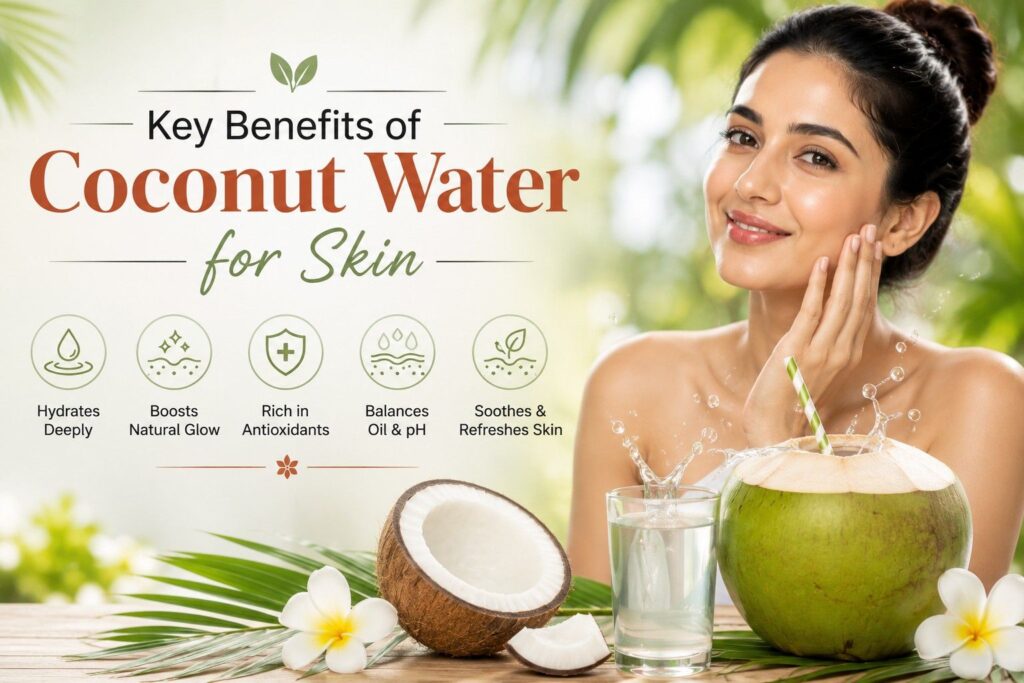
Coconut water offers several genuine, research-supported benefits for skin, though it’s important to view these as complementary support rather than standalone treatments for specific skin concerns.
1. Mild Surface Hydration
The primary and most reliable benefit of coconut water for the skin is light, brief surface hydration. Because it uses a composition rich in electrolytes and almost all water, applying it topically, which includes through a comfortable cotton pad wipe, can provide a fresh, soft hydrating sensation, especially beneficial all through Indian summers when pores and skin sweated simultaneously from heat and humidity mixed with regular AC, . Sticky, dehydrating and feels exposure intestines.
This hydrating effect, however, is of course instantaneous and bottom-digit, lasting a few hours at most, because coconut water lacks committed moisturizing elements like hyaluronic acid or glycerin in occlusive or humidifying houses, which can be formulated primarily to lock in moisture for longer Quality acts as a refreshing precursor before applying a moisturizer
2. Antioxidant Support Against Environmental Damage
Coconut water contains trace amounts of dietary C and many polyphenols, both of which house antioxidants that help neutralize free radicals caused through UV promotion and pollutants — every Indian skin big issue to face extreme solar and, in many cities, excessive air pollution at some stage of the year Steps.
That said, awareness of these antioxidants in coconut water is exponentially lower than specially formulated dedicated serums with stabilized vitamin C in powerful percentages This method can give coconut water a moderate pro boost, mainly consumed as a drink as opposed to topically, but your pores and skin It should not be relied upon as the primary antioxidant defense strategy
3. Soothing Effect for Mildly Irritated Skin
Many humans document a cooling, soothing sensation when applying cool coconut water to sunburnt or heat-challenged pores and skin, not uncommon throughout Indian summer after extended outdoor promotion This soothing effect likely comes from the easy cooling temperature of liquid combined with electrolyte content, in preference to any specific medicinal properties special to coconut water itself .
While it may provide real comfort for minor sunburn or heat rash, it is important to note that coconut water does not prevent cellular degree sunburn and should never update proper solar protection or medical care for extreme sunburn, that dedicated aloe vera-based total goods or, in severe cases, professional medical interest calls out.
4. Support for Acne-Prone and Oily Skin
Some anecdotal reviews propose that coconut water allows consistency smoother skin, although the scientific basis for this unique declaration is weak compared to its hydrating blessing. The theory suggests that proper hydration, even a light source like coconut water, can additionally help prevent the skin from overproducing oil in response to dehydration, a phenomenon dermatologists must take into account in cases of chronically under-moisturised skin.
For obviously acne-prone skin, though, coconut water should be considered a moderate pro project at best, no longer the number one acne treatment, as it lacks the targeted antibacterial or oil-regulating houses discovered in ingredients like salicylic acid or niacinamide, which have significantly stronger clinical evidence behind pimple-fighting efficacy
Drinking Coconut Water vs Applying It Topically
A genuinely useful distinction for readers to understand is that drinking coconut water and applying it directly to skin offer somewhat different benefits, and conflating the two often leads to unrealistic expectations about topical use specifically.
| Aspect | Drinking Coconut Water | Applying Topically |
| Main Benefit | Whole-body hydration, electrolyte balance | Temporary surface cooling and mild hydration |
| Absorption | Full nutrient absorption through digestion | Limited absorption through skin barrier |
| Best Use Case | Daily hydration, especially in summer | Quick refresh, mild sunburn soothing |
| Scientific Support | Well established for hydration | Limited, mostly anecdotal for skin-specific claims |
| Practicality for Indian Climate | Excellent, especially April to June | Useful as a supplementary step, not standalone |
As this comparison shows, drinking coconut water regularly, particularly during peak Indian summer months, offers more reliably established benefits for overall hydration, which does indirectly support healthier-looking skin from within, since well-hydrated skin generally appears more plump and less prone to dryness-triggered oiliness. Topical application, while pleasant and mildly beneficial, should be viewed as a supplementary refreshing step rather than a core treatment strategy, given the more limited direct absorption through the skin barrier.
How to Use Coconut Water for Skin at Home
Using coconut water correctly, both topically and through diet, helps maximize whatever genuine benefits it can offer without creating unrealistic expectations or unnecessary skin issues.

The most effective technique for topical use is to cool fresh coconut water in the refrigerator for about thirty minutes, then use it to lubricate the skin using a cotton swab, gently wiping across the face and neck It works beautifully after a domestic return from arrival and departure, providing a light, cooling sensation before you preserve it with different skin care products, including regular moisturizers.
Coconut water is also a simple DIY mouth p.C. Through the combination of multani mitti (fuller’s earth) or besan with tablespoon after tablespoon, to develop a light, hydrating mask suitable for oily regular skin types. This should be left on for ten to fifteen minutes before washing with lukewarm water, and to prevent all clay-based products from over-drying the skin, it should not be applied more than twice a week .
For sunburnt or heat-traumatized skin, soaking oily in cold coconut water and gently improvising on affected areas for five to 10 mins can provide soothing relief, although this needs to be regarded as comfort care as opposed to remedy, where proper sun protection is ultimately a priority. On the nutritional side, drinking one to two glasses of fresh coconut water daily, especially at some point during the summer months, helps with general square hydration, which rounds up a healthier internal moisture score and gives skin-look benefits over time, something I personally find no amount of topical product can quite mirror
Read this: How Diet Affects Skin Health
Common Mistakes to Avoid
Several common mistakes reduce the effectiveness of coconut water in a skincare routine or lead to unrealistic expectations about what it can genuinely achieve.

A common mistake is waiting for coconut water to completely replace the right moisturizer, based entirely on its natural, hydrating identity although it offers soft bottom freshening yet lacks the desired moisture barrier housing for lasting hydration, meaning pores and skin can feel refreshed quickly but within an hour once again are dry or without proper observation-up- moisturizer.
Another common mistake is using packaged sweetened coconut water items often loaded with brought sugar and preservatives for topical use instead of fresh natural coconut water These inserted ingredients can potentially clog pores or argue stickiness in pores and skin, basically the purpose of using the “natural” side within the first region They can defeat
Many humans additionally follow coconut water at once energetic zits or open wounds, assuming its herbal onset universally secures that while usually mild, whatever on broken or actively inflamed pores skin, utilizing it can enter the microbe, and generally of avoiding until pores and skin heal There is a need Lastly, a few humans leave coconut water on their skin for long periods of time, assuming better absorption way longer contact time. In truth, once the liquid dries on the surface of the skin, it leaves mostly herbal sugars and minerals, which leaves strongly with staying hydrated, which means that fifteen to 20 minutes of touch time basically provides the same benefits as leaving for hours
Myths vs Facts About Coconut Water for Skin
Coconut water’s natural, wholesome reputation has led to several exaggerated claims that deserve honest, scientifically grounded clarification.

Myth 1: Coconut water can cure acne completely. Fact: While coconut water may also provide mild hydration assistance, it does not have a verified, targeted acne-fighting abode that corresponds to components like salicylic acid or benzoyl peroxide, and should not be relied upon as the number one zits treatment .
Myth 2: Drinking coconut water immediately clears pores and skin. Fact: While ordinary hydration helps with general skin health over time, no unadulterated beverage produces instant, visible skin clearing within days; Conducting steady hydration over weeks makes a more meaningful contribution.
Myth 3: Coconut water works equally well or not topically discharged or eaten. Fact: Drinking coconut water provides full nutrient absorption through digestion, while topical application provides the best limited, surface-level blessing due to its restrained absorptive capacity for the skin barrier.
Myth 4: Coconut water is absolutely no chance for all skin types. Fact: While generally benign, the herbal sugar content of coconut water can occasionally contribute to stickiness or minor inflammation of very sensitive pores and skin in unusual cases, which means patch testing before everyday topical use remains a practical precaution.
Myth 5: For pores and skin use, packaged coconut water works just as well as fresh coconut water. Fact: Packaged variations, especially flavored or sweetened versions, routinely include preservatives and added sugar confusing for topical software, making clean, unsweetened coconut water a good preference especially for skincare tasks.
Expert Tips for Best Results
Dermatologists generally see coconut water as a safe, moderate supplement element rather than center therapy, and a few professional insights help set sensible, potent expectations Using coconut water as a lightweight toner-like step straight after cleansing, before your regular serum and moisturizer, allows you to take advantage of its quick hydrating effect without looking further instead of the more important, more focused skincare steps in your routine.
For people with oily or acne-sensitive skin, combining small amounts of coconut water with multani clay in a DIY mask, I prefer to use it myself, provides a more balanced approach that addresses excess oil, yet benefits from the modest hydration presented by coconut water Always patch test any new DIY skin care set, including one entirely based on coconut water, on your inner arm for twenty to 4 hours before using on your face, mainly if combining with other energetic ingredients like lemon juice, which can increase solar sensitivity and infection risk. Finally, prioritize drinking lots of coconut water at some stage during the Indian summer months as an honestly useful hydration habit, and treat topical software as a pleasant, complementary addition to your pores and the number one supply of skin moisture and security.
Read this: Effective Ways to Get Rid of Summer Tan Quickly
Who Should Be Cautious
While coconut water is broadly gentle and safe, certain groups should approach its use, particularly topical application, with additional caution.

People with diabetes or those monitoring blood sugar degrees must eat the herbal sugar content content of coconut water, and need to seek advice on appropriate day-to-day intake from your health practitioner rather than assuming that unlimited consumption is definitely harmless. Those with very touchy or reactive pores and skin, including individuals with eczema, should carefully patch test topical coconut water use, as the herbal sugar bounty can sometimes induce moderate stickiness or infection in already compromised pores and skin borders, though such reactions are exceptionally uncommon .
They stay Anyone managing active, infected zits or open skin wounds should steer clear of using coconut water directly on the affected areas until healing, as the introduction of outside liquid no matter how natural on broken skin contains certain chances of bacterial infection
Conclusion
For skin, coconut water offers real, albeit modest, benefits — mainly light surface hydration, light antioxidant help, and a relaxing, cooling effect especially welcome in the course of Indian summers Works best as a standalone treatment for unique issues like acne or aging vs Potentially drinking provides additional reliably established advantages than just topical software, given greater nutrient absorption through digestion. Used with discreet expectations and mixed with tried-and-tested skincare staples like sunscreen, coconut water can be a clean, low-cost, and downright fun addition to your routine
Read this: Benefits of Ice on Face
FAQs
Q1. Is coconut water a top for pores and skin whitening?
Ans: No, coconut water doesn’t completely lighten or whiten pores and skin. While it can provide moderate hydration and antioxidant support, it does not have scientifically proven skin-lightening properties.
Q2. Can I practice coconut water on my face daily?
Ans: Yes, day-to-day topical application is generally safe for most pores and skin types, although using it with your ordinary moisturizer and sunscreen, is no longer preferred.
Q3. Does coconut water help stop a tan?
Ans: It can also provide gentle and soothing relief for solar-uncovered skin, however it doesn’t remove the tanning issue properly, which instead calls for a thorough exfoliation and solid solar protection
Q4. Is coconut water better than rose water for pores and skin?
Ans: Both are mildly hydrating and soothing blessings; Rose water is generally considered gentler for very sensitive pores and skin, at the same time coconut water gives slightly more electrolyte and antioxidant content Pancham.
Q.5 Can coconut water help with zits and scars?
Ans: There is limited scientific evidence supporting coconut water for treating acne scars in particular; Targeted ingredients like nutrition C or niacinamide are more potent for this issue.

 Admin
Admin