 Admin
Admin Salicylic Acid vs Glycolic Acid
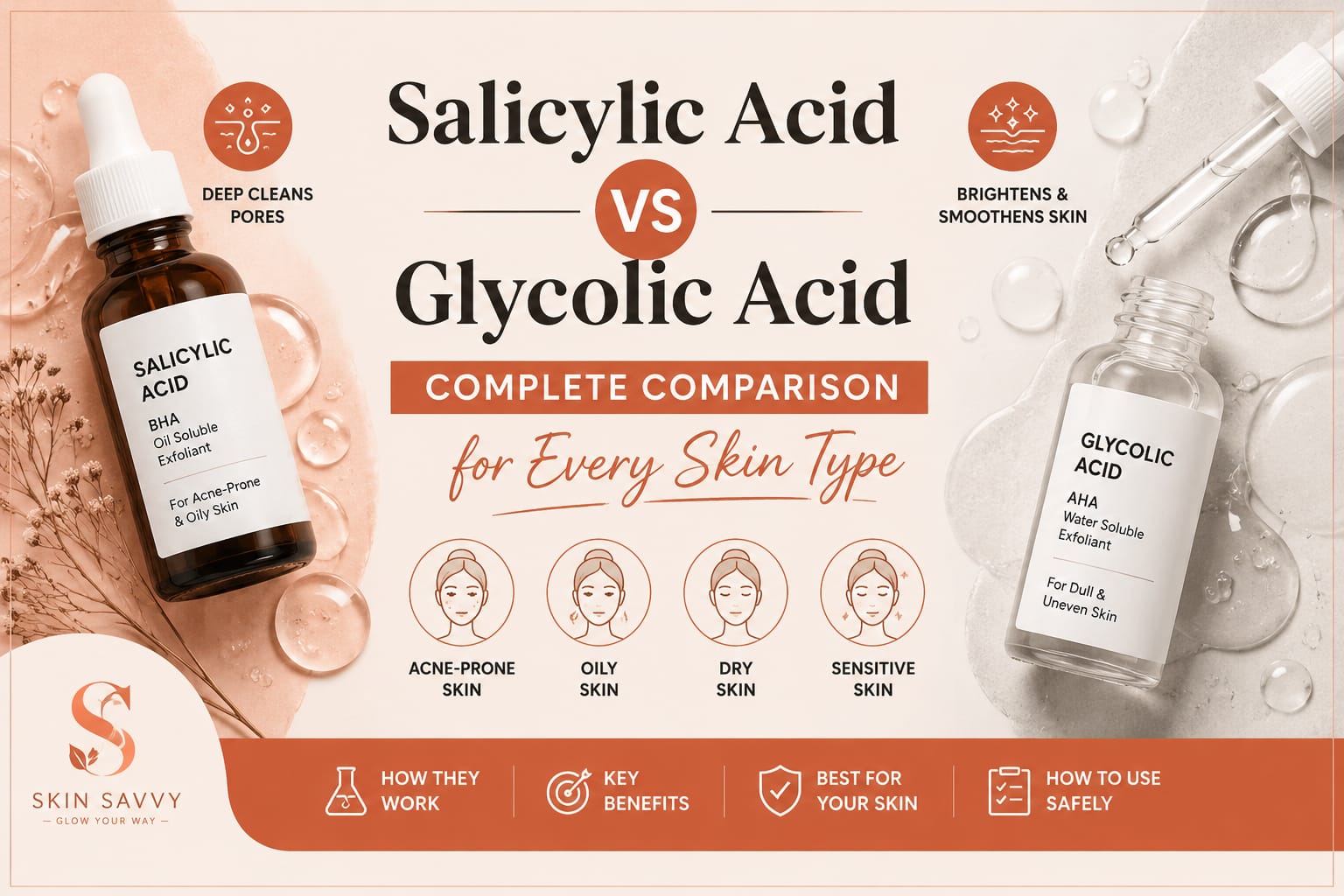
If you’ve ever searched for the best exfoliating ingredient for glowing skin, you’ve probably come across two names repeatedly: Salicylic Acid and Glycolic Acid. Both are highly effective chemical exfoliants that can improve skin texture, reduce breakouts, and promote a brighter complexion. However, despite their popularity, many people are confused about which one is actually right for their skin type.
The truth is that Salicylic Acid and Glycolic Acid work in completely different ways. Choosing the wrong exfoliant can lead to irritation, dryness, or disappointing results. Choosing the right one can help you achieve clearer, smoother, and healthier-looking skin.
In this comprehensive guide, we’ll compare Salicylic Acid vs Glycolic Acid, explain how each ingredient works, discuss their benefits and side effects, and help you determine which exfoliant best suits your skin type.
What Is Chemical Exfoliation and Why Is It Important?
Your skin naturally sheds dead skin cells through a process called desquamation. This process helps reveal fresh, healthy skin underneath. However, factors such as aging, stress, pollution, UV exposure, and hormonal fluctuations can slow down this natural cycle.
When dead skin cells accumulate on the surface, your complexion can appear dull, rough, and uneven. Clogged pores become more common, and skincare products struggle to penetrate effectively.
Chemical exfoliation helps solve this problem by dissolving the bonds that hold dead skin cells together. Unlike harsh physical scrubs, chemical exfoliants provide a more even and controlled exfoliation process.
Two of the most popular chemical exfoliants are:
- Alpha Hydroxy Acids (AHAs) like Glycolic Acid
- Beta Hydroxy Acids (BHAs) like Salicylic Acid
While both exfoliate the skin, they target different concerns and work at different levels.
What Is Salicylic Acid?
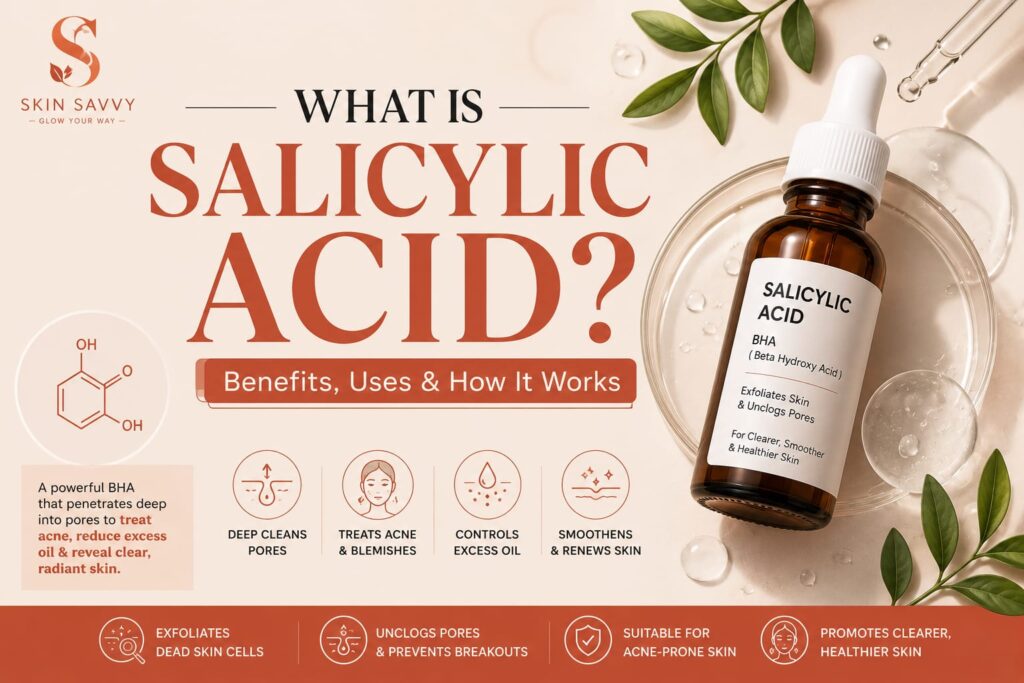
Salicylic Acid is a Beta Hydroxy Acid (BHA) that is oil-soluble. This means it can travel through oil and penetrate deep inside the pores.
Because of this unique ability, Salicylic Acid is particularly effective for:
- Acne-prone skin
- Blackheads
- Whiteheads
- Enlarged pores
- Oily skin
- Congested skin
Instead of working only on the skin’s surface, Salicylic Acid exfoliates inside the pores where acne begins. It helps dissolve excess oil, remove trapped debris, and prevent future breakouts.
Read this: Manage Dryness and Flaking in Sensitive Skin
Benefits of Salicylic Acid
Deep Pore Cleansing
One of the biggest reasons people choose Salicylic Acid is its ability to deeply cleanse pores. Unlike many exfoliating ingredients that work only on the surface, Salicylic Acid is oil-soluble, which means it can travel through excess sebum and reach deep inside the pores. This makes it highly effective for people dealing with oily skin, blackheads, and recurring breakouts.
When pores become clogged with oil, dirt, dead skin cells, and environmental pollutants, they create the perfect environment for acne to develop. Salicylic Acid helps dissolve this buildup and keeps pores clear. Regular use can significantly reduce congestion and make the skin look cleaner and smoother. This is why Salicylic Acid vs Glycolic Acid comparisons often favor Salicylic Acid for people struggling with clogged pores and oily skin.
Helps Reduce Acne
When discussing Salicylic Acid vs Glycolic Acid, acne treatment is one area where Salicylic Acid often stands out. It is one of the most researched ingredients in acne skincare and is widely recommended by dermatologists worldwide.
Salicylic Acid not only exfoliates the skin but also helps reduce the buildup that triggers pimples in the first place. By clearing pores and reducing inflammation, it helps both active acne and future breakouts. Many people notice fewer pimples, reduced redness, and faster healing after consistent use. For individuals dealing with hormonal acne, whiteheads, blackheads, or mild inflammatory acne, Salicylic Acid can become an essential part of an effective skincare routine.
Controls Excess Oil
Excess oil production is one of the biggest challenges for people with oily and acne-prone skin. Throughout the day, excess sebum can make the skin appear greasy, increase pore congestion, and contribute to acne formation.
Salicylic Acid helps regulate oil buildup by exfoliating inside the pores and preventing excess sebum from accumulating. Over time, many users notice that their skin feels more balanced and less shiny. This oil-controlling effect makes Salicylic Acid one of the best exfoliants for oily skin. In the debate of Salicylic Acid vs Glycolic Acid, Salicylic Acid is generally the preferred option for people whose primary concern is oiliness and frequent breakouts.
Read this: Types of Skin Complexion in India Explained
Minimizes Blackheads
Blackheads develop when pores become clogged with oil and dead skin cells. Once exposed to air, the trapped material oxidizes and turns dark, creating the appearance of blackheads.
Because Salicylic Acid works inside the pores, it directly targets the root cause of blackheads rather than simply treating their appearance. With regular use, blackheads become less noticeable and new ones are less likely to form. Many people who struggle with stubborn nose blackheads see significant improvements after introducing Salicylic Acid into their routine. This pore-clearing ability is one of the key reasons why Salicylic Acid remains one of the most recommended ingredients for acne-prone skin.
Improves Skin Texture
Uneven texture often occurs when dead skin cells build up on the surface while clogged pores create bumps underneath the skin. Salicylic Acid addresses both concerns simultaneously by exfoliating the skin and clearing congestion.
As cell turnover improves, the skin begins to feel smoother and look more refined. Rough patches, tiny bumps, and uneven areas gradually become less noticeable. Over time, regular use can help create a softer and healthier-looking complexion. While Glycolic Acid is often praised for surface smoothness, Salicylic Acid also plays an important role in improving overall skin texture, especially for those with oily and acne-prone skin.
Salicylic Acid vs Glycolic Acid: Key Differences
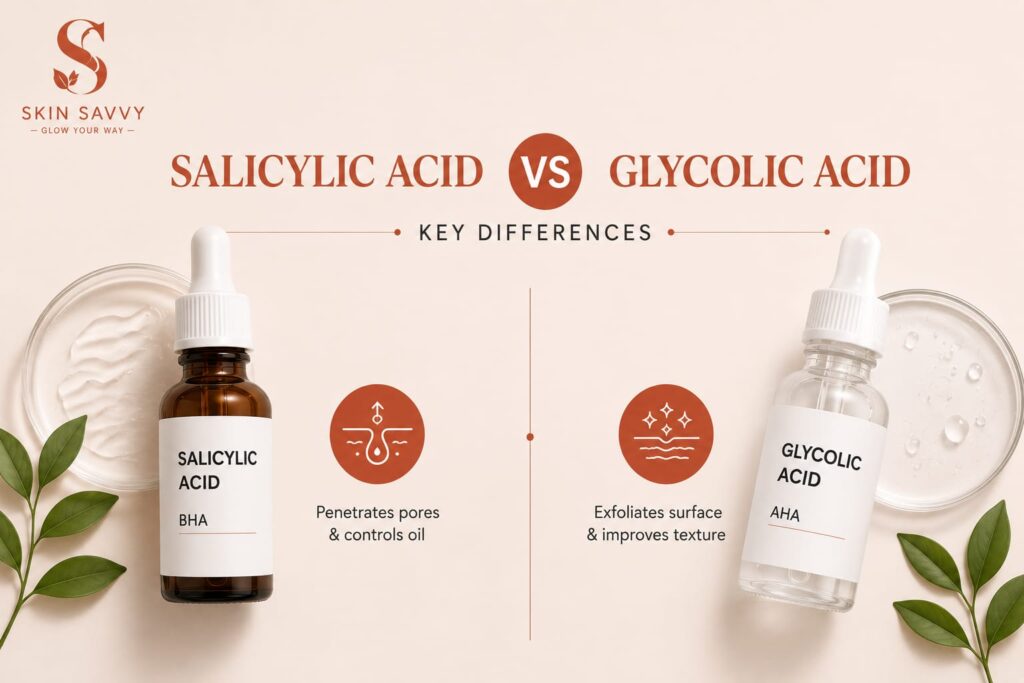
| Feature | Salicylic Acid | Glycolic Acid |
| Category | BHA | AHA |
| Solubility | Oil-Soluble | Water-Soluble |
| Works On | Inside Pores | Skin Surface |
| Best For | Acne & Oily Skin | Dullness & Pigmentation |
| Blackheads | Excellent | Moderate |
| Oil Control | Excellent | Limited |
| Skin Brightening | Moderate | Excellent |
| Fine Lines | Limited | Good |
| Sensitive Skin | Often Better Tolerated | May Cause Irritation |
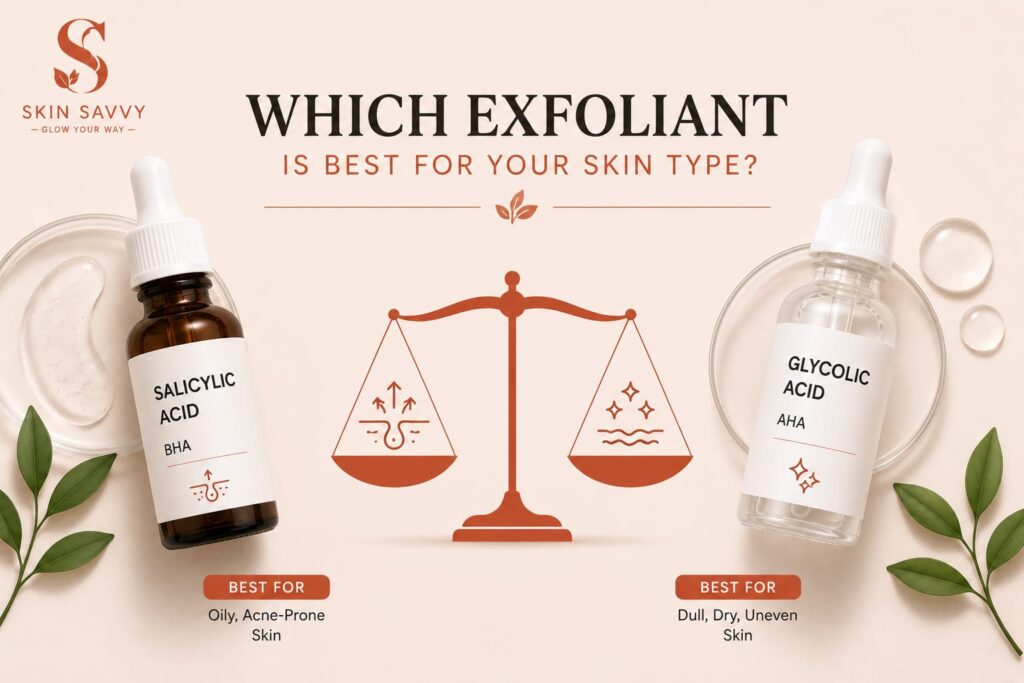
The biggest difference is where they work. Salicylic Acid goes deep into pores, making it ideal for acne and oily skin. Glycolic Acid works primarily on the surface, making it more effective for brightness, texture, and pigmentation concerns.
Which Exfoliant Is Best for Each Skin Type?
Oily Skin
If you have oily skin, Salicylic Acid is usually the better choice. Since it is oil-soluble, it can penetrate through excess sebum and work deep inside the pores. Oily skin often struggles with clogged pores, blackheads, whiteheads, and frequent breakouts. Salicylic Acid helps dissolve the mixture of oil and dead skin cells that causes these problems.
Another advantage is its ability to reduce excess shine without making the skin feel stripped. With regular use, many people notice fewer breakouts, smaller-looking pores, and smoother skin texture. A concentration between 0.5% and 2% is typically enough for most oily skin types.
Acne-Prone Skin
For acne-prone skin, Salicylic Acid is generally considered the gold standard exfoliant. Unlike surface exfoliators, it works inside the pores where acne actually begins. It helps clear existing blemishes while also preventing new breakouts from forming.
Salicylic Acid also has anti-inflammatory properties, which means it can reduce redness and swelling associated with pimples. People dealing with blackheads, whiteheads, hormonal acne, or congested skin often see significant improvements after incorporating Salicylic Acid into their routine consistently.
Dry Skin
Dry skin generally benefits more from Glycolic Acid. While exfoliation may sound counterintuitive for dry skin, removing dead surface cells allows moisturizers to penetrate more effectively.
Glycolic Acid encourages healthy cell turnover and reveals smoother skin underneath. It can also improve dullness that often accompanies dryness. However, it’s important to follow up with a rich moisturizer containing ingredients like ceramides, glycerin, or hyaluronic acid.
Combination Skin
Combination skin can be tricky because some areas are oily while others remain dry. The T-zone may experience congestion and excess oil, while the cheeks may struggle with dullness or dehydration.
For combination skin, both acids can be beneficial. Salicylic Acid can help control oil and breakouts in the T-zone, while Glycolic Acid can improve brightness and texture across the face. Many skincare enthusiasts alternate between the two for balanced results.
Sensitive Skin
Sensitive skin requires extra caution regardless of which exfoliant is chosen. While some people tolerate low concentrations of Glycolic Acid, others may experience redness, stinging, or irritation.
Salicylic Acid is often considered slightly gentler because of its anti-inflammatory properties. However, patch testing is essential. Start slowly with once-weekly use and increase frequency only if your skin responds well.
Mature Skin
Mature skin often benefits more from Glycolic Acid because aging concerns typically involve uneven texture, dullness, fine lines, and pigmentation.
Glycolic Acid accelerates cell turnover and may support collagen production over time. Consistent use can improve skin smoothness, radiance, and overall firmness, making it a valuable ingredient in anti-aging routines.
Read this: Skin Type Test at Home
Can You Use Salicylic Acid and Glycolic Acid Together?
Yes, Salicylic Acid and Glycolic Acid can be used together, but they should be introduced carefully.
Because these ingredients exfoliate in different ways, combining them can provide more comprehensive results. Salicylic Acid works inside the pores, while Glycolic Acid targets the skin’s surface.
However, using both too frequently can damage the skin barrier and lead to irritation, redness, peeling, and sensitivity.
Beginner Schedule
If you’re new to acids, try alternating them:
- Monday – Salicylic Acid
- Wednesday – Glycolic Acid
- Saturday – Salicylic Acid
This schedule gives your skin time to recover between exfoliation sessions.
Advanced Schedule
Experienced users with resilient skin may alternate them more frequently or use them on different days throughout the week.
However, combining both acids with strong retinoids on the same night is usually not recommended.
Important Precautions
- Always wear SPF 30 or higher daily
- Introduce one acid at a time
- Focus on hydration and barrier repair
- Stop or reduce usage if irritation develops
- Avoid over-exfoliation
Remember, healthy skin is not achieved through aggressive exfoliation. Consistency and balance are far more important.
Read this: Natural Skincare Routine for Healthy & Glowing Skin
Common Mistakes People Make While Using Exfoliating Acids
Over-Exfoliating
One of the biggest skincare mistakes is assuming that more exfoliation equals better results. Excessive exfoliation weakens the skin barrier and can cause redness, dryness, irritation, and even more breakouts.
Most people only need to exfoliate two to three times per week.
Skipping Sunscreen
Exfoliating acids make the skin more sensitive to UV rays. Without sunscreen, you increase your risk of sun damage, pigmentation, and premature aging.
Daily SPF is non-negotiable when using either Salicylic Acid or Glycolic Acid.
Using Too Many Active Ingredients Together
Combining multiple powerful ingredients such as retinol, Vitamin C, Glycolic Acid, and Salicylic Acid at the same time can overwhelm the skin.
A simple routine often produces better results than an overly complicated one.
Not Moisturizing
Exfoliation removes dead skin cells, but it also increases the skin’s need for hydration. Without proper moisturizing, the skin barrier can become compromised.
Always pair exfoliation with a quality moisturizer.
Daily Exfoliation From Day One
Many beginners start using acids every day because they want faster results. Unfortunately, this often leads to irritation before improvements become visible.
Start slowly and increase frequency gradually.
Frequently Asked Questions (FAQs)
Which is better for acne: Salicylic Acid or Glycolic Acid?
Salicylic Acid is generally better for acne because it penetrates deep into pores and removes excess oil, dead skin cells, and debris that contribute to breakouts.
Which acid is best for glowing skin?
Glycolic Acid is usually considered better for boosting skin radiance because it removes dull surface cells and improves overall skin texture.
Can I use Salicylic Acid and Glycolic Acid in the same routine?
Yes, but beginners should avoid combining them initially to reduce the risk of irritation and over-exfoliation.
Is Glycolic Acid suitable for sensitive skin?
Some people with sensitive skin can tolerate low concentrations of Glycolic Acid, but patch testing and gradual introduction are essential.
How often should I exfoliate with these acids?
Most skin types benefit from exfoliating 2–3 times per week rather than daily use.
Final Thoughts
When comparing Salicylic Acid vs Glycolic Acid, there is no universal winner. The best exfoliant depends entirely on your skin type, concerns, and skincare goals.
If your primary concern is acne, oily skin, blackheads, or clogged pores, Salicylic Acid is usually the better choice because it works deep inside the pores and addresses the root causes of congestion.
On the other hand, if your goal is brighter skin, smoother texture, reduced pigmentation, and anti-aging benefits, Glycolic Acid often delivers more noticeable results because it focuses on surface renewal and cell turnover.
The good news is that both ingredients are backed by extensive research and can transform your skin when used correctly. The key is to start slowly, prioritize hydration, wear sunscreen daily, and remain consistent with your routine.
Remember, glowing skin doesn’t come from using the strongest exfoliant—it comes from choosing the right exfoliant for your unique skin needs and giving it time to work. With patience and proper use, both Salicylic Acid and Glycolic Acid can help you achieve clearer, smoother, healthier, and more radiant skin.

 Admin
Admin
[…] Read this: Salicylic Acid vs Glycolic Acid […]