 Admin
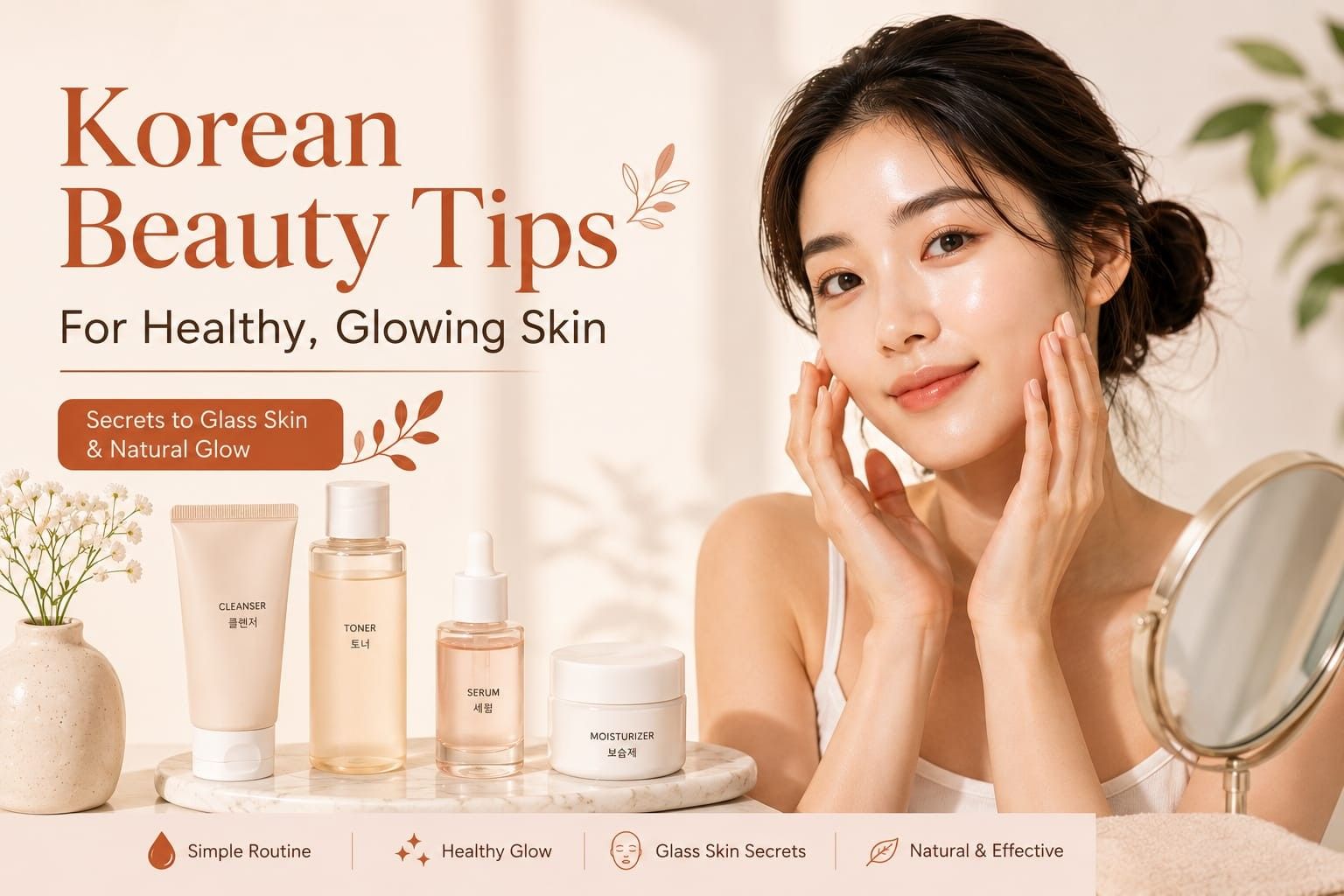
Admin Korean Beauty Tips for Glowing Skin
If you’ve spent any time on Instagram or YouTube in the last few years, you’ve probably noticed something. Korean women just seem to have this skin. You know the one — dewy, bouncy, almost lit from within. It’s not filters (okay, sometimes it’s filters), but a huge part of it comes down to how Korean beauty, or K-beauty, approaches skincare altogether.
I used to think glowing skin was just genetics or money spent on fancy serums. Turns out, it’s mostly about consistency and understanding why you’re doing what you’re doing. Once I started digging into the philosophy behind Korean skincare tips, things started clicking, and my own skin actually changed for the better. Not overnight, but within a few months, in a way that felt real and lasting.
This guide breaks down everything — the logic behind K-beauty, a proper step-by-step routine, ingredients worth knowing, mistakes almost every beginner makes (I made most of them too), and some practical advice specifically for those of us dealing with Indian weather, water, and skin types.
Why Korean Skincare Works Differently
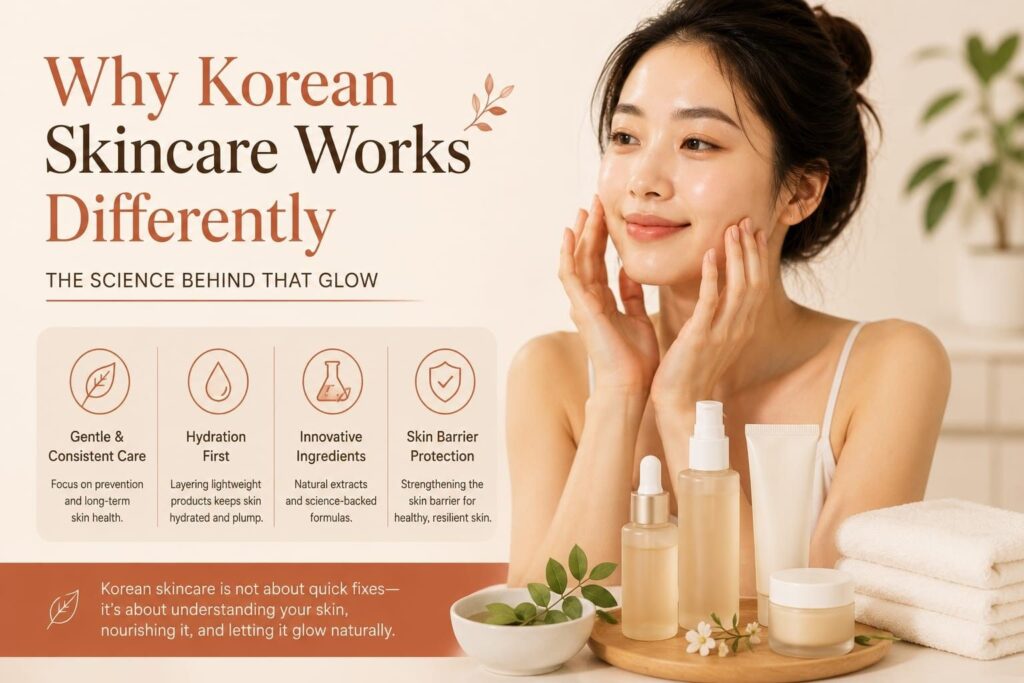
Here’s the thing most people get wrong about Korean beauty: it’s not about buying ten products and slapping them on your face. It’s a mindset shift.Western skincare, traditionally, has been about treating problems. You get a pimple, you buy a spot treatment. You get dry patches, you buy a thick cream. It’s reactive. Korean skincare, on the other hand, is preventive and holistic. The goal isn’t to fix skin after something goes wrong — it’s to keep the skin barrier so healthy that problems don’t show up as often in the first place.
A few things make this approach genuinely different:
It treats skin like an organ, not a canvas.
In Korea, skincare is approached almost the way nutrition is approached for the body. You’re not just covering up issues with makeup or masking dryness with heavy cream. You’re trying to actually improve the skin’s health over time so it needs less covering up.
Hydration is layered, not loaded.
Instead of one heavy moisturizer, K-beauty uses several lightweight layers — toners, essences, serums — that each add a bit of hydration. Skin absorbs thin layers of water-based products far better than it absorbs one thick layer of cream. This is honestly the single biggest “aha” moment for most beginners.
Gentle, slow, and steady wins.
There’s much less emphasis on harsh exfoliation or aggressive actives every single day. The idea is that skin barrier damage from being too aggressive causes more problems (sensitivity, redness, breakouts) than it solves. Fermentation is a big part of Korean food culture (think kimchi), and that same logic got applied to skincare. Fermented ingredients are believed to be more easily absorbed and gentler on the skin while still being effective.
Sun protection isn’t optional, it’s a religion.
Koreans treat sunscreen the way most of us treat brushing teeth. It’s not a summer thing or a beach thing. It’s daily, rain or shine, indoors or out. This single habit probably does more for “glowing skin” than any serum on the market.
Put all of this together and you get an approach to skin that’s slower, gentler, more layered, and frankly, more sustainable. It’s less about chasing a quick fix and more about building a relationship with your own skin
Read this: Salicylic Acid vs Glycolic Acid
Step-by-Step Korean Skincare Routine
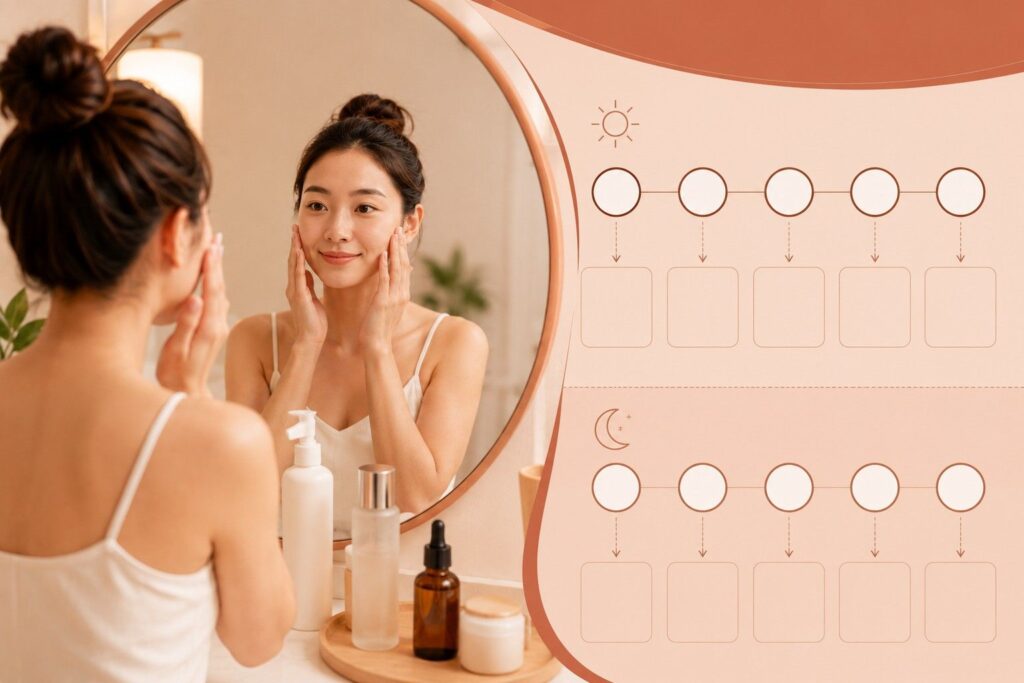
The famous “10-step Korean skincare routine” sounds intimidating, but you don’t need all ten steps every single day. Here’s a realistic breakdown — both the full version and a simplified one for busy mornings
Morning Routine
- Oil cleanser (optional in the morning, but helpful if you use heavy night cream)
Removes any leftover product from the night before without stripping skin. - Water-based cleanser
A gentle, low-pH cleanser to wash away sweat and oil that built up overnight. Look for something that doesn’t leave skin feeling tight afterward. - Toner
Not the harsh, alcohol-based toners of the 2000s. Korean toners are hydrating and meant to prep skin to absorb the next products better. Pat it in with your hands rather than a cotton pad if you can. - Essence
This is the step most people outside Korea have never heard of. Essence sits between toner and serum — lightweight, watery, packed with active ingredients. It’s the secret to that “glass skin” plumpness. - Serum
This is where you target specific concerns — brightening, acne, anti-aging, pigmentation. Apply based on what your skin actually needs that day. - Eye cream
The skin around your eyes is thinner and shows aging first. A small amount, gently tapped in. - Moisturizer
Lock everything in. Even oily skin needs this step — skipping it often makes oily skin produce more oil to compensate. - Sunscreen
Non-negotiable. Broad spectrum, SPF 30 or higher, reapplied if you’re outdoors for long stretches.
Evening Routine
1.Oil cleanser (to dissolve sunscreen, makeup, pollution)
2.Water-based cleanser (double cleansing is key at night)
3. Toner
4. Essence
5. Treatment/serum (this is when you can use stronger actives since skin repairs overnight)
6. Sheet mask (2-3 times a week, not daily)
7. Eye cream
8. Night cream or sleeping mask
Read this: Gel vs Cream Moisturizer
The Realistic Minimalist Version
If ten steps feels like too much (it does, for most people, most days), here’s what actually matters:
Cleanse
Toner or essence (pick one if you’re short on time)
Moisturizer with some active ingredient built in
Sunscreen (morning only, obviously)
Honestly, doing four steps consistently beats doing ten steps for three days and then giving up.
Common Mistakes Beginners Make
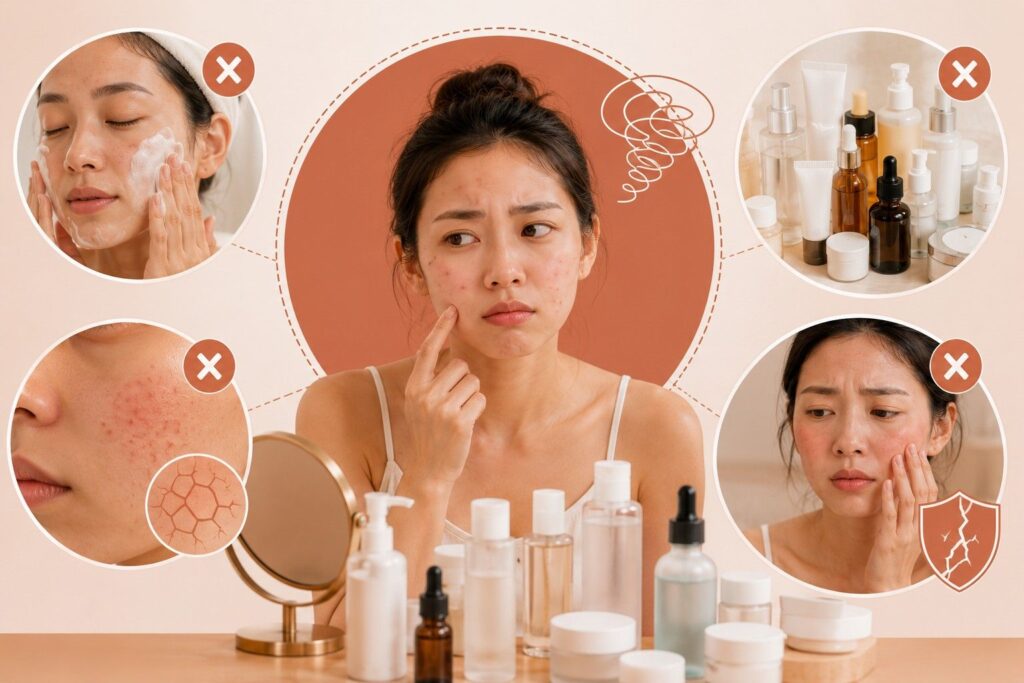
I’ve made nearly every one of these, so consider this list a public service.
Skipping sunscreen because “I have brown skin, I don’t burn.
” This is probably the most common one among Indian users specifically. Melanin gives some natural protection, but it doesn’t prevent UV damage, premature aging, or pigmentation — and pigmentation is already a common concern for Indian skin tones. Skipping SPF undoes almost everything else you’re doing.
Buying too many products at once.
Introducing five new products in one week makes it impossible to know what’s working or what’s causing breakouts. Add one new product every week or two.
Using products meant for someone else’s skin type.
A routine designed for dry Korean winters doesn’t always translate directly to humid Mumbai summers or dry Delhi winters. More on this below.
Over-exfoliating:
Because K-beauty has popularized chemical exfoliants like AHAs and BHAs, beginners sometimes go overboard, using them daily. This wrecks the skin barrier and causes more sensitivity, not less.
Expecting overnight results.
Skin cell turnover takes about 28 days for younger skin and longer as you age. Most genuine improvement shows up after 6-8 weeks of consistent use, not six days.
Not patch testing.
Korean products often contain snail mucin, fermented ingredients, or centella — wonderful for most people, but anyone with allergies should patch test on the inner arm first.
Layering products in the wrong order.
The general rule is thinnest to thickest consistency. Water-based before oil-based. Getting this backward means products don’t absorb properly.
Using the same routine year-round.
Skin needs change with seasons, especially in a country with such varied climate zones. What works in humid Chennai won’t necessarily work in dry Jaipur winters.
Read this: Your Skin not Glowing Even After Using the Right Products
Common Ingredients in Korean Skincare
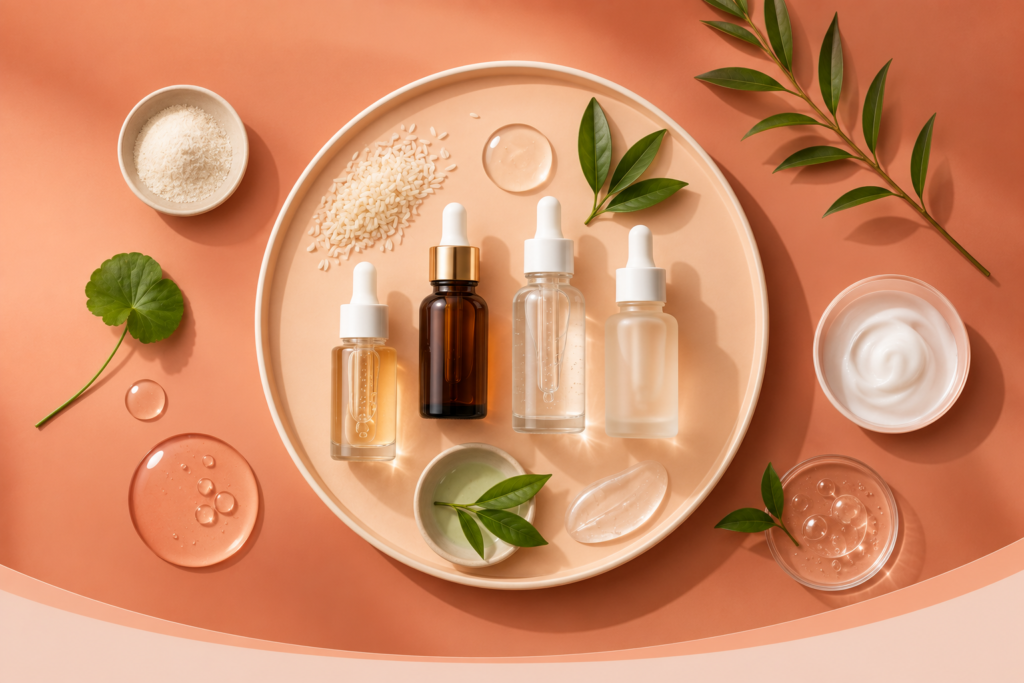
Understanding what’s actually inside these products helps you choose smarter rather than just buying what’s trending.
Snail mucin — Sounds odd, works wonders. It’s hydrating, helps with healing, and is often used for acne scars and texture.
Centella asiatica (Cica) — A calming ingredient, great for sensitive or irritated skin, often found in products meant to soothe redness.
Niacinamide — Helps with brightening, reducing pore appearance, and evening out tone. One of the more universally tolerated actives.
Propolis — Has antibacterial properties, often used in products targeting acne-prone skin.
Rice extract/rice water — Traditionally used for brightening and has become popular in modern formulations for giving that glow.
Fermented ingredients (yeast, galactomyces) — Believed to enhance absorption and deliver nutrients more effectively to skin.
Hyaluronic acid — Not uniquely Korean, but heavily used in essences and serums for that plumping, hydrated look.
Ginseng — Used for its antioxidant properties and association with anti-aging benefits in traditional Korean medicine.
Green tea extract — Calming and antioxidant-rich, common in toners and moisturizers for sensitive skin types.
Practical Tips for Indian Skin and Climate
This is the part most generic K-beauty articles skip, and it matters a lot.
Adjust for humidity
Coastal cities like Mumbai or Chennai deal with high humidity most of the year. Heavy, multi-layer routines can feel suffocating here. Stick to lighter essences and gel-based moisturizers rather than thick creams.
Adjust for dry, dusty climates
Cities like Delhi, especially in winter, deal with dry air and pollution. Here, the layering approach actually shines — multiple thin hydrating layers help more than one heavy moisturizer that just sits on top of dust and pollution
Hard water is a real issue
Many parts of India have hard water, which can leave skin feeling tight even after a gentle cleanse. Consider a water-based toner immediately after washing to counteract this.
Don’t ignore pigmentation concerns
Indian skin is more prone to post-inflammatory hyperpigmentation (those dark marks left after a pimple heals) compared to lighter skin tones. Niacinamide and vitamin C serums, both K-beauty staples, are particularly useful here.
Sunscreen needs to suit Indian skin tones and weather
Many international sunscreens leave a white cast, which is frustrating for medium to deep skin tones. Korean sunscreens are generally formulated to be lightweight and cosmetically elegant, which is part of why they’ve become so popular among Indian users specifically — look for ones labeled “no white cast.”
Budget-friendly swaps exist
You don’t need to import every product. Several Indian and easily available brands now make centella, niacinamide, and rice-based products inspired by K-beauty formulations at a fraction of the cost.
Heat and sweat change everything
If you’re someone who commutes on a scooter or deals with serious heat, gel-based, non-comedogenic products will serve you better than rich, creamy Korean products originally formulated for colder climates.
Festival season skin prep
Many of us load up on makeup during wedding season or festivals. Using a consistent K-beauty-inspired routine in the weeks leading up to a big event genuinely helps makeup sit better and last longer.
Frequently Asked Questions
Q.1 Is Korean skincare suitable for Indian skin types?
Ans: Yes, largely. the core philosophy-hydration, gentle care, sun protection- works for every skin type. What needs adjusting is the texture and richness of products based on your local climate and humidity levels.
Q.2 How Long before I see results?
Ans: Most people start noticing sutable changes like better hydration and less dullness within 3-4 weeks. Real, visible changes in texture or pigmentation typically take 8-12 weeks of consistent use.
Q.3 Do I really need 10 steps every day?
Ans: No, The 10 step routine is more of a framework than a rule. Most dermatologists, Korean or otherwise, agree that a consistent 4-5 step routine done daily beats an elabrate routine done inconsistently.
Q.4 Can I use Korean skincare products if I have acne-prone skin?
Ans: Yes, many K-beauty ingredients like centella, propolis, and tea tree are specifically known for calming acne-prone skin. Avoid heavy, oil-based products if you’re prone to breakouts, and look for “non-comedogenic” labels.
Q.5 What is the difference between essence and serum?
Ans: Essence is lighter and more watery, meant to hydrate and prep skin. Serum is more concentration and targets specific concerns like pigmentation or fine lines. Essence goes on first, then serum.
Q.6 Is double cleansing necessary every day?
Ans: Double cleansing (oil cleanser followed by water-based cleanser) is most useful at night when you’re removing sunscreen, makeup, or pollution buildup. In the morning, a single gentle cleanse is usually enough unless you used heavy overnight products.
Q.7 Can men use Korean skincare routines too?
Ans: Absolutely, Skin doesn’t Know gender. The principles of hydration, gentle cleansing, and sun protection apply equally, and many Korean brands have specific lines for men, though honestly, the regular ones work just fine too.
Final Thoughts
Korean beauty tips for glowing skin aren’t really about chasing some unattainable “glass skin” ideal you see filtered on social media. At its core, it’s a philosophy of patience, layering, gentleness, and consistency. The glow people are after isn’t really about a magic product — it’s the cumulative result of treating your skin well, every single day, for long enough that it shows.
For those of us in India, the trick isn’t copying the routine exactly as it’s marketed, but adapting it sensibly to our climate, our water, our sun exposure, and our skin’s specific tendencies. Do that, and the glow genuinely follows.
Read this: layer eye treatment SPF and makeup

 Admin
Admin
[…] Read this: Korean Beauty Tips for Glowing Skin […]
[…] Korean Beauty Tips for Glowing Skin […]