
 Admin
Admin Skincare Routine for Beginners
Let’s be honest — walking into a beauty store or scrolling through Instagram for skincare advice feels overwhelming. Fifteen-step Korean routines, serums with names you can’t pronounce, and influencers telling you that you “need” seven different products just to wash your face. If you’ve ever stood in front of a shelf full of cleansers wondering where to even start, you’re not alone.
Here’s the good news: building an effective skincare routine for beginners doesn’t require a cabinet full of products or a chemistry degree. It requires understanding a few basics, being consistent, and knowing what your skin actually needs — not what a viral video says you need. This guide breaks it all down in plain language, so you can build a routine that actually works for your skin, your budget, and your lifestyle.
Why Most Beginners Get Skincare Wrong

Many beginners believe that using more products or following every skincare trend will produce faster results. In reality, healthy skin is built through a routine that matches your skin type, concerns, and lifestyle. Using products without understanding your skin’s needs can weaken the skin barrier, leading to dryness, irritation, breakouts, or increased sensitivity instead of improvement.
Another common mistake is expecting visible results within a few days. Most skincare ingredients need at least 4–8 weeks of consistent use before noticeable changes appear because the skin renews itself gradually. Frequently changing cleansers, serums, or moisturizers before they’ve had enough time to work makes it difficult to know which products are actually helping and may disrupt your skin’s natural balance.
Beginners also tend to overlook the basics while chasing expensive or viral products. A simple routine consisting of a gentle cleanser, a suitable moisturizer, and a broad-spectrum sunscreen used every day is often more effective than a complicated routine with multiple active ingredients. Once your skin barrier is healthy and consistent, you can slowly introduce targeted treatments if needed.
The key to successful skincare isn’t owning the largest collection of products—it’s understanding your skin, choosing evidence-based ingredients, and following a consistent routine every day. Patience and regular care deliver far better long-term results than constantly changing products in search of instant improvement.
Understanding Your Skin Type First Identify Your Skin Type Before Buying Any Product
Before investing in skincare products, take a few minutes to understand your skin type. Choosing products without knowing whether your skin is oily, dry, combination, sensitive, or normal often leads to poor results, unnecessary spending, and avoidable irritation. When your routine matches your skin’s natural needs, every product is more likely to perform effectively.
Oily skin usually produces excess sebum, making the forehead, nose, and chin appear shiny within a few hours of cleansing. Enlarged pores, blackheads, and frequent breakouts are also common because excess oil can trap dirt and dead skin cells.
Dry skin produces less natural oil, so it often feels tight after washing and may appear rough, flaky, or dull. Without enough moisture, the skin barrier can become weaker, making the skin more prone to irritation and dehydration.
Combination skin has both oily and dry areas. The T-zone is typically oily, while the cheeks remain normal or dry. Because different parts of the face have different needs, this skin type often benefits from lightweight, balanced skincare products.
Sensitive skin reacts more easily to skincare products and environmental factors. You may notice redness, itching, burning, or irritation after trying new ingredients. Choosing fragrance-free, gentle formulations and introducing new products gradually can help minimize reactions.
Normal skin has a healthy balance of oil and moisture. It rarely feels excessively oily or dry, and breakouts or sensitivity are generally less frequent. Even so, daily cleansing, moisturizing, and sunscreen remain essential to maintain healthy skin.
If you’re unsure about your skin type, try a simple at-home test. Wash your face with a gentle cleanser and avoid applying any skincare products for about 30 minutes. If your entire face becomes shiny, you likely have oily skin. If it feels tight or rough, your skin is probably dry. If only your forehead, nose, and chin become oily while your cheeks stay comfortable, you most likely have combination skin. This quick observation can help you choose skincare products that are better suited to your skin’s needs.
Read this: Skin Type Test at Home
The Core Skincare Routine: Step-by-Step
A good skincare routine doesn’t need to be complicated. In fact, using a few well-chosen products consistently is often more effective than layering multiple products without understanding their purpose. The goal is to cleanse, protect, hydrate, and address specific skin concerns while keeping your skin barrier healthy.
Step 1: Cleanser (Morning and Night)
Cleansing is the foundation of every skincare routine because it removes excess oil, sweat, dirt, pollution, makeup, and sunscreen that accumulate on the skin throughout the day. Choosing a gentle, pH-balanced cleanser helps clean the skin without disrupting its natural protective barrier. Harsh soaps or excessive cleansing can damage this barrier, leading to dryness, irritation, or increased oil production. Select a cleanser based on your skin type so your skin feels clean and comfortable rather than tight or stripped.
Step 2: Toner (Optional but Helpful)
A toner isn’t essential for everyone, but the right formula can complement your routine. Modern toners are designed to provide lightweight hydration, soothe the skin, and improve the absorption of products applied afterward. If you have sensitive or dry skin, choose alcohol-free toners with hydrating ingredients. For oily or acne-prone skin, toners containing gentle exfoliating or oil-balancing ingredients may be beneficial. Avoid products with high alcohol content, as they can weaken the skin barrier over time.
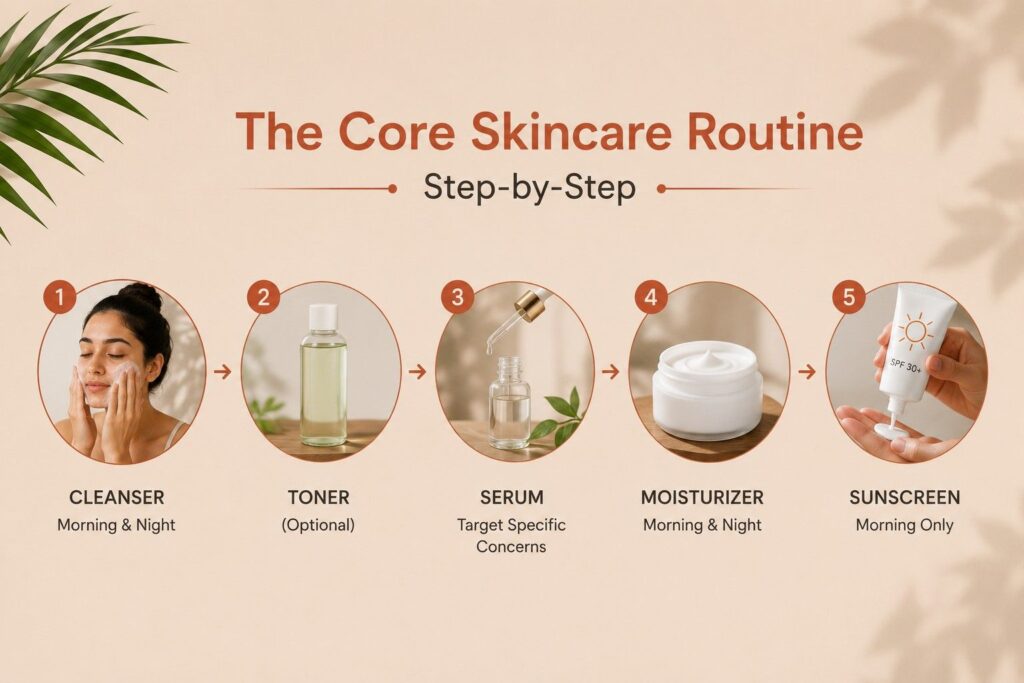
Step 3: Serum (For Targeted Skin Concerns)
Serums contain concentrated ingredients that target specific concerns such as acne, pigmentation, dehydration, dullness, or early signs of ageing. Instead of choosing a serum based on trends, select one that matches your primary skin concern. Since serums are highly concentrated, a few drops are usually enough. Consistent use is more important than expecting overnight results, as most active ingredients require several weeks to produce visible improvements.
Step 4: Moisturizer (Morning and Night)
A moisturizer helps maintain the skin’s natural barrier by reducing moisture loss and keeping the skin hydrated throughout the day. This step is important for every skin type, including oily and acne-prone skin. When the skin becomes dehydrated, it may produce more oil in an attempt to compensate, which can make the face appear even greasier. Choosing a moisturizer that matches your skin type helps maintain a healthy balance without feeling heavy or clogging pores.
Step 5: Sunscreen (Morning Only)
Sunscreen is the most important step in any daytime skincare routine because it protects the skin from harmful UVA and UVB rays. Daily sun exposure contributes to tanning, pigmentation, uneven skin tone, premature wrinkles, and collagen breakdown. Even the most effective serums and moisturizers cannot fully repair ongoing sun damage if sunscreen is skipped. Apply a broad-spectrum sunscreen with at least SPF 30 and PA+++ every morning as the final step of your skincare routine, and reapply it during prolonged outdoor exposure to maintain effective protection.
10 Important Points Every Beginner Should Know
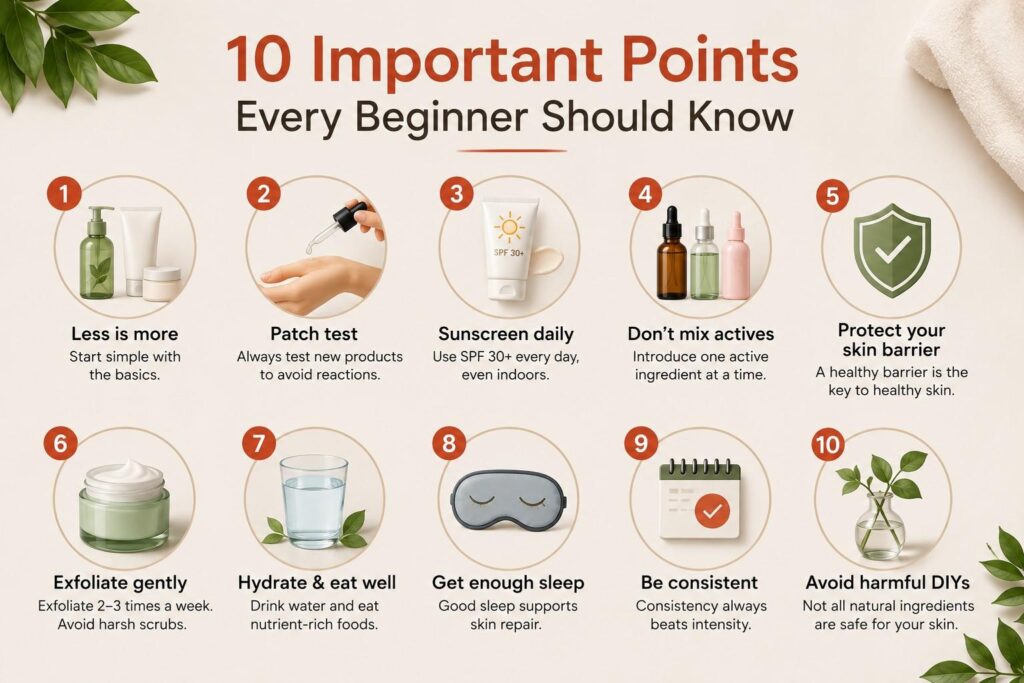
- Less is more in the beginning. Start with a cleanser, moisturizer, and sunscreen. Add actives like retinol or vitamin C only after your skin adjusts to the basics.
- Patch test everything. Apply a new product to your inner forearm or behind your ear for 2-3 days before using it on your face. This prevents unexpected reactions.
- Sunscreen is non-negotiable, even indoors. Blue light from screens and UV rays through windows still affect your skin. A broad-spectrum SPF 30 or higher, reapplied every 3-4 hours if outdoors, is essential.
- Don’t mix too many active ingredients. Combining retinol, vitamin C, and exfoliating acids all at once can damage your skin barrier. Introduce one active at a time.
- Your skin barrier is more important than “results.” A damaged barrier leads to redness, sensitivity, and breakouts. If your skin feels tight, stingy, or inflamed, simplify your routine immediately.
- Exfoliation should be gentle and occasional. Two to three times a week with a mild chemical exfoliant (like lactic acid) is safer than daily physical scrubs, which can cause micro-tears.
- Diet and hydration matter. Skin reflects overall health. Drinking enough water and eating foods rich in antioxidants supports skin repair from within.
- Sleep affects skin more than people realize. Cortisol spikes from poor sleep can trigger breakouts and dullness. Skincare works best alongside good sleep habits.
- Consistency beats intensity. Using a basic routine daily for two months outperforms an expensive 10-step routine used sporadically.
- Not all “natural” ingredients are safe for skin. Lemon juice, baking soda, and raw garlic are commonly recommended as DIY remedies but can cause burns, irritation, and pigmentation. Stick to dermatologist-recommended ingredients.
Common Mistakes Beginners Make
One of the most common mistakes is over-cleansing the face. Washing your skin more than twice a day can strip away its natural oils, weakening the skin barrier. This may leave dry skin feeling tighter and cause oily skin to produce even more oil in an attempt to restore moisture.
Another mistake is skipping sunscreen because the weather looks cloudy or you’re staying outside for only a short time. UV rays are present throughout the year and can gradually cause tanning, pigmentation, and premature ageing. Applying sunscreen every morning is one of the simplest habits for maintaining healthier skin over time.
Many beginners also introduce several new products at once, hoping for faster results. When irritation or breakouts occur, it becomes difficult to identify which product is responsible. Adding one new product every few weeks allows your skin to adjust and helps you evaluate its effectiveness more accurately.
Popping or squeezing pimples is another habit that often does more harm than good. It can push bacteria deeper into the skin, increase inflammation, delay healing, and raise the risk of post-acne marks or permanent scarring. Allowing blemishes to heal naturally or using suitable acne treatments is a safer approach.
A frequently overlooked mistake is ignoring the neck and hands during your skincare routine. These areas are exposed to the same environmental damage as your face and are often among the first to show signs of ageing. Applying moisturizer and sunscreen to them daily helps maintain a more even and youthful appearance.
Finally, copying someone else’s skincare routine without considering your own skin type can lead to disappointing results. Skin needs vary from person to person, so products that work well for dry skin may not be suitable for oily, sensitive, or acne-prone skin. Building a routine based on your own skin type and concerns is far more effective than following trends or recommendations without personalization.
Key Ingredients to Know and What They Actually Do
| Ingredient | Best For | Key Benefit |
| Niacinamide | Oily, acne-prone, combination skin | Reduces oil production, calms redness, minimizes pores |
| Hyaluronic Acid | Dry, dehydrated skin | Draws moisture into skin, plumps and hydrates |
| Vitamin C | Dull skin, pigmentation | Brightens skin tone, fights free radical damage |
| Salicylic Acid (BHA) | Oily, acne-prone skin | Unclogs pores, reduces breakouts |
| Ceramides | Sensitive, dry, damaged skin | Repairs and strengthens skin barrier |
| Retinol | Fine lines, texture, acne | Boosts cell turnover, improves texture over time |
| Zinc Oxide (in sunscreen) | All skin types | Provides broad-spectrum sun protection |
Dermatologists widely agree that daily broad-spectrum sunscreen use is one of the most well-supported interventions for preventing premature skin aging and reducing skin cancer risk, according to guidance frequently cited by dermatology associations such as the American Academy of Dermatology. This is why experts consistently rank SPF above trendier ingredients in terms of long-term skin health impact.
Read this: How to Repair Your Skin Barrier
Practical Tips for Indian Skin and Climate
India’s diverse climate — from humid coastal cities to dry northern winters — means your routine needs seasonal adjustments.

- In humid regions (Mumbai, Chennai, Kolkata): Use lightweight, gel-based moisturizers instead of heavy creams to avoid clogged pores.
- In dry regions (Delhi winters, Rajasthan): Switch to a richer, ceramide-based moisturizer during colder months to prevent flaking.
- Pollution exposure: Cities with high pollution benefit from double cleansing at night — a gentle oil-based cleanser followed by a water-based one — to remove buildup thoroughly.
- Melanin-rich skin and pigmentation: Indian skin is more prone to post-acne dark spots (hyperpigmentation) than fine lines. Niacinamide and vitamin C are particularly useful here.
- Budget-friendly options: Brands like Minimalist, Dot & Key, and Plum offer dermatologically formulated products at accessible price points, making it easier to start without overspending.
- Avoid multani mitti and besan daily. While traditional, these can be overly drying with frequent use. Reserve them for occasional use, not as a daily face wash replacement.
Building Your Routine on a Budget
Healthy skin doesn’t depend on expensive products—it depends on using the right essentials consistently. Dermatology experts recommend starting with a simple routine instead of buying multiple products at once.
Focus on these three basics:
- A gentle, pH-balanced cleanser
- A moisturizer suitable for your skin type
- A broad-spectrum sunscreen (SPF 30 or higher)
Use this routine consistently for 4–6 weeks before introducing any new active ingredients. Experts also recommend adding only one new product at a time so you can monitor how your skin responds and reduce the risk of irritation or breakouts. A simple, consistent routine is far more effective than using too many products at once. slowly introduce a serum targeting your specific concern.
Read this: Combination Skin Care Routine
Frequently Asked Questions
1. How long does it take to see results from a new skincare routine?
Skincare requires consistency and realistic expectations. Hydration and skin softness may improve within 2–4 weeks, while concerns such as acne marks, pigmentation, or uneven skin tone often take 8–12 weeks or longer. Avoid changing products too quickly, as most active ingredients need time to show visible results.
2. Do I really need separate day and night creams?
Not always. The most important factor is choosing a moisturizer that suits your skin type. During the day, pair your moisturizer with a broad-spectrum sunscreen to protect against UV damage. At night, you can use the same moisturizer or a richer formula if your skin feels dry, as the skin naturally repairs itself while you sleep.
3. Can oily skin skip moisturizer?
No. Oily skin still needs hydration. When the skin lacks moisture, it may produce even more oil to compensate, making the face feel greasier over time. A lightweight, non-comedogenic, gel-based moisturizer helps maintain the skin barrier without clogging pores.
4. Is sunscreen necessary if I stay indoors most of the day?
Yes, especially if you spend time near windows or in rooms with plenty of natural daylight. UVA rays can pass through glass and contribute to pigmentation and premature skin ageing. Applying sunscreen every morning helps provide consistent daily protection, even when you’re mostly indoors.
5. What is the correct order to apply skincare products?
Apply products from the lightest texture to the heaviest so they absorb properly. A simple morning routine is cleanser, serum (if needed), moisturizer, and sunscreen. At night, follow the same steps but skip sunscreen. Keeping your routine simple and consistent is usually more effective than using too many products.
6. Should beginners start using retinol immediately?
It’s better to first build a basic skincare routine with a gentle cleanser, moisturizer, and sunscreen. Once your skin is comfortable with this routine, you can introduce retinol gradually by using a low-strength formula 2–3 nights a week. This approach helps reduce irritation while allowing your skin to adjust safely.
Final Thoughts: Start Simple, Stay Consistent
The truth about skincare is refreshingly simple: you don’t need a complicated routine to get healthy, glowing skin — you need the right basics used consistently. Start with a gentle cleanser, a suitable moisturizer, and daily sunscreen. Give your skin time to adjust before adding new products, and always patch test anything new.
Skincare isn’t about chasing trends; it’s about understanding your skin and giving it what it actually needs. Be patient, stay consistent, and your skin will thank you for it — not in days, but in the weeks and months of steady care that actually make a difference.

 Admin
Admin
[…] Read this: Skincare Routine for Beginners […]
[…] Read this: Skincare Routine for Beginners […]