 Admin
Admin How to Apply Sunscreen Correctly
You sold the perfect sunscreen. Most mornings you don’t even forget to apply it. However, you still get tanned, your pigmentation doesn’t improve, and you wonder if sunscreen even works. Here’s the uncomfortable fact: it’s probably not the product that’s failing you — it’s the software. Actual international sunscreen usage studies consistently show that maximum humans observe the best 1 / 4 to half of the desired amount of SPF on the label in actual pictures.
That way if you use SPF 50 and still use very little, you could be handiest to get protection of SPF 10 or 15. Knowing how to overlook sunscreen effectively isn’t always a minor element — it’s the difference between real protection and a false sense of protection. This guide walks through exactly how to do it right, how to apply great, reapply, and the flaws that quietly wreck your skin
Why Application Technique Matters More Than the Product Itself
Choosing an awesome sunscreen is essential, but how you apply it has a better more effect on your skin’s safety. Even the most intensely priced SPF 50+ sunscreen cannot supply its claimed protection if done too thinly, messily, or simply once in the morning. In real-life situations, elements like sweat, oil, touching your face, and sun promotion regularly reduce protective levels, making the right software and timely reapplication critical Dermatologists regularly emphasize that sunscreen works beautifully when used liberally away, extending quietly over all uncovered areas and reapplied during the day.
A well-formulated SPF 30 that is used effectively can provide more reliable protection than an SPF 50 that is applied sparingly or forgotten after the primary application. The consistency alone can reduce tanning, pigmentation, sunburn, and prolonged UV damage—not just the wide variety of SPFs printed on the bottle. The goal isn’t always to shop for the absolute best SPF sunscreen there can be. It’s about making sunscreen a day-to-day habit and following it effectively by stepping outside every chance you get. When the right remedy turns into a part of your routine, your sunscreen can protect your pores and skin a whole lot more effectively and supply the results you calculate.
Understanding SPF and PA Ratings First
Before getting into application, it helps to understand what you’re actually applying.
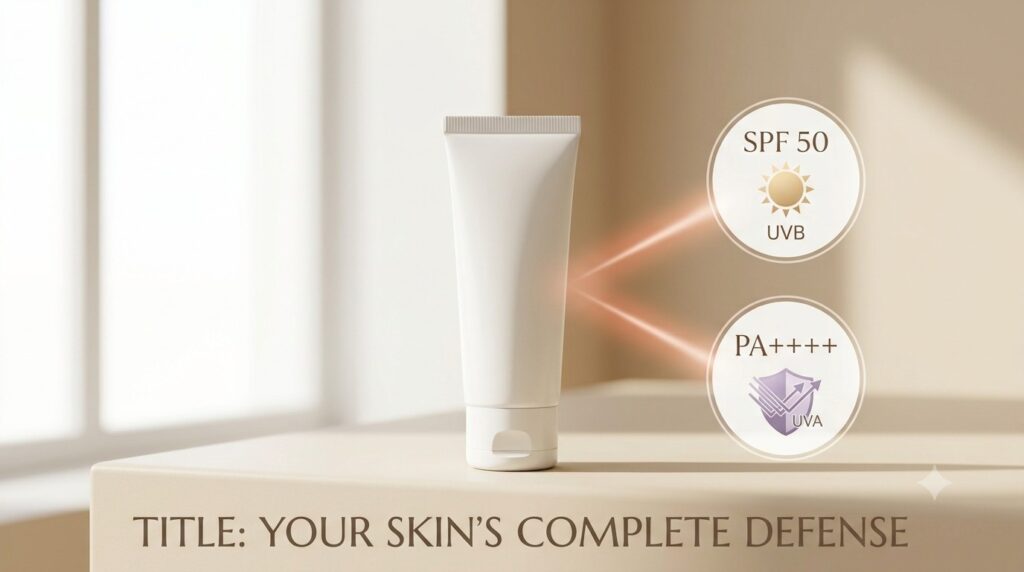
Many humans are recognized only on the SPF number, but every SPF PA is important for total sun protection. SPF (Sun Protection Factor) indicates how well sunscreen protects your pores and skin from UVB rays, which can be particularly responsible for sunburn and increase the risk of pores and skin and most cancers with prolonged exposure. The PA rating measures protection against UVA rays, which penetrate deeper into the skin and contribute to untimely aging, wrinkles, loss of pores, skin elasticity and stubborn pigmentation For everyday use, choose a broad-spectrum sunscreen that protects against both UVA and UVB rays.
Most dermatologists recommend using at least SPF 30 with PA+++ for every day activities. If you spend long periods of time outdoors, playing sports, or uncovering in extreme sunlight, choosing SPF 50 with PA++++ can provide added protection by applying liberally and reapplying frequently. Remember, even an exceptional sunscreen cannot provide its entire protection except that it is utilized within the far appropriate dosage and reapplied during the day.
Step-by-Step Guide: How to Apply Sunscreen Correctly
Step 1: Cleanse and Moisturize First
Always start with oily skin because oil, sweat and dirt can prevent sunscreen from spreading quietly. If your skin feels dry or dehydrated after cleansing, try a daily moisturizer. Sunscreen should always be the last step in your morning skincare routine before makeup. Allow a minute or two for your moisturizer to take in before using sunscreen so that each product can work effectively without pilling or adding uneven layers.
Step 2: Use the Right Amount
Using the right amount of sunscreen is just as important as choosing the right SPF. Most people use most of the effective half of the desired dosage, which means they get much less protection than the SPF noted on the label. For the face and neck, dermatologists generally endorse the two-finger rule, where sunscreen is squeezed along the length of the index finger and middle arm This facilitates creating an even shielding layer that can better protect your pores and skin against dangerous UV rays.
Step 3: Apply Before Going Outdoors
Time additionally impacts how well sunscreen works. Chemical sunscreens need 15 to twenty minutes to bond with pores and skin and emerge as fully potent, like mineral sunscreens start shielding immediately after software Applying sunscreen right after going into direct sunlight exposes your skin in the primary few minutes while UV damage can start earlier, especially On hot summer days
Step 4: Spread It Evenly
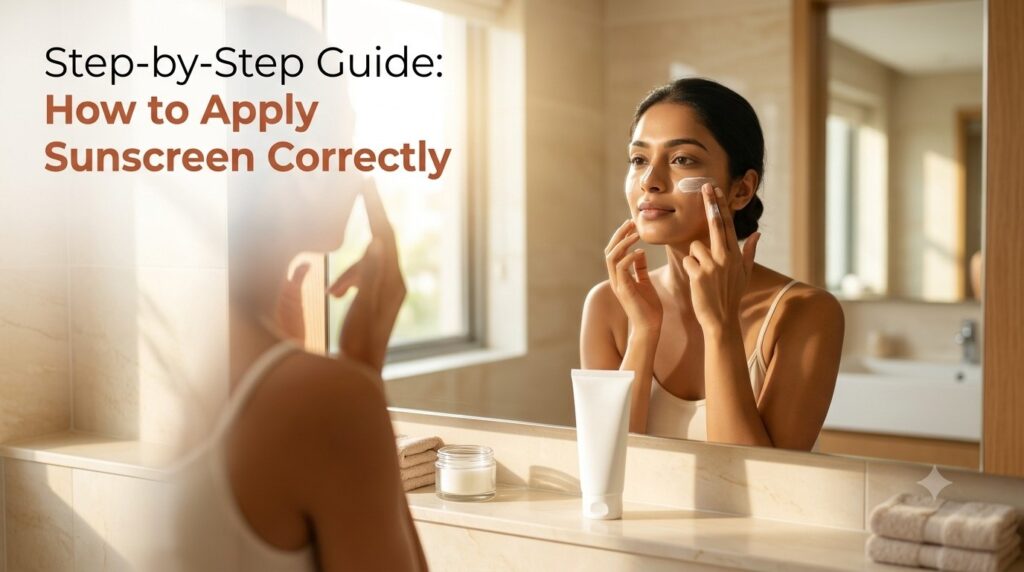
Instead of aggressively rubbing sunscreen onto the skin, lightly release it using a smooth, even shock until every nearby blanket. Strong friction can cause uneven distribution, leaving positive parts of the skin much less protected than others. A solid layer guarantees that sunscreen bureaucracy is a reliable barrier against UVA and UVB rays.
Step 5: Cover Every Exposed Area
Many humans have the easiest awareness on their face and accidentally go various exposed areas unprotected. Ears, neck, hairline, fingers and toes get direct daylight every day and risk tanning, pigmentation and premature aging Taking a few more seconds to apply sunscreen to these often forgotten regions gives more complete solar protection and enables you to preserve good pores and skin tone
Step 6: Reapply Throughout the Day
Sunscreen doesn’t stay quite as potent all day because sunlight, sweat, herbal pores, skin oils, or even regularly touching your face reduces its protective levels If you spend time outdoors, reapply sunscreen every hour to maintain adequate protection. If you are mostly indoors but sit near windows or catch indirect sunlight, it is still beneficial to reapply every 3 to four hours because UVA rays can penetrate glass and contribute to chronic pores and skin damage.
Step 7: Apply Makeup After Sunscreen
If makeup is part of your every day routine, allow your sunscreen to set for three to 5 minutes before using foundation or a different beauty product. This waiting period helps the sunscreen to shape a strong protective film on the skin. When you need to reapply over the course of the day, choose sunscreen sticks, cushions or SPF setting sprays designed for use over makeup, as they help restore sun protection without stressing your finished look
Read this: Effective Ways to Get Rid of Summer Tan Quickly
10 Important Points Everyone Should Know About Sunscreen

- Broad-spectrum conservation is important. Sunscreen classified as the best “SPF” without being “broad-spectrum” can also protect against sunburn and yet not be susceptible to UVA-induced aging and pigmentation
- A higher SPF does not indicate proportionately better protection. SPF 30 blocks about ninety-seven% of UVB rays, as does SPF 50 about ninety-eight%. The real difference comes down to proper dosing and reapplication, not chasing higher numbers.
- Sunscreen expires. Most formulas lose effectiveness after 365 days as soon as they are opened, or as marked by an expiration date. Applying expired sunscreen provides incredible protection.
- Physical and chemical sunscreens work differently. Physical (mineral) sunscreens containing zinc oxide or titanium dioxide sit on the skin and reflect UV rays. Chemical sunscreens absorb UV rays and convert them into heat, which is then released from the skin.
- You also need a sunscreen interior. UVA rays penetrate glass windows, meaning extended time near a window in a home or vehicle however exposes your skin to aging rays
- The blue color from the displays is mild and can contribute to pigmentation. Although research is still evolving, some research proposes that the light seen from prolonged display exposure can additionally worsen melasma and pigmentation in already sensitive skin, making tinted mineral sunscreens with iron oxide particularly useful
- Sunscreen should be the closing stage of skin care, no longer mixed with moisturizer. Combining it with a moisturizer or foundation dilutes the concentration and reduces its labeled degree of safety.
- Water resistance has a time limit. The “water-resistant” on the label generally maintains the SPF by swimming or sweating close to sunscreen for 40 or eighty minutes, no longer indefinitely. Recycling or heavy sweating after swimming is still important.
- Darker pores and skin tones may want sunscreen anyway. While melanin provides some herbal protection, it’s nowhere near enough to protect you from UV damage, pigmentation, or prolonged skin aging.
- Sunscreen complements other solar protection, not replaces it. A combination of hats, sunshades, shade seeking and ultraviolet hours at all altitudes (usually 10am to 4am) provides broadly better universal safety
Common Mistakes People Make With Sunscreen
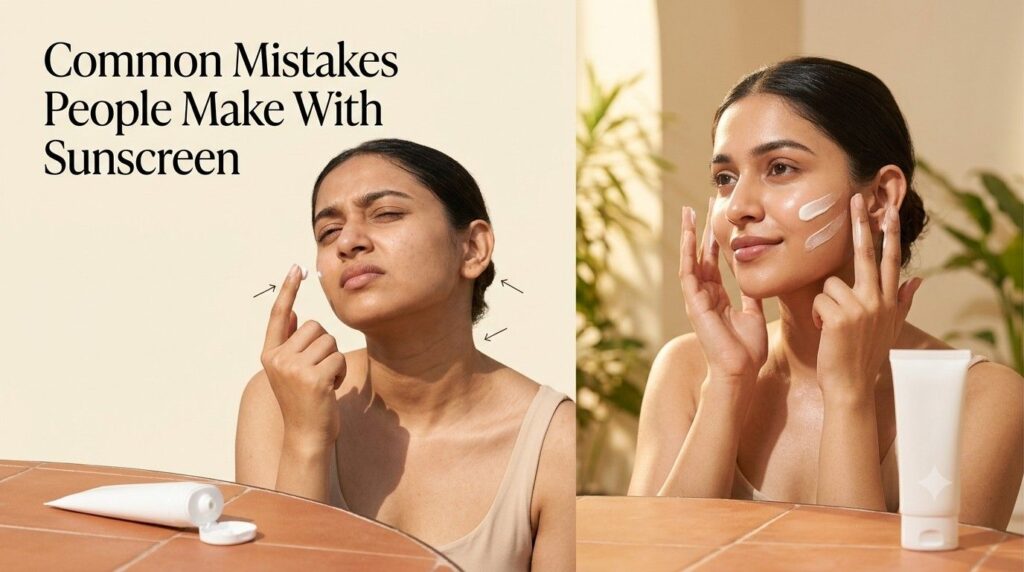
- One of the biggest mistakes humans make is using too little sunscreen. Sunscreen handiest provides the SPF protection noted on the label, when it has been applied for miles in the encouraged amount. Using a thin layer can keep your skin away at the risk of tanning, sunburn, and prolonged UV damage.
- Another common mistake is treating sunscreen as a product too quickly. Sunlight, sweat, excess oil, and normal play in turn lower the protective level. If you spend time outdoors, it’s important to reapply sunscreen every hour to preserve powerful protection.
- Many people additionally focus best on their face, forgetting regions like ears, neck, hairline, arms and tops of feet. These areas receive ordinary solar exposure and often first extend choppy tanning, pigmentation, and signs of premature aging
- A huge misconception is that sunscreen is only desirable on bright, sunny days. In reality, UV rays can penetrate the cloud shield and reach your pores and skin during the year. Making sunscreen a daily reliance, no matter the climate, provides additional constant protection against cumulative solar damage.
- Another mistake is to apply sunscreen as soon as you go outside. For chemical sunscreens, applying them 15–20 minutes before sun exposure can create an effective shielding layer for UV filters. Waiting until you are already in direct sunlight leaves your skin unprotected throughout the initial campaign.
- Finally, many people choose the simplest sunscreen based on the popularity or rate of the symbol. Instead of specializing in advertising claims, look for broad-spectrum components with appropriate SPF and PA ratings to suit your pores and skin type. The best sunscreen is one that you can wear every day without difficulty and reapply consistently.
Read this: Skincare Routine for Beginners
Key Sunscreen Ingredients and What They Actually Do
| Ingredient | Type | Key Benefit |
| Zinc Oxide | Physical/Mineral | Broad UVA/UVB protection, gentle on sensitive skin |
| Titanium Dioxide | Physical/Mineral | Reflects UV rays, suitable for acne-prone and sensitive skin |
| Avobenzone | Chemical | Strong UVA protection, often paired with stabilizers |
| Octocrylene | Chemical | Stabilizes other UV filters, adds water resistance |
| Iron Oxide | Pigment additive (tinted sunscreens) | Protects against visible light-induced pigmentation |
| Niacinamide (added in some formulas) | Skin-soothing agent | Calms skin while reducing oil and redness |
According to dermatology guidance widely referenced by organizations such as the American Academy of Dermatology, daily broad-spectrum sunscreen use remains one of the most effective, evidence-backed methods of preventing premature skin aging and reducing long-term skin cancer risk — more impactful than most other single skincare steps.
Practical Tips for Indian Weather and Skin Tones
India’s sun intensity, humidity, and diverse skin tones call for a few specific adjustments.

- India’s weather varies significantly from region to region, which means the same sunscreen won’t feel comfortable or perform equally well for everyone. In hot and humid cities like Mumbai, Chennai and Kolkata, lightweight gel-based all-or-matte or matte-end sunscreens are often preferred because they absorb quickly and feel much less oily on pores and skin This can make daily sunscreen application more difficult, especially for oily or acne-prone people. If you are staying in hilly or ultra-altitude regions like Himachal Pradesh or Uttarakhand, don’t allow the colder temperatures to fool you. UV radiation is more powerful at higher altitudes, increasing sun damage even when the climate is pleasant. Consistent sunscreen application remains essential for the duration of the year. For Indian pores and skin tones that can be extra sensitive to pigmentation, melasma and up-pimple marks, protection against visible light may be just as necessary as protection against UV rays tinted sunscreens with iron oxide helping reduce the look of cussed dark spots over the years You can offer additional blessings People with oily skin or zits-prone skin should focus on sunscreens labeled non-comedogenic, as they are designed to reduce the risk of clogged pores and breakouts Choosing a texture that suits your skin type increases the chances of always using sunscreen, which is key to long-lasting powerful protection .
- The daily solar exposure for the duration of the commute can also upload quickly. If you travel by motorcycle or scooter regularly, sunscreen works exceptionally well when mixed with physical protection by wearing full sleeves, sunglasses, or a face mask This layered method enables to reduce normal UV exposure and provides more reliable protection at some point outdoors.
Comparing Physical vs Chemical Sunscreens
| Factor | Physical (Mineral) Sunscreen | Chemical Sunscreen |
| How it works | Reflects UV rays | Absorbs and converts UV rays to heat |
| Texture | Can leave a white cast, thicker | Lightweight, blends easily |
| Best for | Sensitive, acne-prone skin | Normal to oily skin without sensitivity |
| Time to activate | Effective immediately | Needs 15-20 minutes before sun exposure |
| Common ingredients | Zinc oxide, titanium dioxide | Avobenzone, octocrylene, octinoxate |
Frequently Asked Questions
1. How much sunscreen should I actually apply on my face?
For your face and neck, use about two finger-lengths of sunscreen. Most people apply much less than the recommended amount, which lowers the actual SPF protection. Apply an even layer and don’t forget areas like the ears and neck for complete sun protection.
2. Do I need sunscreen if I have darker skin?
Yes. Darker skin has more melanin, but it can still develop tanning, pigmentation, premature ageing, and other sun-related damage. Daily sunscreen helps protect your skin barrier and keeps your complexion more even over time.
3. Should I reapply sunscreen over makeup?
Yes. Sunscreen wears off because of sweat, oil, and sun exposure. If you’re wearing makeup, use a sunscreen stick, SPF setting spray, or mineral powder sunscreen for easy reapplication without ruining your makeup.
4. Is sunscreen necessary on cloudy or rainy days?
Yes. UV rays can pass through clouds, so your skin is still exposed even when the sun isn’t visible. Wearing sunscreen daily, regardless of the weather, provides more consistent protection against tanning, pigmentation, and premature ageing.
5. What’s the difference between SPF 30 and SPF 50?
SPF 30 blocks about 97% of UVB rays, while SPF 50 blocks around 98%. The small difference matters less than applying enough sunscreen and reapplying it regularly. A properly applied SPF 30 is often more effective than too little SPF 50.
6. Can I skip sunscreen if I’m indoors all day?
Not always. If you sit near windows or receive natural daylight, UVA rays can still reach your skin and contribute to pigmentation and skin ageing. Applying sunscreen once in the morning is a simple way to maintain daily protection.
Final Thoughts: Protection Is in the Details
Sunscreen simply works as you observe. The proper SPF is too little of a wide variation method even if you use a thin, uneven layer and skip reapplication for the duration of the day. Focus on using a generous, even layer at least 15-20 minutes before sunbathing, don’t forget generally neglected regions such as your neck and ears, and reapply every two to 3 hours while outdoors.
Small changes in how you apply sunscreen make a much bigger difference in the long-term health of your skin than changing merchandise every few months. Get the technique right, live daily, and your skin will already show a difference within years — not just in preventing sunburn these days, however in preventing pigmentation, premature aging and prolonged solar damage

 Admin
Admin