
 Admin
Admin Manage Dryness and Flaking in Sensitive Skin
If you have sensitive skin, you already know the struggle. You find a moisturizer that feels amazing for two days — then suddenly your skin is tight, flaky, and red again. You switch products, and somehow things get worse. It feels like your skin has a mind of its own, and no matter what you do, that persistent dryness and flaking just won’t quit.
Here’s what most skincare advice gets wrong: managing dryness in sensitive skin isn’t just about layering on more moisturizer. Sensitive skin has a compromised skin barrier — and that’s the real root cause of dryness, flaking, redness, and reactivity. When you understand what’s actually happening beneath the surface, the path to calm, hydrated skin becomes a lot clearer.
In this guide, we’re going deep: the science of sensitive, dry skin, the mistakes that make it worse, the ingredients that actually help, and a complete daily routine you can follow starting today. Whether your sensitivity is genetic, triggered by environment, or the result of over-exfoliating, this guide is for you.
What Is Sensitive Skin, Really?

“Sensitive skin” is one of the most commonly used terms in skincare — but it’s actually more of an experience than a medical diagnosis. Dermatologists define sensitive skin as skin that reacts more intensely to stimuli (products, temperature, environment, stress) than non-sensitive skin would. This reactivity shows up as redness, stinging, burning, itching, dryness, and yes — flaking.
Sensitive skin typically falls into a few categories:
- Naturally sensitive skin — often genetic; the skin barrier is inherently thinner or produces less sebum
- Reactive skin — triggered by environmental factors like pollution, hard water, cold weather, or wind
- Sensitized skin — skin that has become sensitive due to overuse of harsh products, over-exfoliation, or retinoid use
- Skin with a condition — eczema (atopic dermatitis), rosacea, psoriasis, and contact dermatitis all involve heightened sensitivity
Regardless of the category, dry, flaking sensitive skin nearly always comes back to one thing: a weakened or compromised skin barrier. Let’s talk about what that actually means.
The Skin Barrier: Why It’s Everything for Sensitive Skin
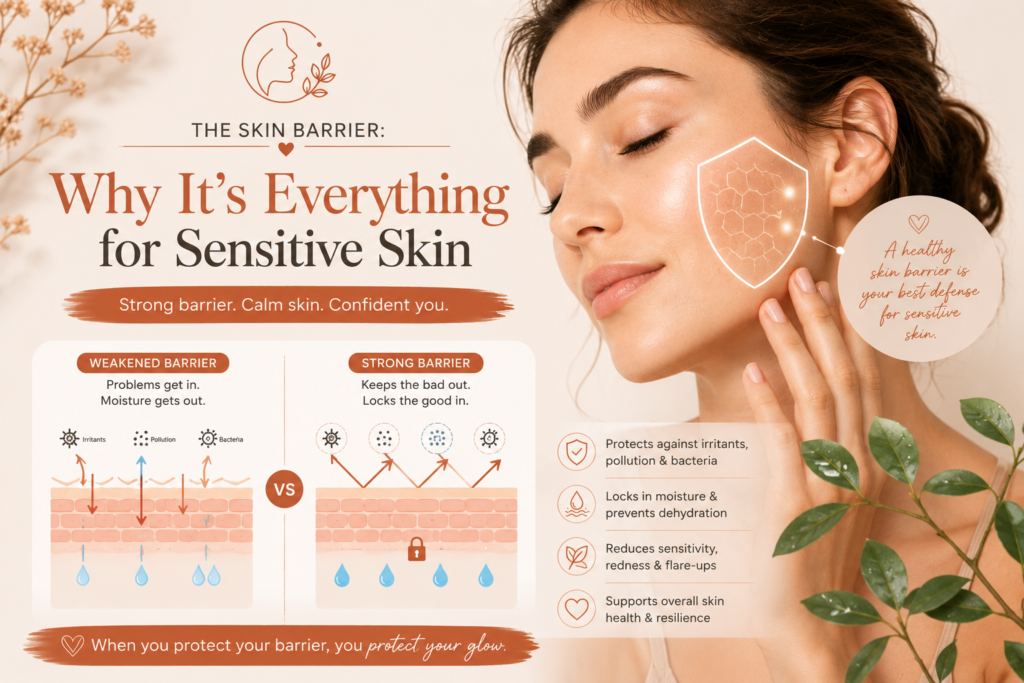
Your skin barrier — formally called the stratum corneum — is the outermost layer of skin. Think of it like a brick wall: your skin cells are the bricks, and a combination of lipids (ceramides, cholesterol, and fatty acids) are the mortar holding them together. This wall has two critical jobs: keeping moisture in and keeping irritants, bacteria, and allergens out.
When the skin barrier is healthy, skin stays hydrated, supple, and calm. When it’s compromised — either from genetics, harsh products, weather, or illness — the mortar between those bricks starts to crack. Moisture escapes (this is called transepidermal water loss, or TEWL), and irritants get in more easily. The result? Dryness, flaking, tightness, and heightened sensitivity.
Common causes of a compromised skin barrier in sensitive skin include:
- Over-cleansing or using soaps with high pH levels (normal skin pH is 4.5-5.5; harsh soaps can push it to 9-10)
- Over-exfoliating — using acids, scrubs, or retinoids too frequently strips the lipid layer
- Cold, dry, or windy weather — accelerates TEWL dramatically
- Long, hot showers — hot water dissolves the natural oils that protect your barrier
- Fragrance and alcohol in skincare — two of the most common barrier disruptors
- Chronic stress — elevated cortisol levels impair barrier repair and increase inflammatory responses
Read this: How to Repair Your Skin Barrier
The Difference Between Dryness and Dehydration in Sensitive Skin
This is a distinction that genuinely changes how you approach your routine — and most people miss it. Dry skin and dehydrated skin look similar (both flake and feel tight) but they have different causes and need different solutions.
Dry skin:
Dry skin is a skin type — meaning it’s a structural issue where your skin naturally produces less sebum (oil) than normal. This is largely genetic. Dry skin is typically rough, flaky, and dull. It lacks oil, not just water. The fix involves occlusive and emollient ingredients that replace what the skin can’t produce on its own.
Dehydrated skin:
Dehydrated skin is a condition — any skin type, including oily skin, can become dehydrated. It means the skin lacks water, not necessarily oil. Dehydrated skin looks dull, feels tight, and may show fine lines that disappear when you press gently. It can happen to anyone, triggered by climate, diet, inadequate moisturizing, or barrier damage. The fix is humectant ingredients that attract and hold water in the skin.
Many people with sensitive skin have both dry skin type AND dehydration — which is why a comprehensive approach that addresses both oil content and water content is so important.
The Best Ingredients for Dry, Flaking Sensitive Skin

When it comes to treating sensitive, dry skin, ingredients matter more than any other factor. The wrong ingredient — even in a product marketed for sensitive skin — can trigger a flare-up instantly. Here’s what to look for and why:
Humectants — Attract and Hold Moisture
Humectants are water-binding ingredients that draw moisture from the environment (and from deeper layers of your skin) to the surface. They’re the first line of defence against dehydration.
- Hyaluronic acid — can hold up to 1,000x its weight in water; lightweight and well-tolerated by even the most reactive skin
- Glycerin — one of the gentlest, most effective humectants available; great for extremely sensitive or eczema-prone skin
- Aloe vera — soothes inflammation while providing lightweight hydration
Emollients — Smooth and Soften
Emollients fill the spaces between skin cells, smoothing rough texture and reducing flaking. They’re essential for dry skin types.
- Ceramides — identical to the lipids already in your skin barrier; essentially repair the ‘mortar’ between skin cells
- Squalane — a lightweight, non-comedogenic oil derived from olives or sugarcane; deeply nourishing and extremely well-tolerated
- Shea butter — rich in fatty acids, ideal for very dry or eczema-prone skin
- Oat extract (colloidal oatmeal) — clinically proven to reduce inflammation, itching, and flaking in sensitive and eczema skin
Occlusives — Seal in Moisture
Occlusives create a physical barrier on the skin’s surface to prevent water from evaporating. They’re especially important in cold or dry climates.
- Petrolatum (petroleum jelly) — one of the most effective occlusives known to dermatology; non-comedogenic and safe for sensitive skin
- Dimethicone — a silicone that forms a breathable protective layer; lightweight and non-greasy
- Beeswax — natural occlusive that also has mild anti-inflammatory properties
Barrier-Repairing Heroes
- Niacinamide (Vitamin B3) — strengthens the skin barrier, reduces redness, and regulates oil production; excellent for sensitive skin at 2-5% concentration
- Panthenol (Pro-Vitamin B5) — deeply moisturizing, promotes skin healing, and reduces inflammation
- Allantoin — skin-softening ingredient that promotes cell turnover gently and reduces irritation
Ingredients to Avoid If You Have Sensitive, Dry Skin
Knowing what to avoid is just as important as knowing what to use. These common ingredients can trigger reactions, worsen flaking, and disrupt the skin barrier in sensitive skin types:
- Fragrance and parfum — the number one cause of contact dermatitis and skin reactions; always check for this on ingredient labels
- Denatured alcohol (SD alcohol, alcohol denat.) — strips the skin’s natural oils and disrupts the microbiome
- Sodium lauryl sulfate (SLS) — a harsh surfactant commonly found in cleansers that destroys the lipid barrier
- High-concentration AHAs and BHAs — glycolic acid, salicylic acid, and lactic acid in high percentages can cause immediate irritation and barrier disruption
- Essential oils (tea tree, eucalyptus, citrus oils) — despite being ‘natural,’ they are highly irritating for sensitive skin
- Preservatives like methylisothiazolinone (MI) — a well-documented allergen in rinse-off and leave-on products
Read this: 10 Best Dry Skin Foundation Tips In India
A Complete Daily Routine for Sensitive, Dry, Flaking Skin

Here’s a gentle, effective routine built specifically for managing dryness and flaking in sensitive skin. Every step is intentional — nothing is there just for marketing purposes.
Morning Routine
- Gentle Rinse or Micellar Water Cleanse
In the morning, your skin doesn’t need a full cleanse — it hasn’t been exposed to pollution or sunscreen overnight. A simple lukewarm water rinse or a swipe of micellar water is enough to remove any overnight product residue. If you must cleanse, use a creamy, fragrance-free, pH-balanced cleanser. Avoid hot water entirely — it breaks down the lipid barrier immediately.
- Hydrating Toner or Essence (Optional)
A calming, hydrating toner with glycerin, panthenol, or aloe vera adds a first layer of moisture and preps the skin to absorb what comes next. Apply by gently pressing into the skin with your palms — never use a cotton pad, which creates unnecessary friction on flaking skin.
- Ceramide-Rich Moisturizer
This is the heart of your morning routine. Apply a ceramide-rich, fragrance-free moisturizer while your skin is still slightly damp from cleansing or toning. The dampness helps humectants work more effectively. Look for creams containing ceramides + hyaluronic acid + niacinamide — this combination hydrates, repairs, and protects all at once.
- Mineral SPF (Non-Negotiable)
UV damage weakens the skin barrier and worsens dryness and flaking over time. A mineral SPF with zinc oxide or titanium dioxide is best for sensitive skin — chemical SPF filters can cause stinging and redness in reactive skin. Choose a formula with moisturizing agents already included to keep your routine streamlined.
Evening Routine
- Oil Cleanse + Gentle Second Cleanse (Double Cleansing)
At night, you need to remove SPF, pollution, and any makeup. Start with a gentle cleansing oil or balm (even sensitive skin can do this — the right oils don’t strip the barrier), followed by a mild, fragrance-free gel or cream cleanser. Never rely on one harsh cleanser to do all the work — it strips too much.
- Treatment Serum (Barrier-Focused)
In the evening, apply a gentle treatment serum focused on barrier repair. A serum with niacinamide, ceramides, and panthenol is ideal. If you want to incorporate retinol for anti-aging or cell turnover, use a very low concentration (0.025-0.1%) encapsulated retinol and only 1-2 nights per week — always follow with a rich moisturizer. Never use retinol and strong acids in the same routine.
- Rich Night Moisturizer or Sleeping Mask
Night is when skin repair is most active (cellular turnover peaks between 11pm and 4am). Use a richer, more emollient moisturizer than your daytime cream. An overnight sleeping mask with shea butter, squalane, or oat extract is excellent for severely dry or flaking skin.
- Occlusive Seal (When Flaking Is Severe)
If your skin is severely dry or flaking, apply a thin layer of petrolatum or a balm-like occlusive as the final step. This is called ‘slugging’ in the skincare community. It completely seals in all the moisture from previous layers. Use just a small amount — a thin film is enough. This is only recommended for nighttime use.
Beyond Products: Lifestyle Factors That Affect Skin Dryness

No skincare routine works in isolation. Your lifestyle has a profound impact on how dry and reactive your skin is — and addressing these factors can make a bigger difference than any product swap.
Hydration and Diet
Drinking adequate water (around 2 litres daily) helps maintain skin hydration from the inside. Omega-3 fatty acids — found in salmon, flaxseeds, chia seeds, and walnuts — are particularly important for sensitive, dry skin. They directly support the skin’s lipid barrier. A diet rich in antioxidants (berries, leafy greens, vitamin E-rich foods) also helps combat the inflammation that drives sensitivity.
Humidity and Environment
Indoor heating and air conditioning dramatically reduce air humidity, accelerating moisture loss from the skin. A humidifier in your bedroom (aim for 40-60% relative humidity) can make a noticeable difference in skin hydration, especially during winter months. Avoid standing directly in front of heaters or air conditioning units.
Shower and Bathing Habits
Short, lukewarm showers (5-10 minutes maximum) are significantly better for sensitive, dry skin than long, hot ones. Apply your moisturizer within 3 minutes of getting out of the shower — while skin is still slightly damp — to lock in maximum hydration. This ‘damp skin moisturizing’ technique is one of the most underrated tips in dermatology.
Stress Management
Chronic stress elevates cortisol, which impairs the skin barrier, increases inflammation, and triggers flares in sensitive skin conditions like eczema and rosacea. Regular stress-management practices — even just 10-15 minutes of deep breathing, yoga, or walking daily — have measurable positive effects on skin health. This isn’t a soft suggestion; it’s backed by significant clinical research.
Read this: Natural Skincare Routine for Healthy & Glowing Skin
Common Mistakes That Make Sensitive, Dry Skin Worse
- Over-exfoliating to remove flakes
It seems logical — if skin is flaking, exfoliate to remove dead cells. But for sensitive skin, this is one of the worst things you can do. Scrubs and high-concentration acids remove not just dead cells but also the lipid barrier. The result is more flaking, more reactivity, and a skin barrier that takes weeks to recover.
- Using too many products at once
More is not more when it comes to sensitive skin. A 10-step routine increases the number of potential irritants your skin is exposed to. Stick to a simple, focused routine of 3-5 products with well-tolerated ingredients.
- Constantly switching products
When sensitive skin reacts, the instinct is to immediately switch products. But constantly introducing new formulas means your barrier never gets a chance to stabilize. When you find something that works, stick with it. Give new products a minimum of 4-6 weeks before evaluating whether they’re working.
- Skipping SPF because it irritates
SPF sensitivity is usually about the formula, not sunscreen itself. Switching to a mineral-only, fragrance-free SPF almost always solves the problem. UV damage is the leading cause of premature aging and barrier breakdown — skipping it is not an option.
- Applying products on dry skin
Applying moisturizer on completely dry skin means you’re relying entirely on the product to provide moisture. Applying to slightly damp skin allows humectants to do their job much more effectively, significantly boosting hydration.
When to See a Dermatologist

While this guide covers the most effective at-home approaches to managing sensitive, dry skin, there are times when professional help is necessary. See a board-certified dermatologist if:
- Flaking is severe, widespread, or accompanied by significant redness and swelling
- You suspect you have eczema, psoriasis, rosacea, or another diagnosed condition
- OTC products have made no improvement after 8 weeks of consistent use
- You experience intense itching, oozing, or crusting alongside dryness
- Your dryness appears suddenly and severely with no obvious trigger — it may be a sign of an underlying health condition
A dermatologist can prescribe prescription-strength barrier repair creams, topical steroids for flare management, or investigate potential allergies via patch testing — none of which are available over the counter.
Your Sensitive Skin Cheat Sheet at a Glance
DO:
- Use fragrance-free, minimal-ingredient products
- Moisturize on damp skin, every morning and night
- Look for ceramides, hyaluronic acid, glycerin, niacinamide, and panthenol
- Use a humidifier indoors, especially in winter
- Patch test every new product before full application
DON’T:
- Use hot water on your face or body
- Over-exfoliate — maximum once a week, very gently, if at all
- Use products with alcohol, fragrance, or essential oils
- Layer too many products at once
- Skip SPF — switch to mineral SPF if chemical filters irritate you
Frequently Asked Questions (FAQs)
1. Why is my sensitive skin always dry and flaky even after moisturizing?
A damaged skin barrier is often the main reason sensitive skin stays dry and flaky despite regular moisturizing. When the barrier is weakened, moisture escapes easily, leading to persistent dryness, irritation, and redness. Using barrier-repair ingredients like ceramides, glycerin, and niacinamide can help restore healthy skin function.
2. What are the best ingredients for dry, sensitive skin?
The best ingredients for dry, sensitive skin include ceramides, hyaluronic acid, glycerin, panthenol, niacinamide, squalane, and colloidal oatmeal. These ingredients help hydrate the skin, strengthen the barrier, and reduce irritation without causing further sensitivity.
3. Can over-exfoliation cause flaking and sensitivity?
Yes. Over-exfoliation can strip away the skin’s natural protective barrier, causing dryness, flaking, redness, and increased sensitivity. People with sensitive skin should exfoliate very gently and only when necessary.
4. How long does it take to repair a damaged skin barrier?
A mildly damaged skin barrier may improve within 2–4 weeks, while more severe damage can take 6–8 weeks or longer. Consistent use of gentle, fragrance-free skincare products is essential for effective recovery.
5. Should people with sensitive skin wear sunscreen every day?
Yes. Daily sunscreen use helps protect the skin barrier from UV damage, which can worsen dryness, irritation, and premature aging. Mineral sunscreens containing zinc oxide or titanium dioxide are usually the best choice for sensitive skin.
Final Thoughts
Managing dryness and flaking in sensitive skin isn’t about finding the single magic product — it’s about building a consistent, gentle, barrier-focused routine and giving it time to work. The skin barrier is incredibly resilient when given the right support. With the right ingredients, a simplified routine, and a few key lifestyle adjustments, even severely dry and reactive skin can become calm, hydrated, and comfortable.
Start with the basics: a gentle cleanser, a ceramide-rich moisturizer, and a mineral SPF. Add one thing at a time. Patch test everything. Be patient — skin barrier repair typically takes 4-8 weeks of consistent care to show significant improvement. You’re not looking for an overnight fix; you’re rebuilding your skin’s natural defences.
Your skin is doing its best. The kindest thing you can do is meet it where it is, stop overwhelming it with too much too fast, and give it the gentle, consistent care it genuinely needs.
Have a sensitive skin tip that’s worked for you? Share it in the comments below — we’d love to hear from you!

 Admin
Admin
[…] Read this: Manage Dryness and Flaking in Sensitive Skin […]
[…] Read this: Manage Dryness and Flaking in Sensitive Skin […]