 Admin
Admin Introduction
Long before ice rollers and cryotherapy facials became popular skincare trends, Indian households were already using a simple ice cube wrapped in cloth to deal with puffy eyes, tired skin, and pre-wedding glow-ups. This traditional home remedy has quietly stood the test of time, and today, the benefits of ice on face are being validated, at least partially, by dermatological science rather than just passed-down household wisdom.
That said, ice therapy for skin isn’t a one-size-fits-all miracle solution, and using it incorrectly, particularly applying ice directly onto bare skin without any barrier, can genuinely cause harm rather than help. Understanding both the real, science-backed benefits and the necessary precautions is essential before making this a regular part of your routine, especially given how frequently this practice gets exaggerated or misapplied based on social media trends.
In this guide, we’ll explore exactly what happens to your skin when ice is applied, the genuine benefits you can expect, how it compares to a simple cold water splash, safe application techniques, and dermatologist-backed guidance on who should avoid this practice entirely, all explained specifically for Indian skin dealing with heat, humidity, and pollution.
What are the benefits of ice on face?
Ice on face temporarily reduces puffiness through vasoconstriction, calms mild inflammation from acne or sunburn, and creates a temporary tightening effect that makes pores appear smaller. It also helps set makeup and gives skin a brief, refreshed glow, though these effects are short-lived and require proper technique, using a cloth barrier, to avoid skin damage.
Table of Contents
- What Happens to Skin When You Apply Ice
- Key Benefits of Ice on Face
- Ice Therapy vs Cold Water Splash
- How to Use Ice on Face Safely
- Common Mistakes to Avoid
- Myths vs Facts About Ice on Face
- Expert Tips for Best Results
- Who Should Avoid Ice Therapy
- Conclusion
- FAQs
What Happens to Skin When You Apply Ice
Understanding the actual physiological response your skin has to cold temperature helps explain why ice therapy produces the specific effects it does, rather than treating it as a vague, unexplained home remedy.

When ice contacts the skin, blood vessels near the surface undergo vasoconstriction, meaning they temporarily narrow in response to the cold. This is your body’s natural protective mechanism to reduce heat loss, and it produces the visible tightening and reduced redness effect that many people notice immediately after applying ice to their face. This vasoconstriction is genuinely useful for temporarily reducing puffiness and calming visible inflammation, both common concerns for Indian skin dealing with heat, sweat, and occasional breakouts.
Following this initial vasoconstriction, once the ice is removed and skin temperature normalizes, blood vessels dilate again, a process called reactive hyperemia, which brings a fresh rush of blood flow to the area. This is why skin often appears pink and slightly flushed immediately after ice application, followed by what many describe as a healthy, refreshed glow as circulation improves in the treated area.
Cold temperature also has a mild numbing effect on nerve endings, which is why ice therapy can provide temporary relief from the discomfort of an inflamed pimple or minor sunburn, working similarly to how a cold compress helps reduce pain and swelling from a minor injury elsewhere on the body.
It’s important to understand that these effects are genuinely temporary, typically lasting anywhere from a few minutes to a couple of hours, since the underlying causes of puffiness, inflammation, or dullness aren’t being permanently resolved, just temporarily managed through this cold-induced circulatory response.
Key Benefits of Ice on Face
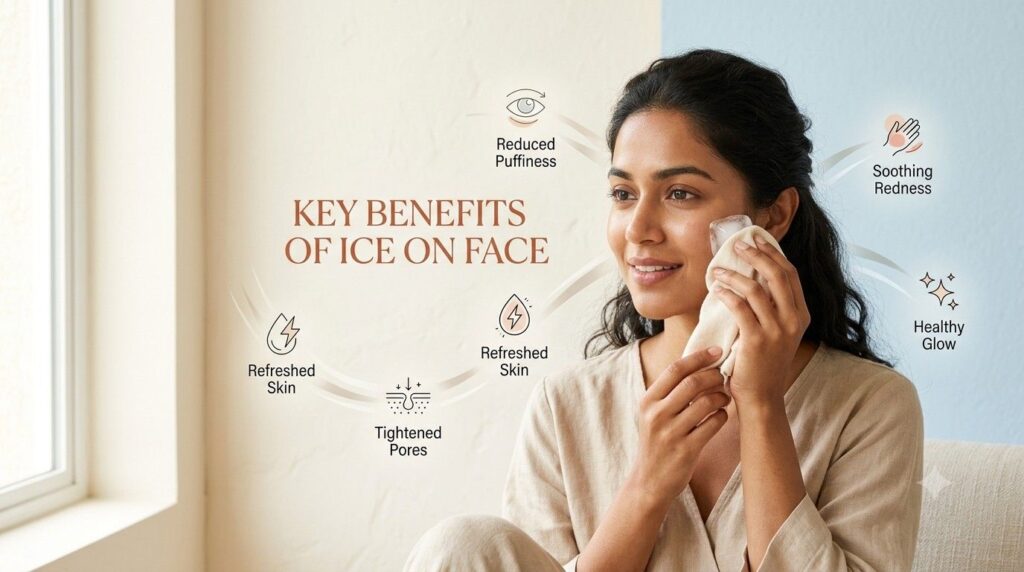
Ice therapy offers several specific, temporary benefits for skin, each rooted in the vasoconstriction and circulatory mechanisms explained above.
1. Reduces Under-Eye Puffiness
Under-eye puffiness, extremely common among Indian professionals dealing with irregular sleep schedules and long work hours, often results from fluid retention in the delicate skin around the eyes. Applying a cloth-wrapped ice cube gently under the eyes for a few minutes helps constrict blood vessels and reduce this fluid buildup temporarily, offering a quick, practical fix before an important meeting or event, even though it doesn’t address the underlying cause, such as poor sleep or high salt intake the previous night.
2. Calms Inflamed Acne
For an actively inflamed, painful pimple, brief ice application can help reduce redness and swelling by constricting the blood vessels feeding that inflamed area. This provides temporary relief and can make an inflamed pimple appear noticeably less prominent within minutes, a genuinely useful trick before stepping out, though it’s important to understand that ice doesn’t treat the underlying bacterial or hormonal causes of acne itself.
3. Creates a Temporary Pore-Tightening Effect
Many people report that their pores appear smaller immediately after using ice on their face. This happens because the cold temperature causes the surrounding skin tissue to temporarily contract, creating the visual appearance of tighter pores. It’s worth being clear that pore size is largely determined by genetics and cannot be permanently altered, meaning this tightening effect, while visually satisfying, is cosmetic and temporary rather than a genuine, lasting change to pore structure.
4. Helps Makeup Sit Better
A quick ice application before makeup application is a technique long used by Indian brides and makeup artists alike, since the temporary skin tightening and reduced puffiness create a smoother base, helping foundation and concealer sit more evenly and last longer throughout long wedding functions or event days.
5. Provides Quick Relief from Sunburn or Heat Rash
During intense Indian summers, ice wrapped in cloth can offer soothing, temporary relief for mildly sunburned or heat-irritated skin, working similarly to a cold compress by reducing surface inflammation and providing comfort, though more severe sunburn requires proper medical care rather than relying on ice alone.
Read this: Your Skin not Glowing Even After Using the Right Products
Ice Therapy vs Cold Water Splash
Many people wonder whether a simple cold water splash offers similar benefits to using ice directly, and understanding the genuine differences helps clarify when each method is more appropriate.
| Aspect | Ice Therapy | Cold Water Splash |
| Intensity of Cooling | Stronger, more targeted | Milder, more generalized |
| Best For | Localized puffiness, inflamed acne | Overall refreshment, mild wake-up effect |
| Duration of Effect | Slightly longer-lasting tightening | Shorter-lived refreshment |
| Risk of Skin Damage | Higher if used incorrectly (needs cloth barrier) | Very low risk |
| Convenience | Requires ice availability, slightly more effort | Instantly available with tap water |
As this comparison shows, ice therapy offers a more intense, targeted cooling effect suited for specific concerns like localized puffiness or an inflamed pimple, while a cold water splash provides a gentler, more generalized refreshing sensation suitable for a quick daily wake-up routine without any specific targeted concern. For readers seeking a simple daily habit with minimal risk, a cold water splash is genuinely sufficient, while ice therapy is better reserved for specific, occasional situations requiring more targeted cooling.
How to Use Ice on Face Safely
Correct technique is genuinely essential when using ice on your face, since improper application is one of the most common causes of unnecessary skin damage from this otherwise beneficial practice.

Never apply ice directly onto bare skin. Always wrap ice cubes in a clean, soft cloth or use a designated ice roller with proper insulation, since direct, prolonged contact between ice and skin can cause frostbite, redness, or damage to the skin’s delicate surface, particularly around sensitive areas like the under-eye region.
Limit application to short bursts of no more than thirty seconds at a time on any single area, moving the ice gently in circular motions rather than holding it stationary in one spot. This prevents excessive cold exposure to any particular area while still allowing you to cover your entire face or targeted zones effectively within a reasonable two to three minute session.
Always start with clean skin before applying ice, since this prevents trapping dirt, bacteria, or makeup residue against your skin during the cooling process, which could otherwise contribute to clogged pores rather than the refreshing effect you’re aiming for.
Follow up ice application with your regular moisturizer, since the temporary vasoconstriction and cold exposure can leave skin slightly more prone to dryness immediately afterward, and locking in hydration helps maintain the refreshed, plump appearance ice therapy is meant to provide.
Limit ice application to two to three times a week at most for general use, or as an occasional quick fix for specific concerns like sudden puffiness or an inflamed pimple, rather than making it an aggressive daily habit that could over-stress the skin’s blood vessels and barrier function over time.
Read this: Brown Spots on Face
Common Mistakes to Avoid
Several common mistakes reduce the benefits of ice therapy or, more concerningly, cause unnecessary skin damage that could otherwise be easily avoided with correct technique.
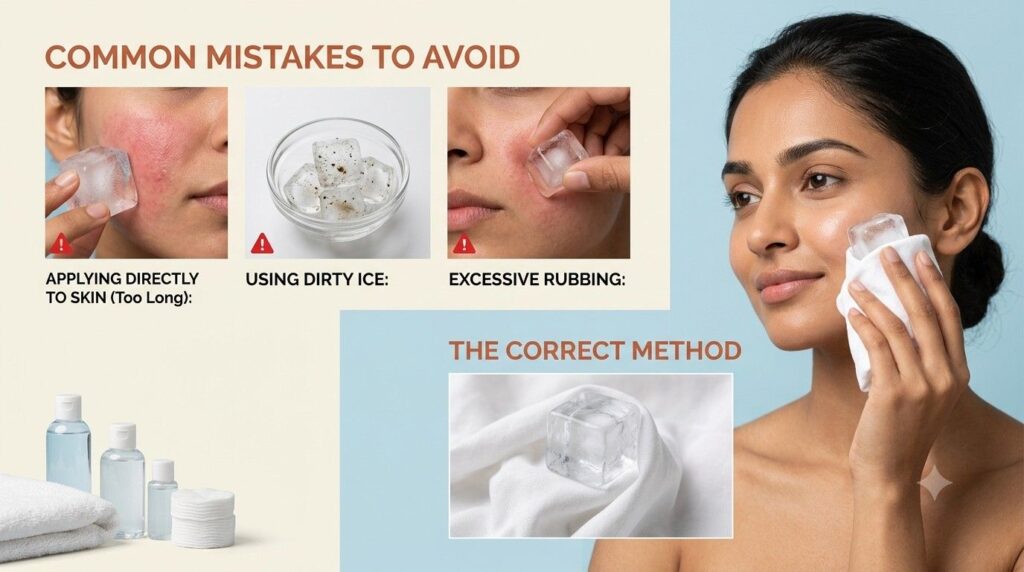
The single most significant mistake is applying ice directly to bare skin without any cloth barrier, often done in an attempt to maximize the cooling effect. This dramatically increases the risk of frostbite or cold burn, a genuine skin injury that can cause redness, blistering, and even temporary numbness if ice contact is prolonged or repeated without proper insulation.
Another frequent error is holding ice stationary on one spot for an extended period, rather than moving it continuously in gentle circular motions. Prolonged, fixed contact concentrates cold exposure on a single area, increasing injury risk without providing any additional cosmetic benefit compared to shorter, moving application.
Many people also expect ice therapy to permanently shrink pores or cure acne, based on exaggerated social media claims. As explained earlier, these effects are genuinely temporary and cosmetic, and relying on ice as a substitute for proper, consistent skincare, such as a suitable cleanser or targeted acne treatment, often leads to disappointment and neglect of more effective, evidence-based solutions.
Lastly, using ice on already broken, actively bleeding, or severely inflamed skin, such as a popped pimple with open skin, can introduce additional irritation or bacteria rather than providing the intended soothing benefit, making it important to reserve ice therapy for intact, non-broken skin only.
Myths vs Facts About Ice on Face
Given how often ice therapy is discussed with exaggerated claims online, separating genuine effects from popular misconception helps set realistic, safe expectations.
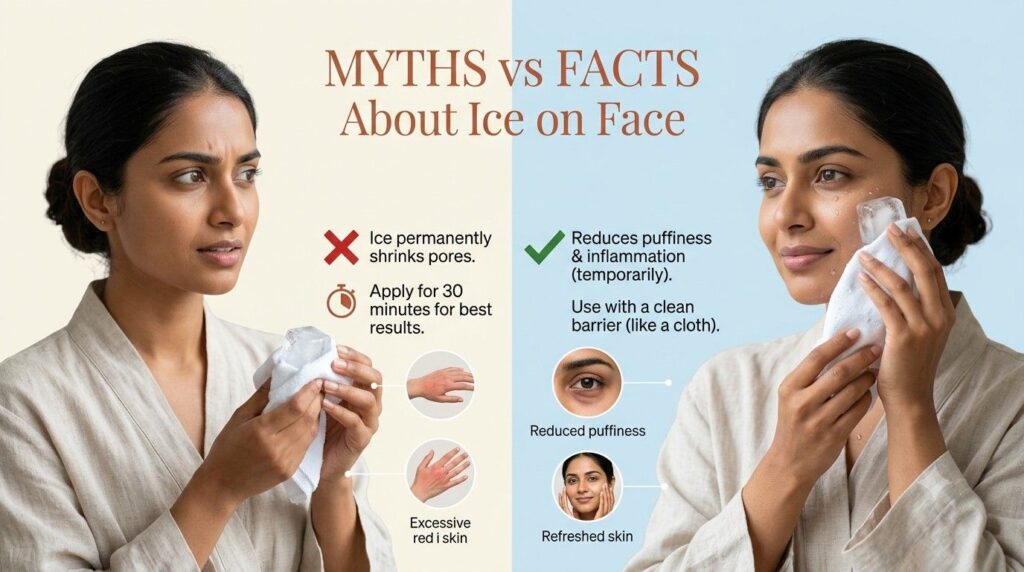
Myth 1: Ice permanently shrinks pore size. Fact: Ice creates a temporary tightening effect due to tissue contraction from cold exposure, but pore size is largely determined by genetics and cannot be permanently altered through ice therapy or any topical treatment.
Myth 2: The colder the ice, the better the results. Fact: Standard ice cubes provide sufficient cooling for skin benefits; using extremely cold sources like dry ice or prolonged direct contact significantly increases injury risk without proportional additional benefit.
Myth 3: Ice therapy can replace your regular skincare routine. Fact: Ice offers temporary cosmetic benefits like reduced puffiness and calmed inflammation, but it doesn’t replace essential steps like cleansing, moisturizing, sunscreen, or targeted acne treatment.
Myth 4: Applying ice daily multiple times a day maximizes benefits. Fact: Excessive, frequent ice application can stress the skin’s blood vessels and barrier function over time; two to three times a week, or as an occasional targeted fix, is generally sufficient.
Myth 5: Ice is completely risk-free since it’s a natural remedy. Fact: Direct, prolonged, or improper ice application can cause genuine skin damage, including frostbite or cold burn, making proper technique with a cloth barrier essential for safety.
Read this: Homemade Face Cleanser for Daily Use and Glowing Skin
Expert Tips for Best Results
Dermatologists generally view ice therapy as a safe, mild complementary practice when used correctly, and a few professional insights help maximize its genuine benefits while minimizing risk.
Using a soft, clean cloth or a cotton sock as a barrier between ice and skin, rather than direct contact, remains the single most important safety practice, allowing you to enjoy the cooling benefits without risking frostbite or unnecessary skin irritation from prolonged cold exposure.
For under-eye puffiness specifically, gently pressing the wrapped ice against the area for no more than fifteen to twenty seconds at a time, with brief breaks in between, offers effective de-puffing without over-stressing the delicate, thin skin in this particular region.
Combining ice therapy with your existing skincare routine, such as using it briefly before applying a hydrating serum or moisturizer, rather than as a standalone treatment, allows you to benefit from both the temporary cosmetic effect and your regular routine’s more lasting, targeted benefits.
Reserving ice therapy for specific situations, such as before an important event, after a particularly hot and sweaty commute, or to calm an occasional inflamed pimple, rather than making it an aggressive daily habit, aligns with how dermatologists generally recommend using this practice for genuine, sustainable benefit.
Who Should Avoid Ice Therapy
While ice therapy is broadly safe when used correctly, certain groups should approach this practice with additional caution or avoid it entirely.

People with rosacea or other conditions involving highly reactive blood vessels should generally avoid ice therapy, since the repeated vasoconstriction and dilation cycle can potentially worsen visible redness and vascular sensitivity over time, making this practice counterproductive for their specific skin condition.
Anyone with broken skin, open wounds, active cystic acne, or recent facial procedures like chemical peels or laser treatments should avoid ice application on affected areas until their dermatologist confirms it’s safe, since cold exposure on compromised or healing skin can interfere with proper recovery.
Individuals with cold urticaria, a rare condition causing allergic-type reactions to cold exposure, including hives or swelling, should avoid ice therapy entirely and consult a dermatologist if they notice unusual reactions like excessive redness, itching, or swelling after cold exposure to their skin.
Read this: Skin Purging vs Breakout
Conclusion
The genuine benefits of ice on face lie in its ability to temporarily reduce puffiness, calm inflamed acne, and provide a quick, refreshing tightening effect, all rooted in the skin’s natural vasoconstriction response to cold temperature. These effects, while real and dermatologist-acknowledged, are temporary and cosmetic rather than permanent solutions for pore size, acne, or ageing. Used correctly, always with a cloth barrier and in short, gentle sessions, ice therapy can be a safe, practical, and genuinely useful addition to an Indian skincare routine, particularly for quick fixes before events or relief from summer heat-related skin irritation.
FAQs
1. What are the main benefits of ice on face?
Ice on face temporarily reduces puffiness, calms inflamed acne, creates a tightening effect that makes pores appear smaller, and helps makeup sit better, though these effects are short-lived.
2. Is it safe to apply ice directly on the face?
No, ice should always be wrapped in a clean cloth before application, since direct contact with bare skin can cause frostbite or cold burn, particularly with prolonged use.
3. Does ice permanently reduce pore size?
No, ice creates only a temporary tightening effect through tissue contraction; pore size is genetically determined and cannot be permanently changed through ice therapy.
4. How often should I use ice on my face?
Two to three times a week for general use, or as an occasional targeted fix for specific concerns like sudden puffiness, is generally sufficient and safe.
5. Can ice help reduce acne breakouts?
Ice can temporarily calm redness and swelling from an inflamed pimple, but it doesn’t address the underlying bacterial or hormonal causes of acne and shouldn’t replace proper acne treatment.
6. Is ice good for under-eye puffiness?
Yes, gently applying cloth-wrapped ice under the eyes for fifteen to twenty seconds can help reduce temporary fluid-related puffiness, particularly useful after a poor night’s sleep.
7. Can ice therapy help before applying makeup?
Yes, a brief ice application before makeup can create a smoother, temporarily tighter base, helping foundation and concealer sit more evenly, a technique commonly used before Indian wedding functions.
8. Who should avoid using ice on their face?
People with rosacea, cold urticaria, active open wounds, or those who recently underwent facial procedures like chemical peels should avoid ice therapy or consult their dermatologist first.
9. Does ice help with sunburn or heat rash?
Cloth-wrapped ice can provide soothing, temporary relief for mild sunburn or heat rash, though more severe sunburn requires proper medical care rather than relying on ice alone.

 Admin
Admin