 Admin
Admin Blackheads vs Whiteheads
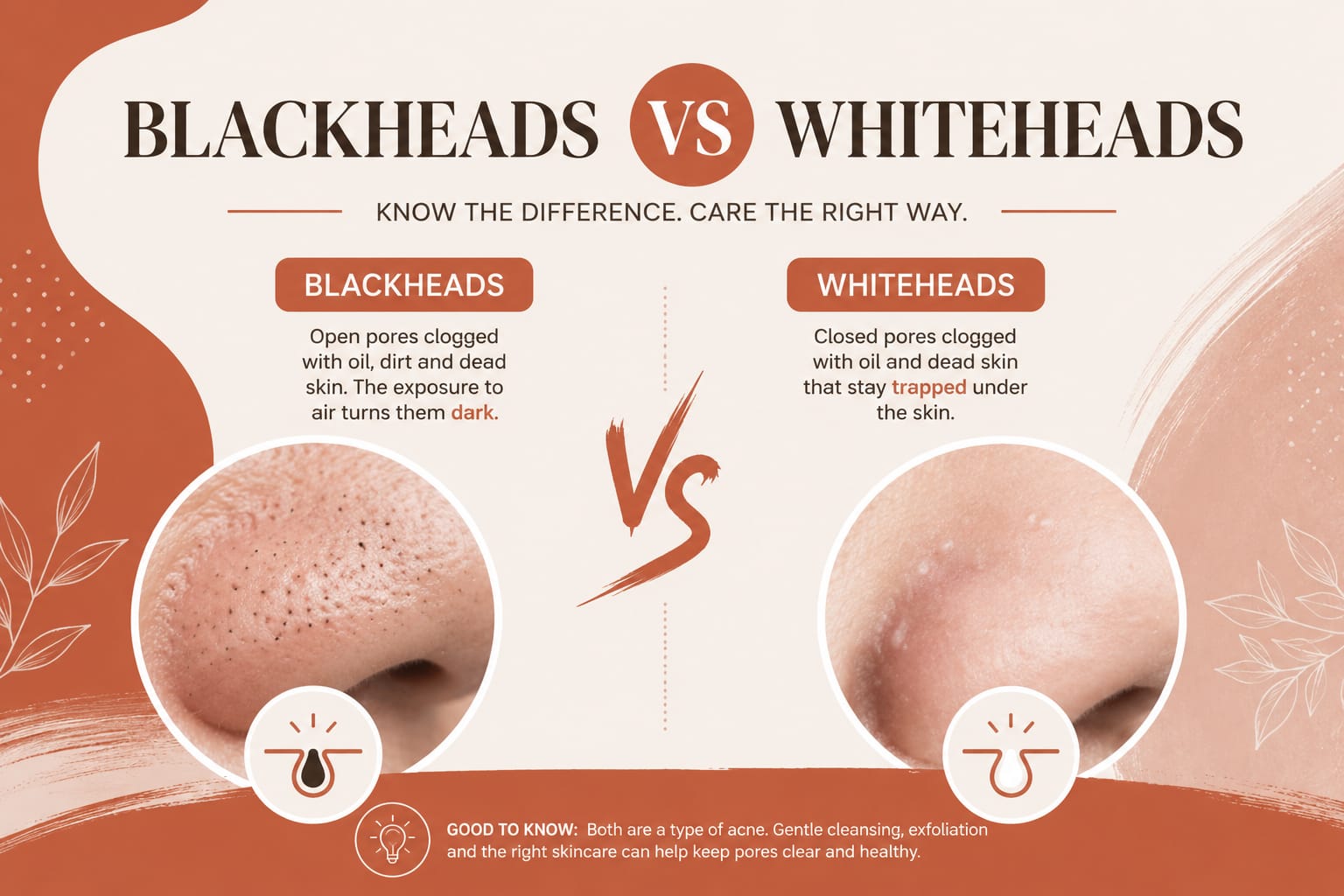
We have all been there — standing in front of the bathroom mirror, inspecting tiny dots on our nose, chin, or forehead and wondering, “Is that a blackhead or a whitehead? And what am I actually supposed to do about it?”
These two types of blemishes are often confused, yet they have different causes, appearances, and — crucially — require different treatment approaches. Treating a whitehead the same way you would a blackhead (or vice versa) can actually make things worse.
In this in-depth guide from Daily Skin Glow, we are breaking down everything you need to know about blackheads vs whiteheads — what they are, how they form, how to tell them apart, and the most effective, dermatologist-approved ways to treat and prevent both. Let’s get into it.
What Are Blackheads and Whiteheads? The Basics
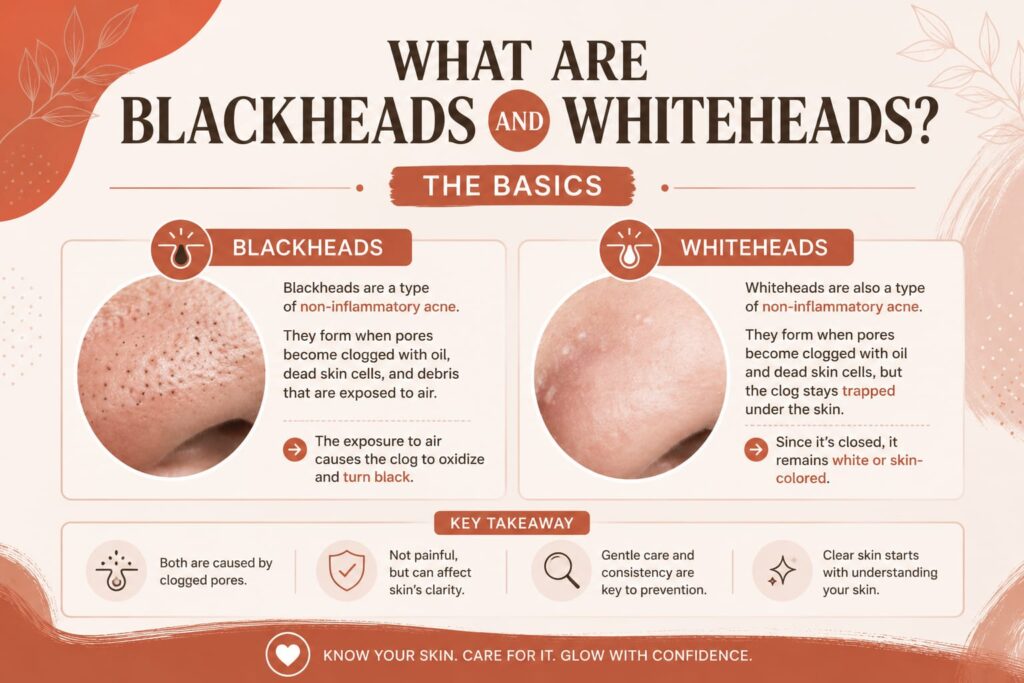
Both blackheads and whiteheads are types of comedones — a medical term for clogged hair follicles (pores). They both form when dead skin cells, excess sebum (skin oil), and sometimes bacteria accumulate inside a pore.
The key difference lies in whether the pore is open or closed at the surface — and that single factor changes everything: the color, the texture, the inflammation level, and the correct treatment approach.
Here is a quick overview before we go deeper:
| Feature | Blackheads | Whiteheads |
| Pore status | Open | Closed |
| Color | Dark brown or black | White or flesh-colored |
| Texture | Flat or slightly raised | Small raised bump |
| Inflammation | Usually none | Mild, contained |
| Painful? | No | Occasionally tender |
| Medical term | Open comedo | Closed comedo |
Blackheads: A Closer Look
What Exactly Is a Blackhead?
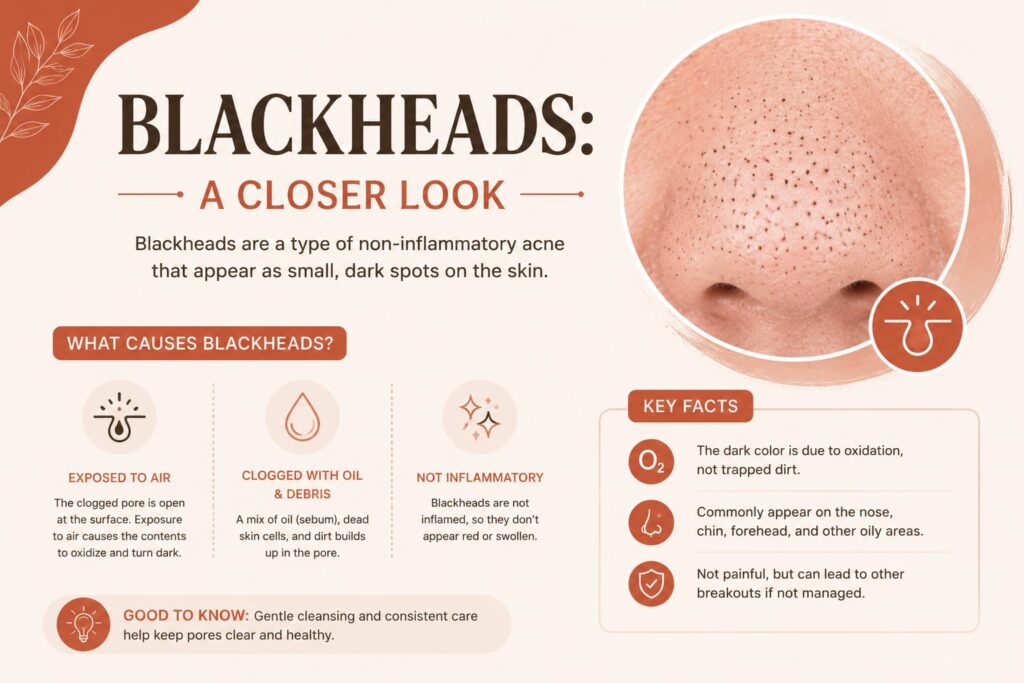
A blackhead — medically called an open comedo — forms when a pore becomes clogged with a mixture of dead skin cells and sebum, but the top of the pore remains open. This exposure to air triggers a chemical reaction called oxidation, which turns the trapped material dark brown or black. This is why blackheads are dark — it has nothing to do with dirt, despite a common misconception.
Read this: Homemade Face Scrub for Blackheads:5 Proven DIY Recipes That Actually Clear Your Pores
What Do Blackheads Look Like?
- Small, flat or slightly raised dots
- Dark brown or black in color
- Often appear on and around the nose, chin, and forehead (the T-zone)
- Can also appear on the back, chest, shoulders, and ears
- Not painful or inflamed
What Causes Blackheads?
Blackheads do not have a single cause — they are typically the result of several overlapping factors:
- Excess sebum production (often triggered by hormones, heat, or humidity)
- Buildup of dead skin cells that are not shed fast enough
- Use of heavy, pore-clogging (comedogenic) skincare or makeup products
- Hormonal fluctuations during puberty, menstruation, or pregnancy
- High-glycemic diet and dairy consumption — some research links these to increased sebum production
- Certain medications including corticosteroids and lithium
- Sweating without cleansing afterward
One important note: blackheads are not caused by poor hygiene. Over-washing your face can actually strip the skin of its natural oils, causing it to overproduce sebum in response — making blackheads worse, not better.
Whiteheads: A Closer Look
What Exactly Is a Whitehead?
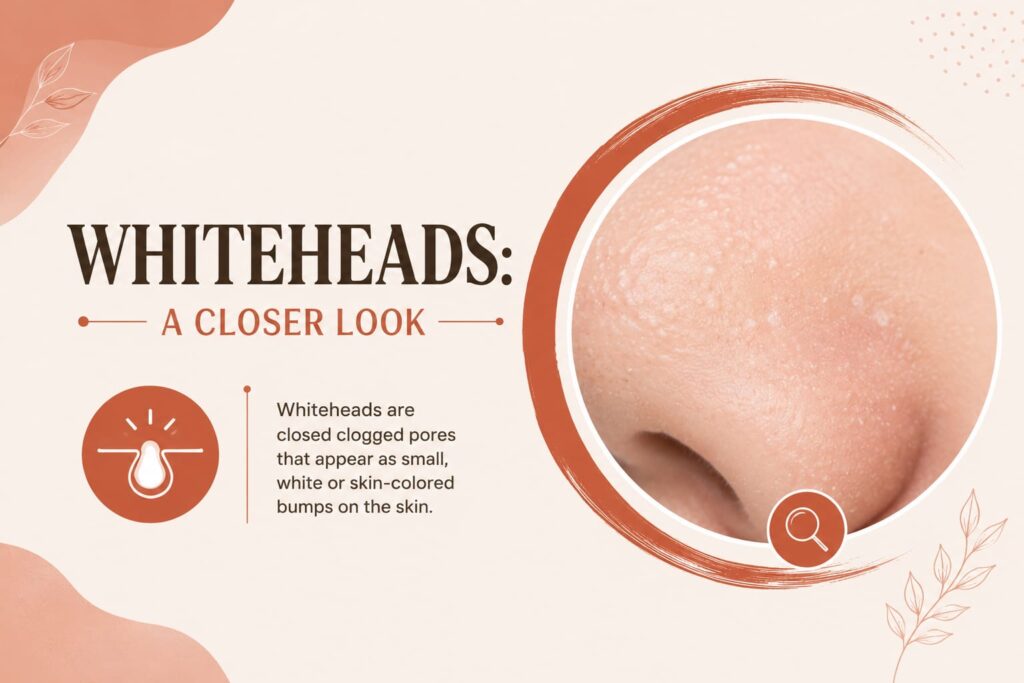
A whitehead — medically called a closed comedo — forms through the same process as a blackhead: a pore gets clogged with dead skin cells and oil. The critical difference is that the pore opening is sealed by a thin layer of skin. Because the clogged material has no contact with air, no oxidation occurs — it stays white or yellowish under the skin.
What Do Whiteheads Look Like?
- Small, rounded bumps raised slightly above the skin surface
- White, cream, or flesh-colored
- A thin skin membrane covers the clogged pore
- Common on the cheeks, chin, nose, and forehead
- Can occasionally feel tender when pressed
- Not deeply inflamed like a pustule or cyst
What Causes Whiteheads?
The root causes of whiteheads overlap significantly with blackheads, but a few factors are more specific:
- Overproduction of sebum, particularly during hormonal shifts
- Skin cells shedding too slowly (slow cell turnover), sealing the pore closed
- Use of thick, occlusive skincare or makeup products
- Hormonal changes — whiteheads are extremely common during puberty, periods, and pregnancy
- Friction and pressure from helmets, tight clothing, or phone screens held against the skin (this is called acne mechanica)
- High humidity and sweating, which can clog pores more rapidly
Read this: Salicylic Acid vs Glycolic Acid
Blackheads vs Whiteheads: The Key Differences Explained
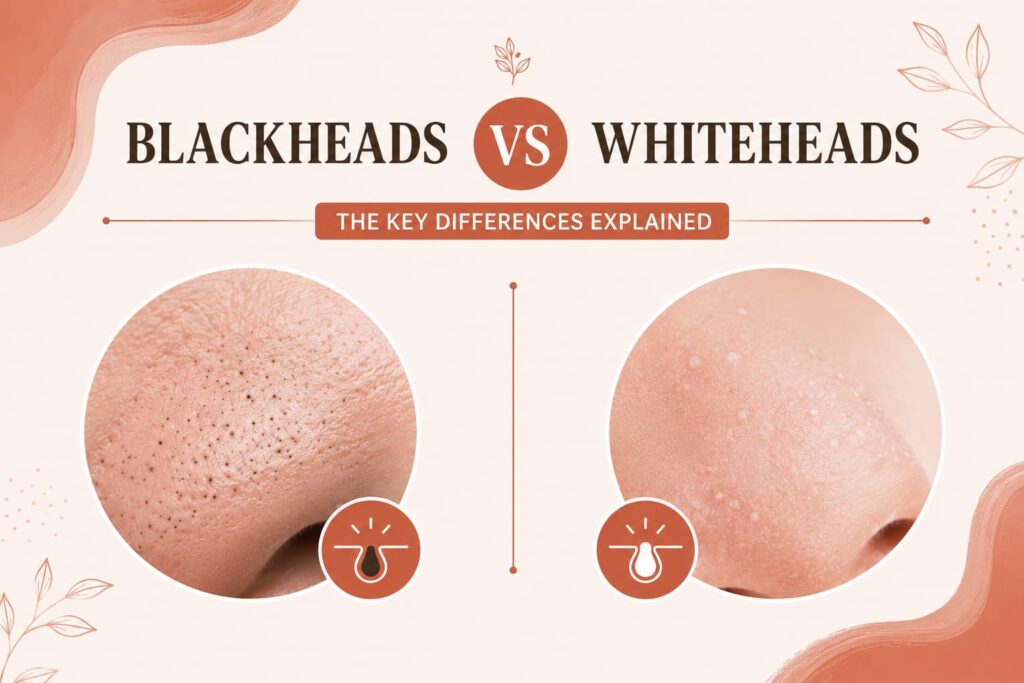
Now that we understand each type individually, let’s compare them side by side across the factors that matter most for your skin routine.
1. The Pore Opening: Open vs Closed
This is the defining difference. A blackhead has an open pore, allowing air to oxidize the sebum and dead cells inside, turning them dark. A whitehead has a closed pore — a thin layer of skin traps everything inside. This single anatomical difference determines color, treatment, and behavior.
2. Color and Appearance
Blackheads are dark — brown or black — and appear flat or barely raised. Whiteheads are light — white, cream, or skin-toned — and have a distinctly raised bump with a smooth surface. Both are small (typically 1–3mm), but they look and feel quite different up close.
3. Inflammation and Sensitivity
Blackheads are non-inflammatory. They rarely hurt or feel sensitive. Whiteheads exist on the mild end of the inflammatory spectrum — they may feel slightly tender when touched, particularly as they mature. Neither blackheads nor whiteheads involve the deep redness and swelling of papules, pustules, or cysts.
4. Risk of Spreading
Both can spread when pores are consistently clogged, but whiteheads carry a slightly higher risk of progressing into more inflamed acne (papules or pustules) if bacteria proliferate in the closed environment. Blackheads are more stable and less likely to evolve into inflamed blemishes.
5. Skin Types Most Affected
Blackheads are most common in oily and combination skin types. Whiteheads can affect all skin types, including dry and sensitive skin, particularly during hormonal shifts or when using pore-clogging products.
How to Treat Blackheads: The Right Approach

The goal with blackheads is to unclog pores, regulate oil production, and prevent future buildup. Here are the most evidence-backed methods:
Salicylic Acid — The Gold Standard
Salicylic acid (a BHA — beta hydroxy acid) is oil-soluble, meaning it can penetrate deep into pores to dissolve the sebum and dead skin cells that form blackheads. Use a 0.5–2% salicylic acid cleanser, toner, or serum once or twice daily. It is the single most recommended ingredient for blackhead-prone skin.
Retinoids
Retinol (OTC) and tretinoin (prescription) speed up skin cell turnover, preventing dead cells from accumulating inside pores. Regular use significantly reduces blackhead formation over time. Start with a low concentration 2–3 nights per week to avoid irritation.
Clay and Charcoal Masks
Kaolin and bentonite clay masks absorb excess oil from the skin surface and pores. Use 1–2 times per week as a targeted treatment. Activated charcoal masks work similarly. These are good maintenance tools but will not resolve deep-seated blockages on their own.
Chemical Exfoliants (AHAs + BHAs)
Regular use of exfoliating acids — glycolic acid, lactic acid, or mandelic acid alongside salicylic acid — keeps skin cell turnover high and prevents the buildup that leads to clogged pores.
Professional Extractions
When done by a trained esthetician or dermatologist, manual extraction safely removes blackheads using a sterile extractor tool. Avoid attempting deep DIY extractions at home without proper technique, as this can damage the skin, cause scarring, or push debris deeper.
What NOT to Do with Blackheads
- Do not use pore strips as a long-term solution — they only remove the very top of the plug temporarily and can stretch pores over time
- Do not scrub aggressively with physical exfoliants — micro-tears in the skin worsen inflammation
- Do not skip moisturizer — dehydrated skin overproduces oil
How to Treat Whiteheads: The Right Approach
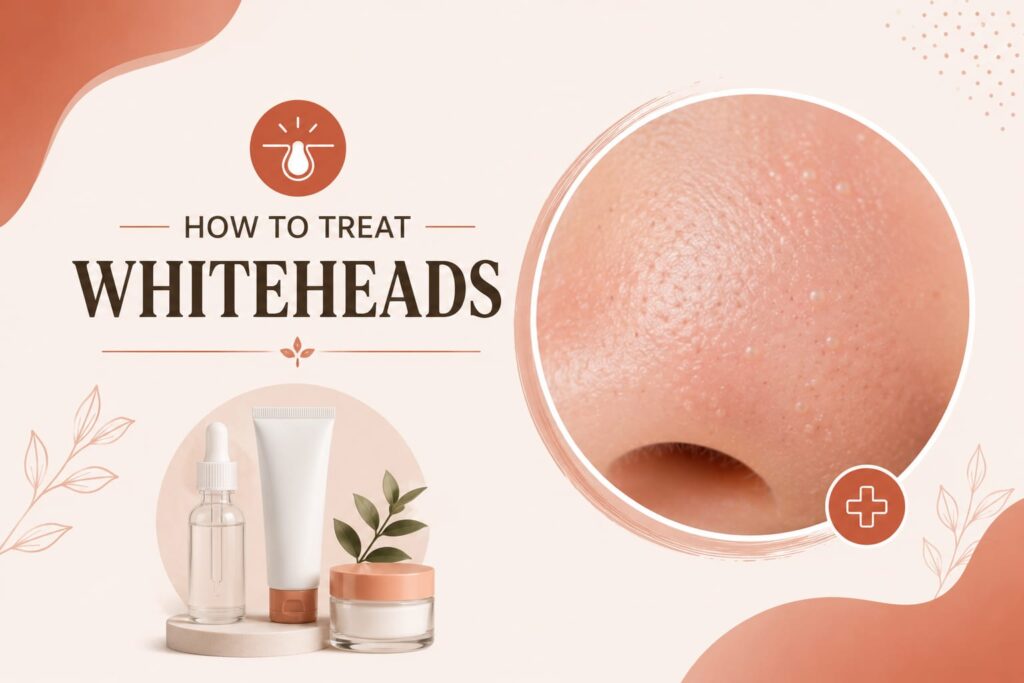
Because whiteheads are closed, the approach differs slightly — you need to both soften the skin covering the plug and encourage the contents to surface safely.
Benzoyl Peroxide
Benzoyl peroxide penetrates the pore and kills acne-causing bacteria (C. acnes), which can proliferate in the closed environment of a whitehead. A 2.5–5% concentration is effective while minimizing dryness and irritation. Apply as a spot treatment or leave-on gel.
Salicylic Acid
Just as with blackheads, salicylic acid is highly effective for whiteheads. Its ability to exfoliate inside the pore helps loosen the blockage and bring the contents toward the surface. Use in a toner or serum form for consistent results.
Retinoids
Retinoids are arguably even more important for whiteheads than blackheads. By accelerating cell turnover, they prevent the skin from sealing over the pore and help existing whiteheads resolve faster.
Sulfur-Based Treatments
Sulfur is an often-overlooked ingredient that absorbs oil and has mild antibacterial properties. It works well for whiteheads, especially in spot treatments and masks, and is a good option for sensitive skin that cannot tolerate benzoyl peroxide.
Gentle Warm Compress
Applying a warm, damp cloth to the affected area for 5–10 minutes can help soften the skin covering a whitehead, making it easier for the blemish to surface and resolve naturally without squeezing.
What NOT to Do with Whiteheads
- Do not pop or squeeze whiteheads forcefully — this pushes bacteria and debris deeper and significantly increases the risk of scarring and post-inflammatory hyperpigmentation
- Do not use harsh, drying treatments in excess — over-drying skin increases oil production
- Do not skip SPF — sun exposure can darken post-whitehead marks
Shared Prevention Strategies: Stop Both Before They Start
Many prevention strategies work for both blackheads and whiteheads because they share root causes. Here is your daily action plan:
- Cleanse twice daily with a gentle, non-comedogenic cleanser. Morning and night cleansing removes excess oil, sweat, and residue without stripping the skin barrier. Avoid harsh soaps that disrupt your skin’s pH.
- Moisturize — even if you have oily skin. Using a lightweight, oil-free, non-comedogenic moisturizer keeps the skin barrier healthy and prevents the overproduction of sebum that leads to clogged pores.
- Always remove makeup before bed. Sleeping with makeup on is one of the fastest ways to develop both blackheads and whiteheads. Use a micellar water or oil cleanser first, then follow with your regular cleanser (double cleansing).
- Incorporate regular chemical exfoliation. Use a BHA (salicylic acid) 2–4 times per week to keep pores clear. If you have dry or sensitive skin, lactic acid is a gentler option.
- Choose non-comedogenic skincare and makeup products. Look for labels that say ‘non-comedogenic’, ‘oil-free’, or ‘won’t clog pores’. Avoid ingredients like coconut oil, isopropyl myristate, or heavy silicones if you are acne-prone.
- Change your pillowcase regularly. Pillowcases accumulate oil, dead skin cells, and bacteria. Swap yours every 2–3 days, or use a clean towel over your pillow each night.
- Manage stress levels. Stress triggers cortisol release, which stimulates the sebaceous glands to produce more oil. Regular exercise, quality sleep, and mindfulness practices genuinely benefit your skin.
- Watch your diet. Research suggests high-glycemic foods (white bread, sugary drinks, processed snacks) and excessive dairy consumption can worsen acne for some people. A balanced diet rich in vegetables, lean proteins, and omega-3 fatty acids supports clearer skin.
Read this: Effective Ways to Get Rid of Summer Tan Quickly
Recommended Skincare Routine for Blackhead & Whitehead-Prone Skin
Morning Routine
- Gentle gel or foam cleanser (non-comedogenic)
- Niacinamide serum (regulates oil, minimizes pores)
- Lightweight, oil-free moisturizer
- Broad-spectrum SPF 30+ sunscreen (non-comedogenic)
Evening Routine
- Double cleanse if wearing makeup or SPF (micellar water or cleansing oil, then cleanser)
- Salicylic acid toner or exfoliant (2–4 nights per week)
- Retinol serum (start 2–3 nights per week, build up gradually)
- Benzoyl peroxide spot treatment on active whiteheads
- Hydrating, non-comedogenic moisturizer
Pro tip: Do not use salicylic acid and retinol on the same night when starting out — alternate them to avoid over-exfoliation and irritation. Once your skin adapts, you can layer them as needed.
Frequently Asked Questions (FAQs)
Q: Can I squeeze a blackhead or whitehead at home?
A: For blackheads, gentle extraction after steaming can sometimes work if done with a clean extractor tool. For whiteheads, it is best to avoid squeezing at home entirely, as the closed pore makes it very easy to push bacteria deeper, cause scarring, or create a worse blemish. Let topical treatments resolve them safely instead.
Q: How long does it take for blackheads and whiteheads to clear?
A: With consistent use of the right topical treatments (salicylic acid, retinoids), most people see noticeable improvement within 4–8 weeks. Some stubborn cases may take 3 months or more. Consistency is more important than intensity.
Q: Do pore strips actually work for blackheads?
A: Pore strips remove the very top surface of blackheads temporarily, so you will see immediate results — but they do not address the root cause, and the blackheads will return quickly. They can also irritate sensitive skin. Use them occasionally if you like, but do not rely on them as a core treatment.
Q: Are blackheads and whiteheads a sign of poor hygiene?
A: No — this is one of the most persistent myths in skincare. Blackheads and whiteheads are caused by pore structure, sebum production, dead skin cell buildup, and hormones — not by being ‘dirty’. Over-washing or scrubbing aggressively actually worsens both by irritating the skin.
Q: When should I see a dermatologist?
A: If over-the-counter treatments have not improved your blackheads or whiteheads after 8–12 weeks, or if they are evolving into deeper, painful, cystic blemishes, it is time to see a dermatologist. Prescription-strength retinoids, antibiotics, or hormonal treatments may be needed.
Final Thoughts: Know Your Blemish, Choose the Right Fix
Blackheads and whiteheads might look similar at first glance, but once you understand the difference — open vs closed pore, oxidized vs sealed sebum — the path to treating them correctly becomes clear.
Blackheads respond best to oil-dissolving, pore-clearing ingredients like salicylic acid and retinoids. Whiteheads need a combination of bacteria-fighting (benzoyl peroxide), pore-loosening (salicylic acid), and cell-renewing (retinoids) ingredients to resolve safely and prevent recurrence.
And for both? Consistent prevention is your most powerful tool. A well-chosen daily routine — gentle cleansing, smart exfoliation, non-comedogenic products, and daily SPF — will do more for your skin long-term than any single treatment.
At Daily Skin Glow, we believe that educated skin is healthy skin. The more you understand what is happening in your pores, the better equipped you are to make the right choices for your unique complexion. Here’s to clear, confident skin — one informed step at a time.

 Admin
Admin
[…] Read this: Blackheads vs Whiteheads: Key Differences and the Right Way to Treat Both […]
[…] Read this: Blackheads vs Whiteheads: Key Differences and the Right Way to Treat Both […]