 Admin
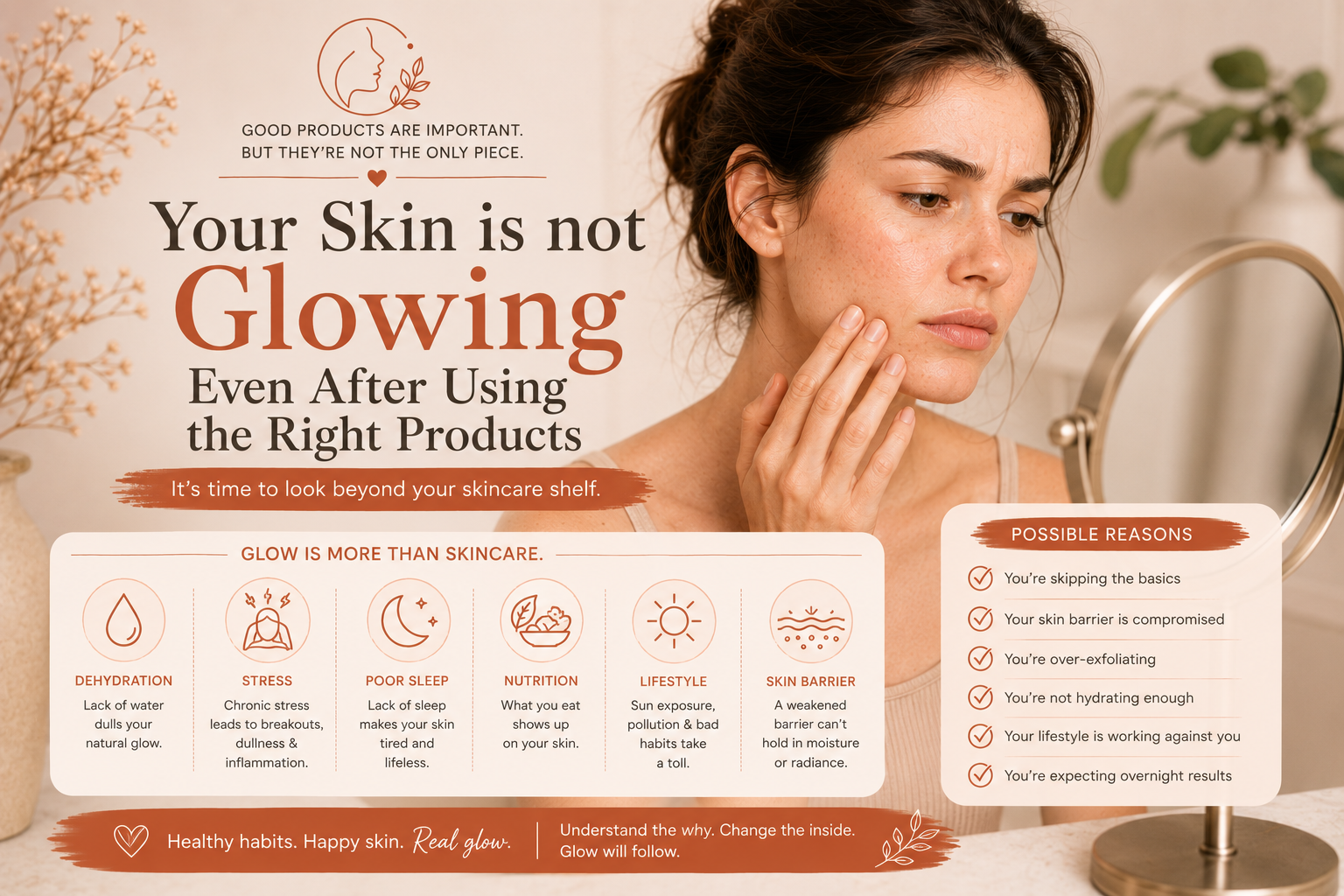
Admin Your Skin not Glowing Even After Using the Right Products
You’ve done everything right. You researched the best vitamin C serum. You invested in a quality hyaluronic acid moisturizer. You never skip SPF. Your skincare shelf looks like it belongs to a beauty editor — and yet, every morning when you look in the mirror, your skin looks… flat. Dull. Definitely not glowing.
If this sounds familiar, you’re not alone — and more importantly, you’re not doing anything wrong. The truth is that using the “right” products is only one piece of the glow puzzle. Radiant, luminous skin is the result of multiple factors working together: cellular health, circulation, hydration, lifestyle habits, and yes — the right products applied in the right way.
In this guide, we’re going to break down every real reason your skin might not be glowing despite a solid routine — and more importantly, exactly what you can do about each one. No fluff, no vague advice. Just the honest, science-backed truth about glow.
First, Let’s Talk About What “Glow” Actually Is
Before we diagnose the problem, it helps to understand what skin glow actually is — because it’s not magic, and it’s not just about genetics. Skin glow is essentially your skin’s ability to reflect light evenly and smoothly. When light hits healthy, hydrated skin with a smooth surface and good circulation, it bounces off in a diffused, luminous way. That’s the glow.
Three physical factors determine your skin’s radiance:
• Surface smoothness — dead skin cells, texture, and rough patches scatter light unevenly, creating a dull appearance
• Hydration level — well-hydrated skin cells are plump and translucent; dehydrated cells look flat and absorb light rather than reflecting it
• Microcirculation — the tiny blood vessels beneath your skin bring oxygen and nutrients to the surface; poor circulation means a sallow, grey, lifeless complexion
If any one of these three factors is compromised, your skin won’t glow — no matter how good your serum is. Now let’s look at all the reasons why this might be happening to you.
Reason 1: Dead Skin Cell Buildup Is Blocking Your Glow
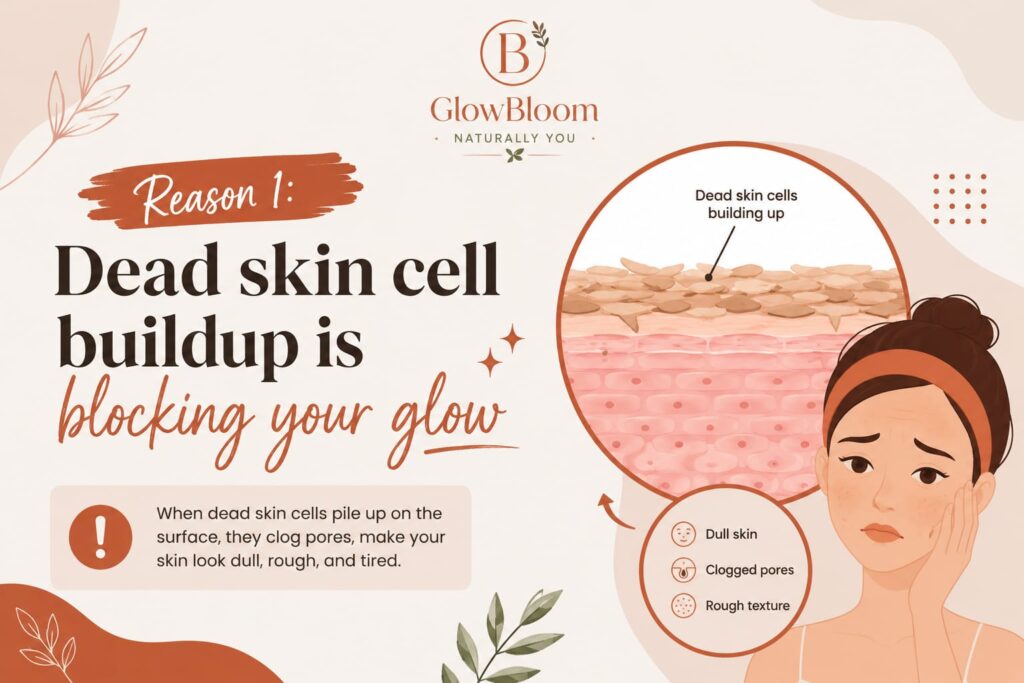
This is the most common — and most overlooked — reason for persistent dullness. Your skin naturally sheds dead cells through a process called desquamation, but as we age (or when our skin is stressed), this process slows down. Dead cells accumulate on the surface, creating a thick, dull layer that reflects light poorly and prevents your expensive serums from actually reaching living skin cells beneath.
Think about it this way: if you layer your most potent vitamin C serum over a thick layer of dead skin cells, you’re essentially moisturizing a wall. The active ingredients never penetrate where they need to go. The result is products that feel like they’re “not working” — because structurally, they aren’t reaching the target.
The fix:
• Incorporate a gentle chemical exfoliant 1-3 times per week: AHAs (like lactic acid or mandelic acid) work on the surface, while BHAs (like salicylic acid) penetrate pores
• Lactic acid at 5-10% is the gentlest AHA and works beautifully for most skin types, including dry and slightly sensitive
• Avoid physical scrubs with rough particles — they cause micro-tears in the skin and worsen dullness over time
Read this: Best Skin Care Tips and Routine for Glowing & Healthy Skin
Reason 2: Your Skin Is Chronically Dehydrated
Dehydration and dullness are practically synonymous. Dehydrated skin lacks water at the cellular level — meaning skin cells are shrunken, flat, and unable to reflect light properly. And here’s the part that surprises most people: you can use a fantastic moisturizer and still have dehydrated skin if you’re not addressing the root cause.
Moisturizer applied on top of skin doesn’t directly hydrate skin cells — it works by reducing water loss from the surface. True cellular hydration requires water from within: from your diet, from humectant-rich products that draw water into the skin, and from a healthy skin barrier that keeps that water from evaporating.
Signs your skin is dehydrated (not just dry):
• Skin looks dull and flat even after moisturizing
• Fine lines appear more prominent in the afternoon
• Skin feels tight and papery despite applying products
• Pinch test: if you gently pinch a small area of cheek skin and it doesn’t snap back immediately, dehydration is likely
The fix:
• Layer a hyaluronic acid serum on damp skin before your moisturizer — this dramatically boosts water retention in the upper layers of skin
• Drink at least 2 litres of water daily — yes, this genuinely shows up in your skin
• Eat water-rich foods: cucumber, watermelon, oranges, celery, and leafy greens contribute meaningfully to skin hydration
Reason 3: You’re Using Products in the Wrong Order
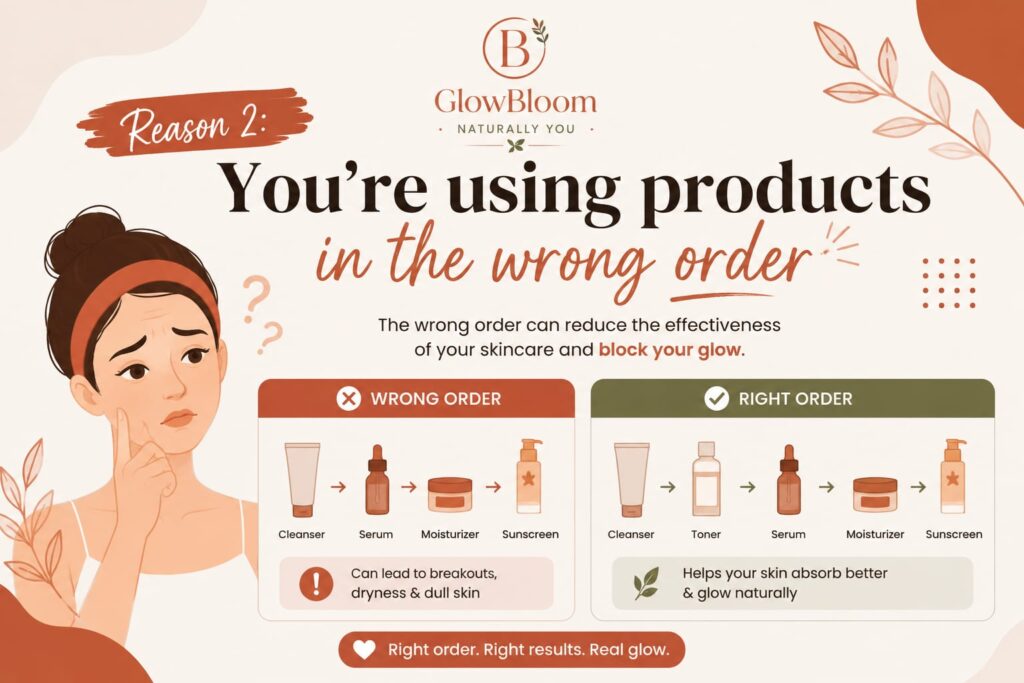
Here’s a scenario that happens constantly: someone buys a brilliant vitamin C serum and a ceramide moisturizer — but applies the moisturizer first and the serum second. The serum can’t penetrate through the moisturizer barrier and sits on top, doing almost nothing. The products are good; the application order has rendered them ineffective.
Product layering is a science. The general rule is thinnest to thickest consistency — but there’s more nuance to it than that. Active ingredients like vitamin C, niacinamide, and AHAs need to be applied directly to clean skin (or after just a toner) to work at their optimal pH and penetrate at the right depth. When layered incorrectly, they become decorative rather than functional.
The correct layering order for maximum glow:
1. Cleanser
2. Exfoliant (on exfoliation days — AHA/BHA toner or serum)
3. Hydrating toner or essence
4. Vitamin C or brightening serum (water-based, thin consistency)
5. Hyaluronic acid serum (on damp skin)
6. Moisturizer (seals in all layers)
7. SPF (morning only — always last)
Read this: Acne vs Pimples: Key Differences, Causes & Best Treatment
Reason 4: Your Diet Is Quietly Working Against You
This is the reason people most resist hearing — but it’s one of the most powerful. Your skin is literally built from what you eat. The collagen, ceramides, and antioxidants in your skin all come from nutrients in your diet. When those nutrients are missing or when inflammatory foods dominate, your skin shows it — and no topical product fully compensates for a poor internal environment.
Foods that dull your skin:
• High-glycaemic foods (white bread, sugary drinks, processed snacks) — spike insulin, promote inflammation, and trigger glycation (a process that damages collagen and makes skin look sallow and dull)
• Dairy — for some people, dairy (especially skim milk) can trigger low-grade inflammation and congestion that clouds the complexion
• Alcohol — dehydrates skin at a cellular level and disrupts sleep, which is when skin repair happens
• Excess salt — causes fluid retention and puffiness that makes skin look less defined and luminous
Foods that genuinely boost your glow:
• Fatty fish (salmon, mackerel, sardines) — omega-3 fatty acids reduce inflammation and strengthen the skin barrier
• Colourful vegetables and fruits — antioxidants (especially vitamin C, beta-carotene, and lycopene) protect against free radical damage and support collagen synthesis
• Nuts and seeds — vitamin E, zinc, and selenium are all essential for skin cell repair and radiance
• Green tea — rich in EGCG (epigallocatechin gallate), a powerful antioxidant that reduces inflammation and protects against UV-related dullness
Reason 5: You’re Not Getting Quality Sleep
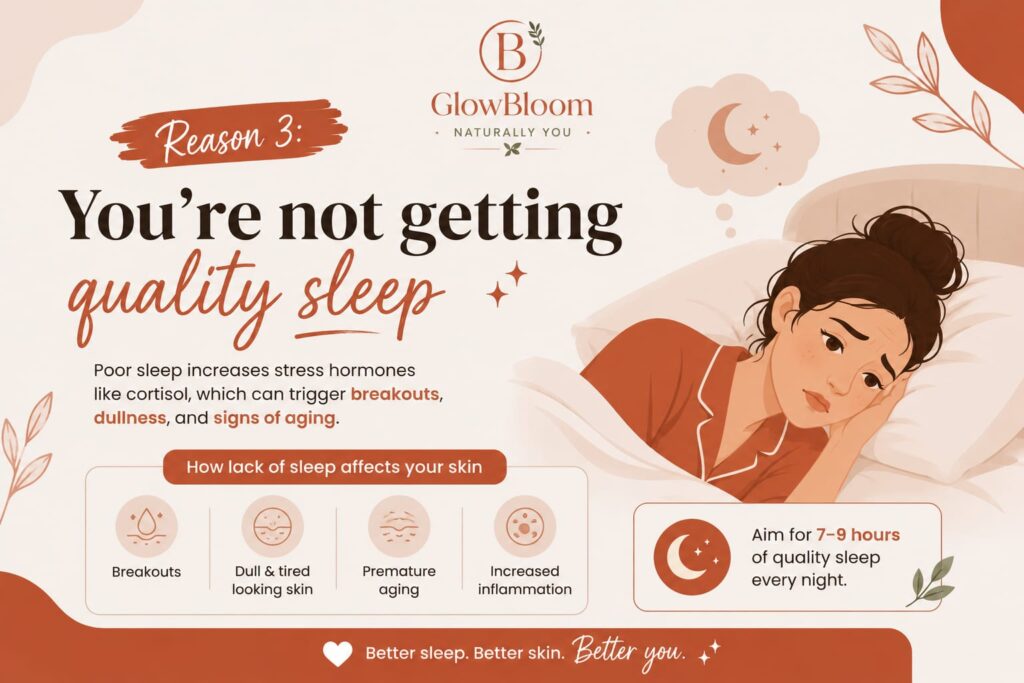
“Beauty sleep” is not a myth — it’s physiology. During deep sleep (stages 3 and 4 of the sleep cycle), your body releases growth hormone, which triggers cellular repair throughout the body, including the skin. Collagen synthesis increases. Inflammation decreases. The skin barrier repairs itself. Blood flow to the skin increases, delivering the oxygen and nutrients that produce that healthy, natural flush.
When you’re consistently sleep-deprived — even by just an hour or two — cortisol levels rise, collagen breaks down faster, and the skin’s natural repair processes are cut short. The result is exactly what you see: dull, sallow, grey-looking skin with more visible lines and a flat texture. Studies have shown that even one night of poor sleep causes measurable increases in skin dullness, puffiness, and the appearance of fine lines.
The fix:
• Aim for 7-9 hours of quality sleep — this is where most adults need to be for skin repair
• Sleep on a silk or satin pillowcase — reduces friction on the skin surface and prevents moisture absorption from skin into the pillow
• Apply your richest skincare products at night — this is when your skin is most receptive to repair and absorption
Reason 6: Stress Is Showing Up on Your Skin
The skin-brain connection is one of the most underappreciated areas of dermatology. When you’re chronically stressed, your body releases elevated levels of cortisol — and cortisol is genuinely one of the most destructive forces for skin glow. It breaks down collagen and elastin (the structural proteins that keep skin firm and smooth), impairs barrier function, increases inflammation, and restricts blood flow to the skin by diverting it to muscles and organs.
The result is a complexion that looks grey, tired, inflamed, and flat — regardless of your skincare routine. You can apply the best products in the world, but if cortisol is constantly running high, your skin is fighting an uphill battle it simply cannot win through topical care alone.
What genuinely helps:
• Regular exercise — increases microcirculation, oxygenates skin, and reduces cortisol; even 20-30 minutes of moderate activity 4-5 times per week makes a visible difference
• Mindfulness and breathwork — even 10 minutes of slow, deep breathing activates the parasympathetic nervous system and reduces cortisol measurably
• Facial massage — a 3-5 minute facial massage during your skincare routine boosts lymphatic drainage and microcirculation, giving an immediate brightening effect
Reason 7: Sun Damage Is Dulling Your Complexion
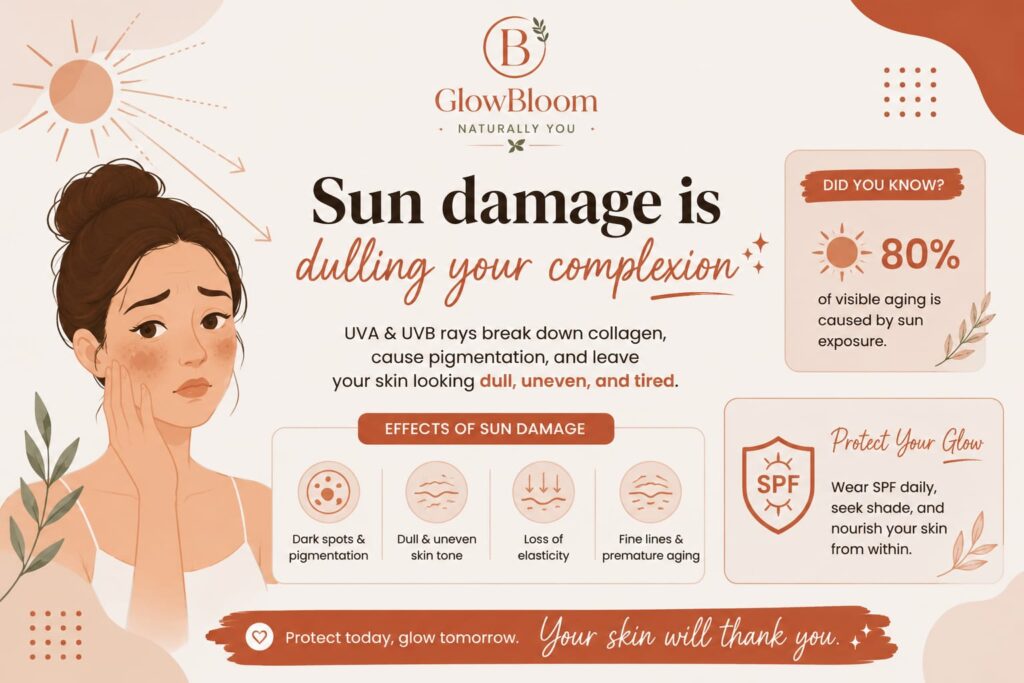
Cumulative UV damage is one of the leading causes of a dull, uneven complexion — and it builds up silently over years before you notice the full impact. UV radiation triggers the production of excess melanin (causing dark spots and uneven tone), breaks down collagen (causing texture irregularities that scatter light unevenly), and generates free radicals that damage skin cell DNA and impair their ability to function optimally.
Here’s the critical point: if you’re currently using brightening and antioxidant products but skipping SPF — or using SPF inconsistently — you are adding water to a leaking bucket. Every day without sun protection undoes a portion of what your actives are trying to achieve. SPF is not optional for glowing skin; it is foundational.
SPF rules that actually matter for glow:
• Use SPF 30-50 broad-spectrum every single morning — indoors near windows too, as UVA passes through glass
• Reapply every 2 hours if you’re outdoors — SPF wears off with sweat, touch, and UV exposure
• Tinted SPF with iron oxides provides additional protection against visible light, which also contributes to dark spots and dullness
Read this: Remove Tan And Pigmentation
Reason 8: You Haven’t Given Your Products Enough Time
In a world of instant gratification, skincare can feel frustratingly slow. But this is one of the most important truths in the industry: most active ingredients require consistent use over weeks to months before their full effect is visible. This is not a marketing trick — it’s biology.
Your skin’s natural cell turnover cycle takes approximately 28 days in your 20s, and progressively longer as you age (up to 45-60 days in your 40s and beyond). This means that even when an active ingredient starts working immediately at the cellular level, you won’t see the results on the surface until a full skin cycle has completed — sometimes two or three cycles for more significant concerns like dark spots or uneven texture.
Realistic timelines for key glow ingredients:
• Vitamin C — expect to see brightening and improved radiance after 4-8 weeks of daily use
• Niacinamide — pore size and texture improvement visible after 4-6 weeks; dark spot reduction after 8-12 weeks
• AHAs — surface smoothness and radiance noticeable within 2-4 weeks of regular use
• Retinol — significant texture and tone improvement takes 12-16 weeks; initial purging (weeks 2-4) is normal
• Peptides — collagen-supporting effects build slowly over 8-16 weeks; cumulative improvement is the goal
Reason 9: Your Products May Not Be as Active as You Think
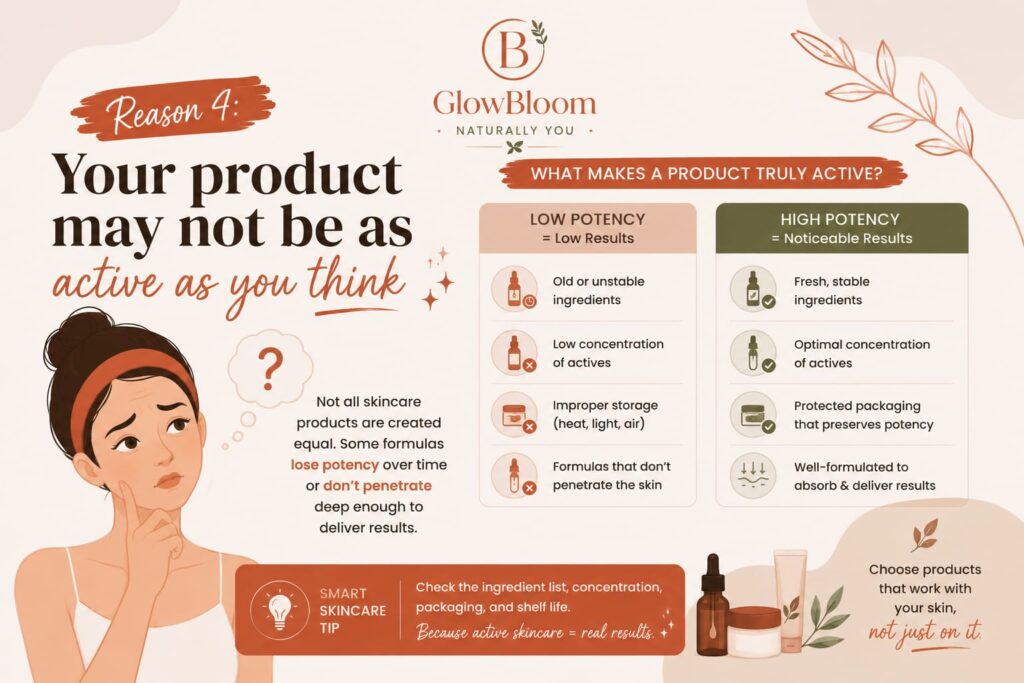
This is an uncomfortable reality in the beauty industry: not all products deliver what they promise. A serum can technically contain vitamin C, niacinamide, or hyaluronic acid and still be virtually ineffective — because of concentration, formulation, and stability issues.
Things to check about your key products:
• Vitamin C form and concentration: L-ascorbic acid is the most clinically proven form, and it needs to be at 10-20% concentration with a pH below 3.5 to work. Many serums use less stable derivatives (like ascorbyl glucoside) at low concentrations that provide minimal brightening
• Vitamin C oxidation: L-ascorbic acid oxidizes quickly when exposed to air and light. If your vitamin C serum has turned orange or brown, it’s degraded and largely ineffective. Store in a dark, cool place and replace within 3 months of opening
• Niacinamide concentration: effective amounts start at 2% and the sweet spot for most skin concerns is 5%. Products listing niacinamide near the bottom of an ingredient list may contain less than 1%
• Hyaluronic acid molecular weight: high-molecular-weight HA stays on the surface (good for temporary plumping); low-molecular-weight HA penetrates deeper. The best serums contain a combination of both
Reason 10: Poor Circulation Is Stealing Your Colour
One of the fastest and most underrated ways to get glowing skin is to improve the microcirculation in your face. Blood carries oxygen and nutrients to skin cells and carries waste products away. When circulation is poor — from sedentary habits, poor posture, smoking, or a cold environment — skin looks grey, flat, and lifeless.
Practical ways to boost facial circulation:
• Facial massage: 3-5 minutes of upward, outward strokes with your fingertips or a gua sha stone during your routine visibly brightens and lifts the complexion within minutes
• Cold water rinse: finishing your morning face wash with a 10-second cold water splash constricts and then rapidly dilates blood vessels, creating a natural flush and glow
• Exercise: even a 20-minute walk increases blood flow to the skin noticeably; regular exercise creates long-term improvements in skin tone and radiance
• Quitting smoking: smoking constricts blood vessels permanently over time, dramatically reducing oxygen delivery to the skin and causing the characteristic grey-yellow dullness seen in long-term smokers
The Real Glow Formula: Putting It All Together
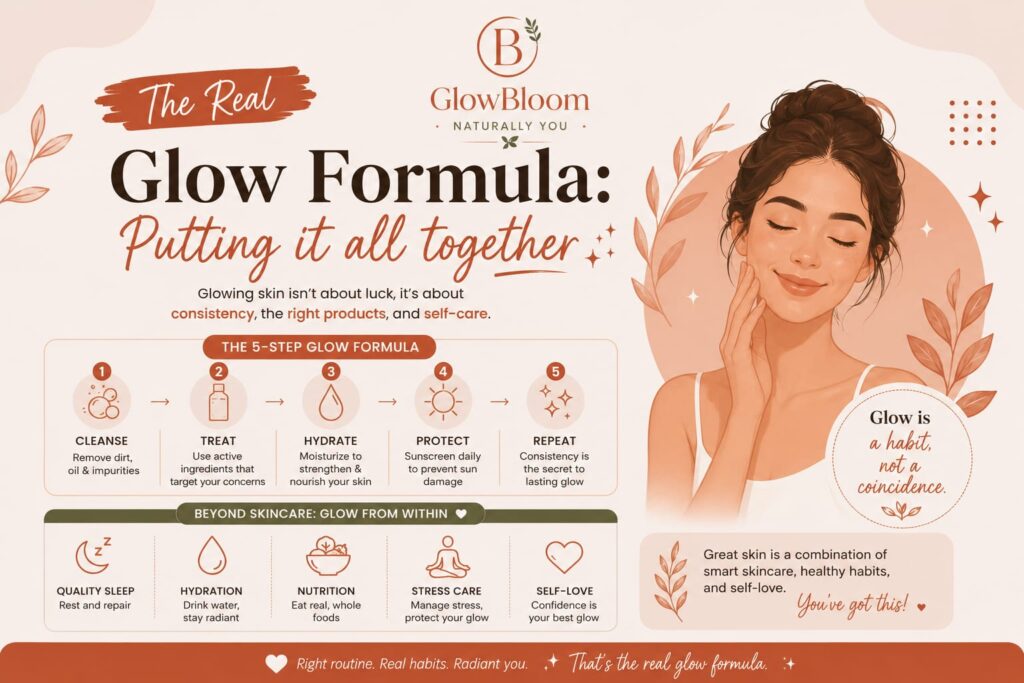
Radiant skin is not a product — it’s a system. Here’s what the formula actually looks like when all the pieces are working together:
• A smooth surface: gentle, consistent exfoliation 1-3 times per week to clear dead skin cell buildup
• Deep hydration: humectants (hyaluronic acid, glycerin) layered on damp skin + sufficient daily water intake
• Targeted actives: a proven brightening serum (vitamin C or niacinamide) applied in the right order, at effective concentrations, consistently for at least 6-8 weeks
• Sun protection: SPF 30-50 every single morning without exception
• Nutritional support: an anti-inflammatory diet rich in antioxidants, omega-3s, and vitamins C and E
• 7-9 hours of quality sleep: this is non-negotiable for overnight skin repair
• Circulation support: regular exercise, facial massage, and stress management
• Patience: give each new product or habit at least 6-8 weeks before evaluating its impact
Your Personal Glow Audit: 10 Questions to Ask Yourself
Run through this quick checklist to identify exactly where your routine or lifestyle might be falling short:
1. Am I exfoliating regularly (1-3x per week with a gentle chemical exfoliant)?
2. Am I applying products on damp skin to maximise humectant absorption?
3. Am I layering from thinnest to thickest, with actives applied before moisturizer?
4. Am I drinking at least 2 litres of water daily?
5. Am I eating a diet with enough antioxidants, omega-3s, and vitamin C?
6. Am I getting 7-9 hours of quality sleep consistently?
7. Is my stress level under control, or is cortisol chronically high?
8. Am I applying SPF every single morning — even indoors?
9. Have I been using my brightening products consistently for at least 6-8 weeks?
10. Are my key actives at effective concentrations and stored/used correctly?
Frequently Asked Questions (FAQs)
1. Why is my skin not glowing even after using expensive skincare products?
Expensive skincare products can help, but glowing skin also depends on factors like hydration, exfoliation, sleep quality, diet, stress levels, and sun protection. If these areas are neglected, even the best products may not deliver visible radiance.
2. How long does it take for skincare products to improve skin glow?
Most brightening ingredients need consistent use before results become visible. Vitamin C typically takes 4–8 weeks, niacinamide 4–12 weeks, and retinol up to 12–16 weeks. Consistency is key to achieving long-term skin radiance.
3. Can dehydration make my skin look dull?
Yes. Dehydrated skin lacks water, making skin cells appear flat and less reflective. This can cause a dull, tired appearance even if you’re using moisturizer regularly. Hydrating ingredients and proper water intake can help restore glow.
4. Does sleep affect skin glow?
Absolutely. During sleep, the skin repairs itself, produces collagen, and improves circulation. Poor sleep can increase inflammation and cortisol levels, leading to dullness, puffiness, and a tired-looking complexion.
5. What is the fastest way to make dull skin look brighter?
Gentle exfoliation, proper hydration, daily sunscreen use, and a vitamin C serum are among the most effective ways to improve skin radiance. Consistent skincare combined with healthy lifestyle habits delivers the best long-term glow.
Final Thoughts
If your skin isn’t glowing despite using good products, the answer is almost never “you need a better product.” It’s almost always “you need to address what’s happening underneath the products.” The right routine is only one layer of the glow formula — and often not even the most important one.
True skin radiance comes from a healthy barrier, consistent hydration, regular gentle exfoliation, proper product layering, a supportive diet, quality sleep, managed stress, and steady sun protection. When all of these pieces are working together, even a simple three-step routine will give you more glow than a 12-step routine with missing fundamentals.
Start with the basics. Be consistent. Give it time. Your glow isn’t gone — it’s just waiting for the right conditions to show itself.

 Admin
Admin
[…] Read this: Your Skin not Glowing Even After Using the Right Products […]
[…] Read this: Your Skin not Glowing Even After Using the Right Products […]
[…] Read this: Your Skin not Glowing Even After Using the Right Products […]
[…] Read this: Your Skin not Glowing Even After Using the Right Products […]