 Admin
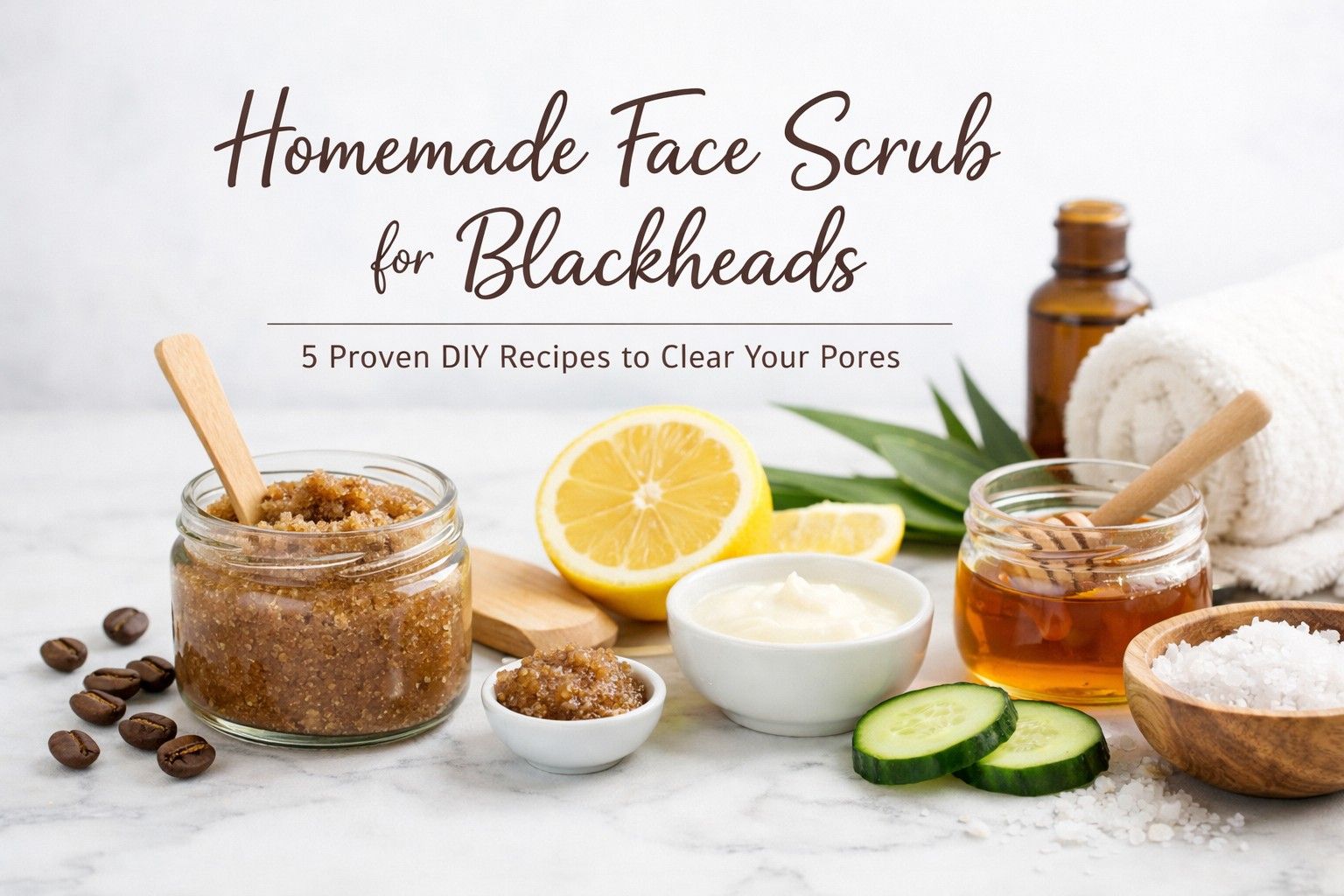
Admin Homemade Face Scrub for Blackheads
You’ve tried the strips. You’ve tried the masks. You’ve tried squeezing them (we’ve all been there). And yet, those stubborn little dark dots on your nose, chin, and forehead just… keep coming back. Sound familiar?
Blackheads are one of the most common skin complaints across every age group — and one of the most misunderstood. The good news? You don’t need expensive salon treatments or chemical-heavy products to get clear, smooth pores. Some of the most effective blackhead-fighting ingredients are already in your kitchen.
In this guide, Daily Skin Glow breaks down exactly what blackheads are, what causes them, which natural ingredients actually work against them, and five tried-and-tested homemade face scrub recipes for blackheads you can make right now. No fluff, no filler — just real, research-backed skincare advice in plain language.
What Are Blackheads — And Why Do They Keep Coming Back?
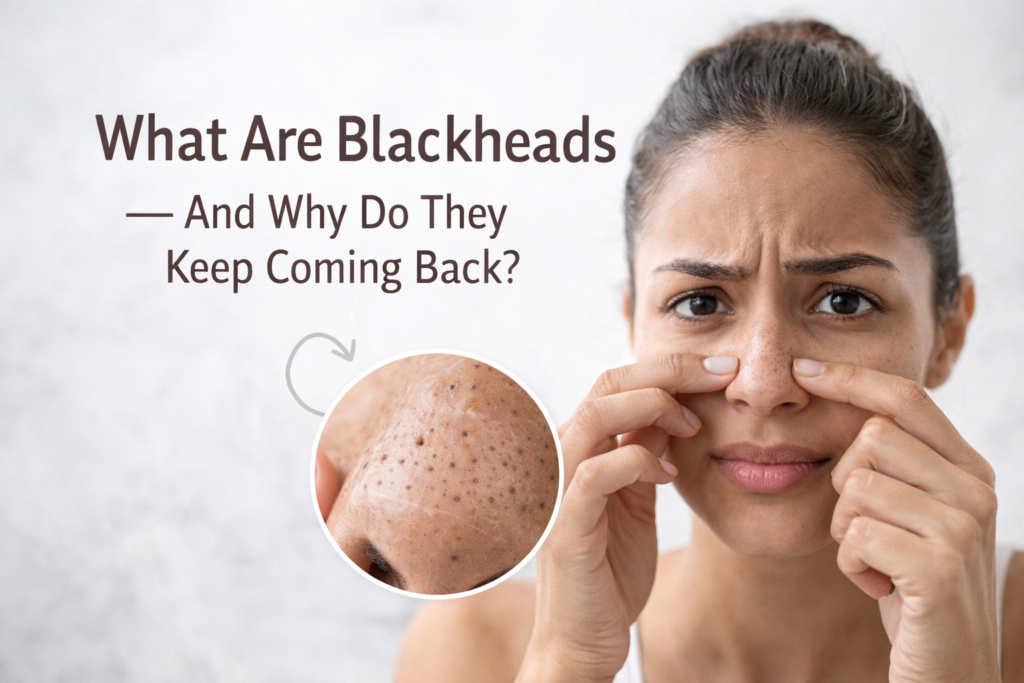
Before we talk solutions, let’s talk science. Blackheads (medically called open comedones) form when a pore becomes clogged with a combination of dead skin cells and sebum (your skin’s natural oil). Unlike whiteheads, which are closed under the skin, blackheads have an open surface — and when that mixture of oil and dead cells is exposed to oxygen, it oxidises and turns dark. That’s the black colour. It’s not dirt.
This is an important distinction, because it explains why simply washing your face harder doesn’t make blackheads go away. The problem isn’t surface grime — it’s a build-up inside the pore that needs to be loosened, lifted, and removed.
Several factors contribute to blackhead formation:
- Excess sebum production (often triggered by hormones, stress, or diet)
- Inadequate exfoliation, allowing dead skin cells to accumulate
- Using pore-clogging (comedogenic) skincare or makeup products
- High humidity or sweat that mixes with skin oils
- Hormonal fluctuations during puberty, menstruation, or pregnancy
- Certain medications or dietary patterns (high-glycaemic foods, dairy)
Quick Answer (AEO): What causes blackheads? Blackheads form when pores are clogged by a mix of excess sebum and dead skin cells. The dark colour comes from oxidation — not dirt. Hormonal changes, poor exfoliation, and comedogenic products are leading causes.
Why a Homemade Face Scrub Works for Blackheads
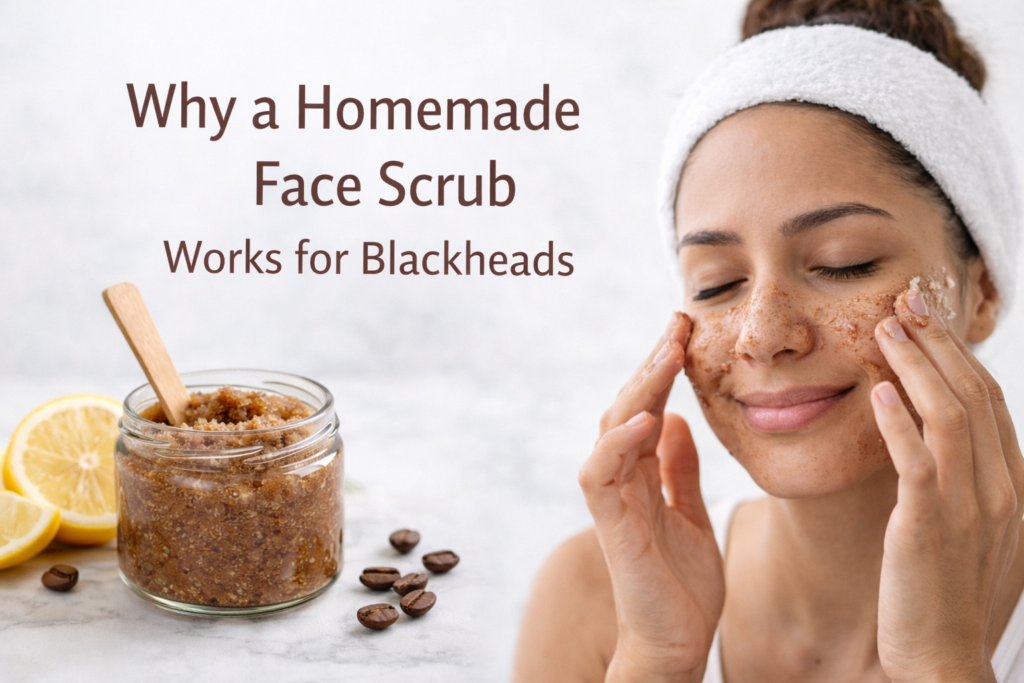
Physical exfoliation — the gentle mechanical action of a scrub — is one of the most effective ways to address blackheads at home. Here’s the science behind it:
- Exfoliating scrubs remove the layer of dead skin cells that traps debris inside pores, allowing built-up sebum to escape more easily.
- Many natural scrub ingredients (sugar, oat flour, rice flour) also contain enzymes or acids that provide mild chemical exfoliation alongside physical action, doubling the effectiveness.
- Natural ingredients like clay, charcoal, and honey draw impurities out of pores through adsorption — binding to the oils and debris and lifting them away.
- Unlike harsh commercial scrubs with microplastics or jagged walnut shell powder (which can micro-tear skin), natural scrubs use rounded particles that exfoliate without damaging the skin barrier.
Important Note: Exfoliating scrubs should be used 2-3 times per week — not daily. Over-exfoliation strips the skin’s natural oils, triggers rebound sebum overproduction, and can worsen blackheads. Consistency and moderation are key.
Read this: Blackheads vs Whiteheads: Key Differences and the Right Way to Treat Both
Best Natural Ingredients for a Blackhead-Fighting Scrub
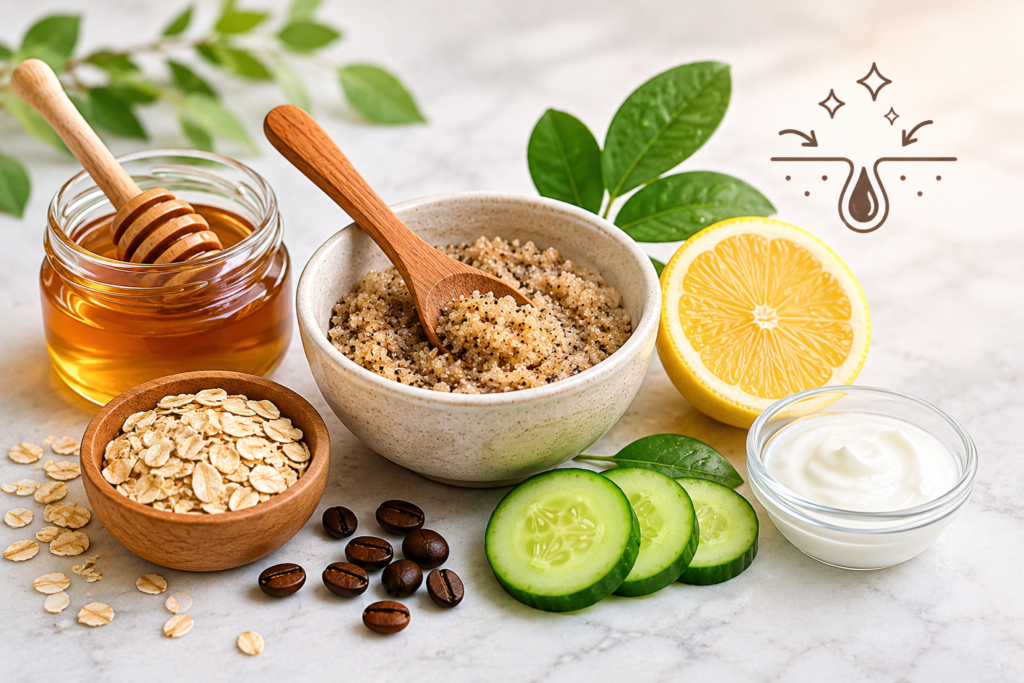
Not all natural ingredients are created equal. Here are the most effective, research-supported options for targeting blackheads:
| Ingredient | How It Fights Blackheads | Skin Type Suitability |
| Brown Sugar | Gentle physical exfoliant; glycolic acid dissolves dead cells | All skin types |
| Baking Soda | Mild abrasive; alkaline pH loosens debris (use sparingly) | Oily skin (short-term only) |
| Kaolin Clay | Absorbs excess oil; tightens pores; draws out impurities | Oily, combination skin |
| Activated Charcoal | Adsorbs toxins, bacteria, and sebum from deep in pores | Oily, acne-prone skin |
| Coffee Grounds | Strong physical exfoliant; antioxidants tighten pores | Normal, oily skin |
| Oat Flour | Gentle exfoliant; soothes inflammation around clogged pores | Sensitive, dry skin |
| Tea Tree Oil | Antibacterial; kills P. acnes bacteria in clogged pores | Oily, acne-prone skin |
| Lemon Juice | Citric acid dissolves dead skin; brightens post-blackhead marks | Normal skin (avoid sun) |
| Bentonite Clay | Deep pore cleansing; strongest natural clay for blackheads | Oily, severely congested |
| Honey (Raw) | Antimicrobial; humectant; softens the keratin plug in pores | All skin types |
| Jojoba Beads | Non-abrasive physical exfoliant; eco-friendly microplastic alternative | All skin types |
Always patch test any new ingredient on your inner wrist 24 hours before applying to your face. This is non-negotiable — even natural ingredients can cause reactions in sensitive individuals.
Read this: Your Skin not Glowing Even After Using the Right Products
5 Homemade Face Scrub Recipes for Blackheads
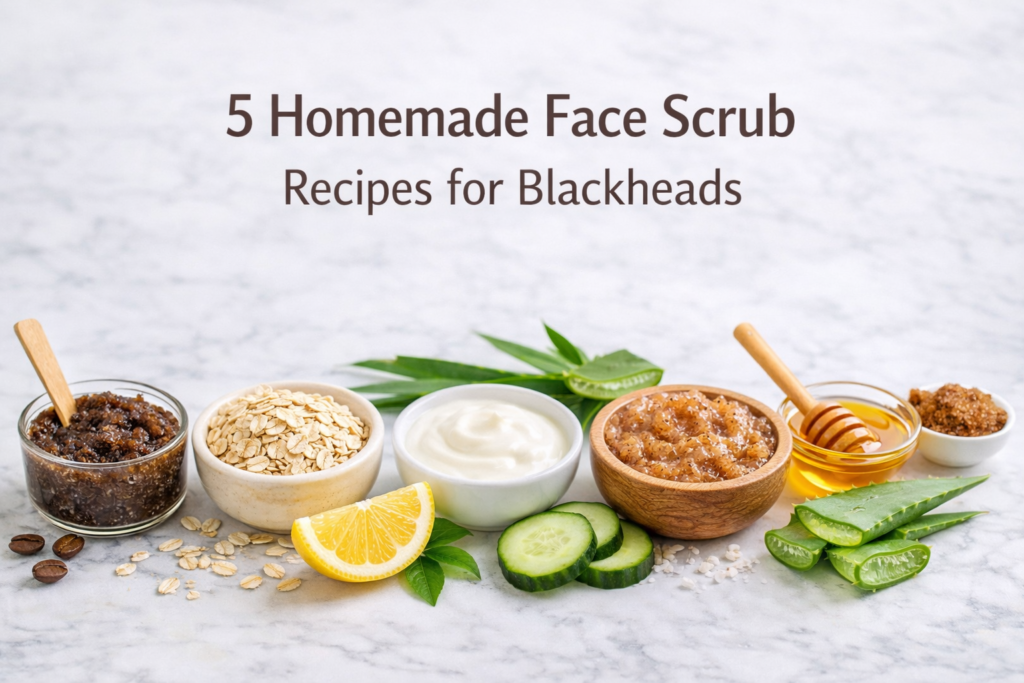
Each recipe below targets blackheads from a slightly different angle. Choose based on your skin type and what ingredients you have available — then commit to using it consistently 2-3 times per week for real results.
Recipe 1: Brown Sugar & Honey Blackhead Scrub (Best for All Skin Types)
This is the ultimate starter recipe — effective, gentle, and made from two ingredients almost everyone has at home. Brown sugar provides physical exfoliation with naturally rounded crystals (far gentler than table sugar), while honey’s enzymes and antimicrobial properties work on the bacterial aspect of blackheads. The glycolic acid naturally present in sugar also provides mild chemical exfoliation, helping to dissolve the bonds between dead skin cells.
What You’ll Need:
- 2 tablespoons brown sugar (fine or medium grain)
- 1 tablespoon raw honey (Manuka works best, but any raw honey is effective)
- 1 teaspoon fresh lemon juice (optional — brightens and adds mild acid exfoliation)
- 1 drop tea tree essential oil (optional — for extra antibacterial action)
How to Make & Use:
- Mix all ingredients in a small bowl until you have a thick, grainy paste.
- Cleanse your face first with your usual cleanser and pat damp (not dry).
- Apply the scrub to blackhead-prone areas — nose, chin, forehead — using your fingertips.
- Massage in small, gentle circular motions for 60-90 seconds. Never press hard.
- Leave on as a brief mask for 2-3 minutes to allow the honey and lemon to work.
- Rinse thoroughly with lukewarm water and follow with a lightweight moisturiser.
Pro Tip: Make this fresh each time — the combination of honey and lemon juice can ferment over a few days. A fresh batch takes under 2 minutes and is always more potent.
Recipe 2: Activated Charcoal & Clay Deep Pore Scrub (Best for Oily & Congested Skin)
If your blackheads are stubborn, deep, and concentrated — this is the recipe you need. Activated charcoal has an extraordinarily large surface area (one gram contains over 500 square metres of adsorptive surface) that binds to the oils, dead cells, and bacteria clogging your pores. Kaolin clay absorbs excess sebum and tightens pores, while the fine texture of the clay provides gentle physical exfoliation simultaneously.
What You’ll Need:
- 1 tablespoon activated charcoal powder (food-grade or cosmetic grade)
- 1 tablespoon kaolin clay powder
- 1 tablespoon raw honey
- Enough rose water or plain water to form a paste (approximately 1-2 tablespoons)
- 3 drops tea tree essential oil
How to Make & Use:
- Combine charcoal and clay in a non-metal bowl (metal can deactivate clay’s drawing properties).
- Add honey and mix well, then add rose water gradually until you reach a spreadable paste.
- Add tea tree oil and stir. The mixture will be dark grey-black — that’s expected.
- Apply to nose, chin, and forehead. Avoid the eye area.
- Massage very gently for 30-45 seconds — charcoal is fine enough that minimal physical pressure is needed.
- Leave on for 5 minutes, then rinse with lukewarm water. Pat dry.
Warning: Activated charcoal will stain — use a dark towel and be careful around light surfaces. Rinse the sink immediately after use.
Recipe 3: Coffee & Coconut Oil Exfoliating Scrub (Best for Normal to Oily Skin)
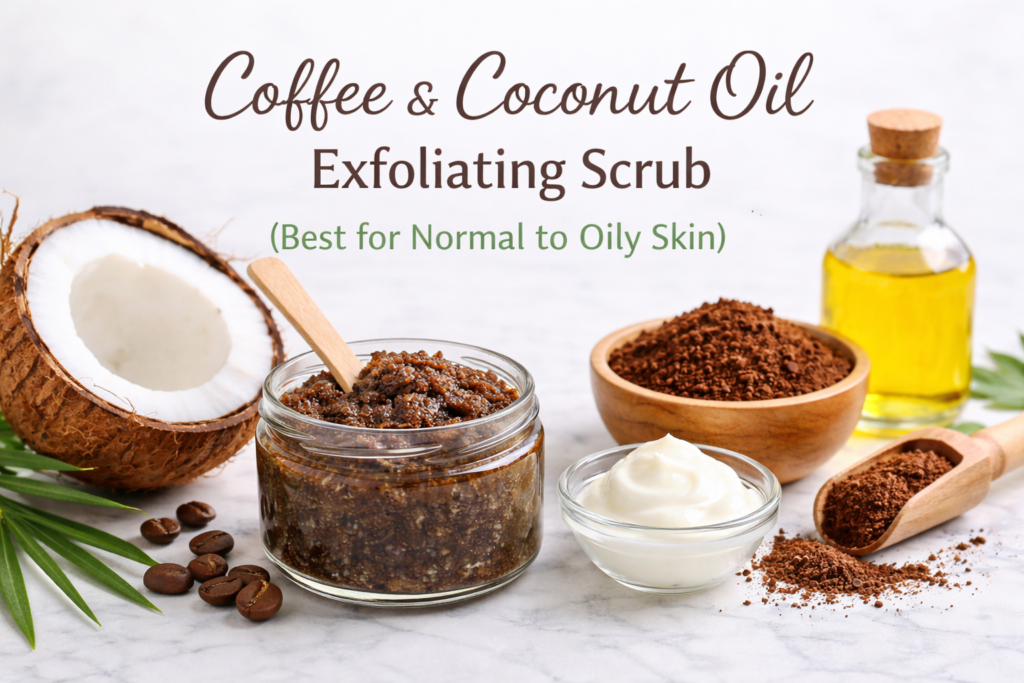
Coffee grounds are a powerhouse exfoliant. The coarser texture provides strong physical exfoliation that effectively sweeps away dead skin cells and loosens the debris plugging pores. Coffee also contains chlorogenic acid — an antioxidant that helps reduce inflammation around congested pores and tighten the skin, temporarily minimising the appearance of pores. Coconut oil binds the scrub together and adds antimicrobial lauric acid to the mix.
A note on coconut oil: it is comedogenic (pore-clogging) for some people. If you’re very acne-prone, substitute jojoba oil instead — it’s non-comedogenic and balances sebum production.
What You’ll Need:
- 2 tablespoons used or fresh coffee grounds (medium grind)
- 1 tablespoon coconut oil (or jojoba oil for acne-prone skin)
- 1 teaspoon raw honey
- Optional: 1/4 teaspoon cinnamon powder (improves circulation, antimicrobial)
How to Make & Use:
- If using coconut oil in solid form, warm briefly between your palms until liquid.
- Mix all ingredients together into a coarse, grainy paste.
- Apply to damp skin and massage using firm but gentle circular motions for 90 seconds.
- Focus on blackhead-prone areas, using slightly less pressure over thinner skin near the nose.
- Rinse well — coffee grounds can be stubborn. Use a face cloth to help.
- Follow with toner and oil-free moisturiser.
Storage: Coffee scrub can be stored in a sealed jar for up to 1 week. If you used coconut oil, keep at room temperature. If using jojoba oil, refrigerate.
Read this: Homemade Face Cleanser for Daily Use and Glowing Skin
Recipe 4: Oat & Yogurt Gentle Blackhead Scrub (Best for Sensitive & Dry Skin)
Sensitive skin and blackheads can be a frustrating combination — most blackhead treatments are too harsh for reactive skin. This recipe solves that. Finely ground oat flour provides the gentlest possible physical exfoliation while actively soothing inflammation. Yogurt’s lactic acid (an AHA) gently dissolves the bonds between dead skin cells and loosens the keratin plugs inside pores — without physical abrasion. Together, they tackle blackheads through chemistry rather than brute force.
What You’ll Need:
- 2 tablespoons finely ground oat flour (blend rolled oats to a very fine powder)
- 1 tablespoon plain full-fat yogurt (higher fat content = more soothing)
- 1 teaspoon raw honey
- 2 drops chamomile essential oil or 1 teaspoon chamomile tea (cooled)
How to Make & Use:
- Blend oats to a fine, flour-like consistency — coarse oats can be too scratchy for sensitive skin.
- Combine all ingredients into a smooth paste. If too thick, add a few drops of chamomile tea.
- Apply to damp skin and use the lightest possible circular massage — your skin should feel no friction.
- Leave on for 3-4 minutes to allow the lactic acid to work enzymatically.
- Rinse with cool water (never hot on sensitive skin). Pat completely dry.
- Follow immediately with a soothing, fragrance-free moisturiser.
Frequency Tip: Sensitive skin should use any exfoliating scrub no more than once or twice per week. If you notice redness or irritation lasting more than 20 minutes after use, reduce frequency or switch to a milder formula.
Recipe 5: Baking Soda & Apple Cider Vinegar Pore-Clearing Scrub (Weekly Deep Clean)
This is your heavy-hitter — the once-a-week deep clean for when your pores are visibly congested. Baking soda (sodium bicarbonate) is a mild abrasive that physically exfoliates and also temporarily neutralises excess skin acidity from sebum build-up. Apple cider vinegar (ACV) contains acetic acid, malic acid, and natural enzymes that dissolve dead skin cells, balance skin pH after the baking soda, and have some antimicrobial properties.
A word of caution: both baking soda and ACV are active ingredients that can irritate skin if overused. This scrub is for weekly use only, and is not suitable for sensitive or dry skin types.
What You’ll Need:
- 1 tablespoon baking soda
- 1-2 teaspoons raw apple cider vinegar (with ‘the mother’ for best results)
- 1 teaspoon raw honey (to buffer and soothe)
- A few drops of water to adjust consistency if needed
How to Make & Use:
- Add honey to the baking soda first and mix. The honey acts as a buffer.
- Add ACV gradually — it will fizz slightly with the baking soda. This is normal.
- Apply immediately to blackhead-prone areas. This mixture loses potency quickly.
- Massage very gently for no more than 30-45 seconds.
- Rinse immediately and thoroughly with cool water. Do not leave on skin.
- Follow with a calming toner and rich moisturiser.
Caution: Do not use this scrub more than once per week. Do not use if skin is broken, sunburned, or currently inflamed. Always follow with moisturiser — this formula is drying by nature.
How to Use a Blackhead Scrub Correctly (The Right Technique Matters)
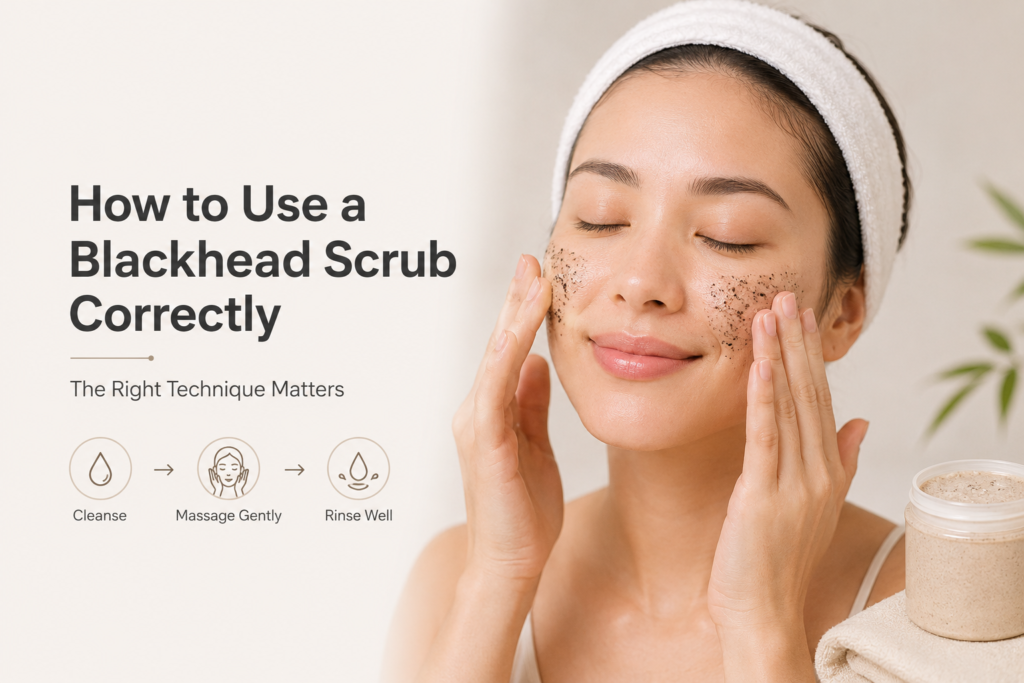
Even the best homemade face scrub for blackheads won’t deliver results if used incorrectly. Follow this method every time:
- Always cleanse first. Remove surface makeup and oil with a gentle cleanser before scrubbing, so the active ingredients reach the pore rather than just sitting on surface debris.
- Apply to damp, not wet skin. Too much water dilutes the scrub and reduces contact time with pores.
- Use fingertips only — never a face brush or washcloth with a scrub. The combination causes over-exfoliation.
- Circular motions, upward direction. Move upward and outward across the face. Downward rubbing can contribute to skin laxity over time.
- 60-90 seconds is enough. More time does not equal better results. Physical exfoliation works quickly; excessive massaging causes irritation.
- Rinse with lukewarm water completely. Any residue left behind can clog pores — the opposite of what you want.
- Always moisturise after. Exfoliation temporarily disrupts the skin barrier. Moisturising immediately after helps repair and protect it.
- Never scrub over active, inflamed pimples. Spreading bacteria across the face worsens breakouts.
Supporting Your Scrub: What to Do Between Sessions
Blackheads are a chronic concern that require a consistent routine — not just a weekly scrub. Between scrub sessions, support your skin with these habits:
- Double cleanse at night — an oil-based cleanser first (to dissolve sebum), then a water-based cleanser. This is the most effective way to keep pores clear between scrubs.
- Use a salicylic acid toner (BHA) 2-3 nights per week. Salicylic acid is oil-soluble, meaning it penetrates into pores and dissolves blackhead plugs from the inside — something physical scrubs can’t do.
- Apply a clay mask once per week on a day you’re not scrubbing. Clay draws out excess sebum between exfoliation sessions.
- Never sleep in makeup. Makeup left overnight is one of the fastest routes to congested pores.
- Change your pillowcase every 2-3 days. Pillowcases accumulate sebum, dead skin cells, and bacteria that transfer to your face overnight.
- Stay hydrated. Dehydrated skin overproduces sebum to compensate — keeping skin hydrated internally reduces oil production.
- Review your products for comedogenic ingredients. Check your moisturiser, sunscreen, and foundation for pore-clogging ingredients like isopropyl myristate, lanolin, or heavy mineral oil.
Frequently Asked Questions About Homemade Face Scrubs for Blackheads
Q: How often should I use a homemade face scrub for blackheads?
A: 2-3 times per week is the sweet spot for most skin types. Oily skin can sometimes tolerate 3 times per week; sensitive and dry skin should limit to once or twice. Over-exfoliation is a real risk — it strips the skin barrier, triggers excess oil production, and can actually worsen blackheads over time.
Q: Can a homemade face scrub permanently get rid of blackheads?
A: No skincare product — homemade or commercial — can permanently eliminate blackheads. Blackheads are caused by ongoing sebum production and dead skin cell accumulation, which are natural physiological processes. Consistent use of a good scrub routine significantly reduces their frequency and visibility, but maintenance is ongoing. Think of it like brushing your teeth — you don’t do it once and stop.
Q: Is it safe to scrub the nose specifically? The skin there feels tougher.
A: The skin on your nose is actually thinner and more vascular than it appears. While it’s true that the nose is the most common site for blackheads (due to a higher density of sebaceous glands), the same gentle technique applies. The pores on the nose are larger and more visible, which can make blackheads seem stubborn — but aggressive scrubbing damages the pore walls and can permanently enlarge them over time.
Q: My blackheads come back within days of scrubbing. What am I doing wrong?
A: If blackheads return very quickly, the issue is likely ongoing sebum overproduction that a scrub alone cannot address. Combine your scrub routine with a BHA (salicylic acid) toner to keep pores clear between sessions. Also review your diet — high-glycaemic foods and dairy are clinically linked to increased sebum production in some individuals. If the problem persists, consult a dermatologist about prescription retinoids, which regulate pore function at a cellular level.
Q: Can I use these scrubs on my back or chest blackheads too?
A: Yes — most of these recipes work well on the back and chest. The skin in these areas is thicker and less reactive than facial skin, so you can apply slightly more pressure. The coffee and sugar scrubs work especially well on body blackheads. Use the same 2-3 times per week frequency guideline.
Q: What’s the difference between blackheads and sebaceous filaments?
A: This is one of the most important skincare distinctions to understand. Sebaceous filaments are naturally occurring structures in every pore — thin, grey or flesh-coloured ‘dots’ that help sebum travel from the follicle to the skin surface. Unlike blackheads, they cannot be permanently removed, and squeezing them causes more harm than good. They refill within 30 days regardless. True blackheads are larger, darker, and feel slightly raised. Scrubs and BHA exfoliants minimise the appearance of both, but only true blackheads can be significantly reduced with consistent treatment.
Final Thoughts: Consistency Is Your Best Weapon Against Blackheads
Blackheads can feel like one of those skincare battles you’re always losing. You clear them, they come back. You try another product, same story. But here’s the truth: the issue usually isn’t the product — it’s the consistency and the completeness of the routine.
A well-formulated homemade face scrub for blackheads, used correctly 2-3 times per week as part of a broader skincare routine (good cleanser, BHA toner, non-comedogenic moisturiser), will absolutely deliver visible results over 4-6 weeks. Natural doesn’t mean slow — it means smart. The ingredients we’ve covered here are backed by both traditional use and modern research.
Start with the recipe that matches your skin type. If you have normal or all-skin-type concerns, the Brown Sugar & Honey Scrub is your best entry point. If your pores are visibly congested, try the Activated Charcoal & Clay formula. Sensitive skin? The Oat & Yogurt recipe has you covered.
Give your skin time. Give your routine consistency. And trust that the change you’re looking for is already in your kitchen, waiting to happen.

 Admin
Admin
[…] Read this: Homemade Face Scrub for Blackheads:5 Proven DIY Recipes That Actually Clear Your Pores […]
[…] Read this: Homemade Face Scrub for Blackheads:5 Proven DIY Recipes That Actually Clear Your Pores […]
[…] Read this: Homemade Face Scrub for Blackheads:5 Proven DIY Recipes That Actually Clear Your Pores […]
[…] Read this: Homemade Face Scrub for Blackheads:5 Proven DIY Recipes That Actually Clear Your Pores […]