 Admin
Admin Homemade face pack for dry skin
Does your skin feel tight, flaky, or rough after washing your face? Do you often notice dry patches around your cheeks, nose, or forehead, especially during winter or after spending time in an air-conditioned room? If so, you’re not alone. Dry skin is one of the most common skincare concerns and can affect people of all ages. While moisturizers help reduce dryness, many people also look for natural remedies that provide deep nourishment without exposing the skin to unnecessary chemicals.
A homemade face pack for dry skin can be an excellent addition to your skincare routine when prepared with the right ingredients. Natural ingredients like honey, banana, oatmeal, aloe vera, avocado, and milk cream are packed with vitamins, healthy fats, antioxidants, and moisturizing compounds that help replenish lost moisture, soothe irritation, and support the skin’s natural barrier. Unlike many commercial products that may contain artificial fragrances or drying alcohols, DIY face packs use simple kitchen ingredients that are gentle on the skin and affordable.
However, it’s important to understand that dry skin isn’t just a lack of moisture. In many cases, it’s the result of a weakened skin barrier. The outermost layer of your skin, known as the skin barrier, is responsible for locking in moisture while protecting your skin from pollution, bacteria, allergens, and environmental damage. When this protective barrier becomes damaged, water escapes more quickly through a process called transepidermal water loss (TEWL). As a result, your skin starts feeling tight, itchy, rough, and more sensitive than usual.
Several everyday habits can weaken the skin barrier. Long hot showers, harsh soaps, over-exfoliation, cold weather, low humidity, dehydration, aging, and certain skin conditions like eczema can all contribute to dryness. Even washing your face too frequently can strip away natural oils that keep your skin soft and healthy. That’s why simply applying a moisturizer isn’t always enough—you also need ingredients that help repair and strengthen the skin barrier.
What Is the Best Homemade Face Pack for Dry Skin?
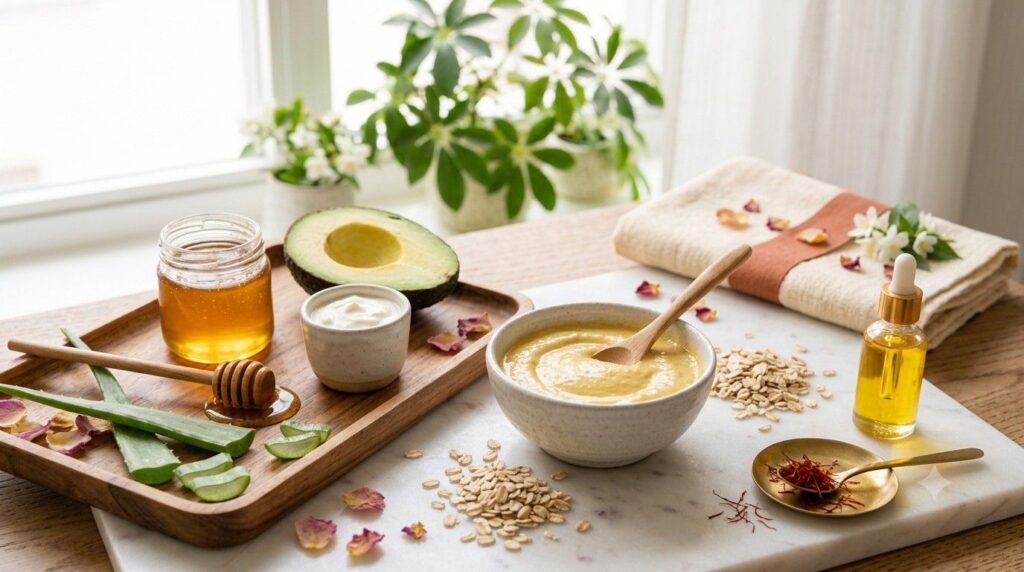
The best homemade face pack for dry skin is one that combines ingredients capable of attracting moisture, preventing water loss, and nourishing the skin with essential nutrients. Ingredients such as raw honey, ripe banana, oatmeal, avocado, aloe vera, and milk cream (malai) work together to hydrate the skin, reduce flakiness, improve softness, and restore a healthy glow.
One of the most effective DIY face packs is made by mixing 1 tablespoon of raw honey with half a ripe mashed banana. Honey acts as a natural humectant, meaning it attracts moisture from the environment and helps retain it within the skin. Banana is rich in potassium, vitamin B6, vitamin C, and antioxidants that soften rough skin while improving its overall texture. Apply the mixture to clean skin for 15–20 minutes, rinse with lukewarm water, and follow with a moisturizer to lock in hydration. With regular use one or two times a week, this simple face pack can help make dry skin feel smoother, softer, and healthier.
Why Does Dry Skin Happen? Understanding the Root Cause
Before trying any homemade face pack for dry skin, it’s important to understand why your skin becomes dry in the first place. Dry skin, medically known as xerosis, develops when the skin loses more water than it can retain. The outermost layer of the skin, called the stratum corneum, acts as a natural protective barrier made up of skin cells and lipids (natural fats). This barrier is responsible for locking moisture into the skin while protecting it from pollution, bacteria, allergens, and environmental damage. When this barrier becomes weakened or damaged, moisture escapes through a process known as transepidermal water loss (TEWL). As a result, the skin starts feeling tight, rough, flaky, itchy, and more sensitive to skincare products and environmental changes.
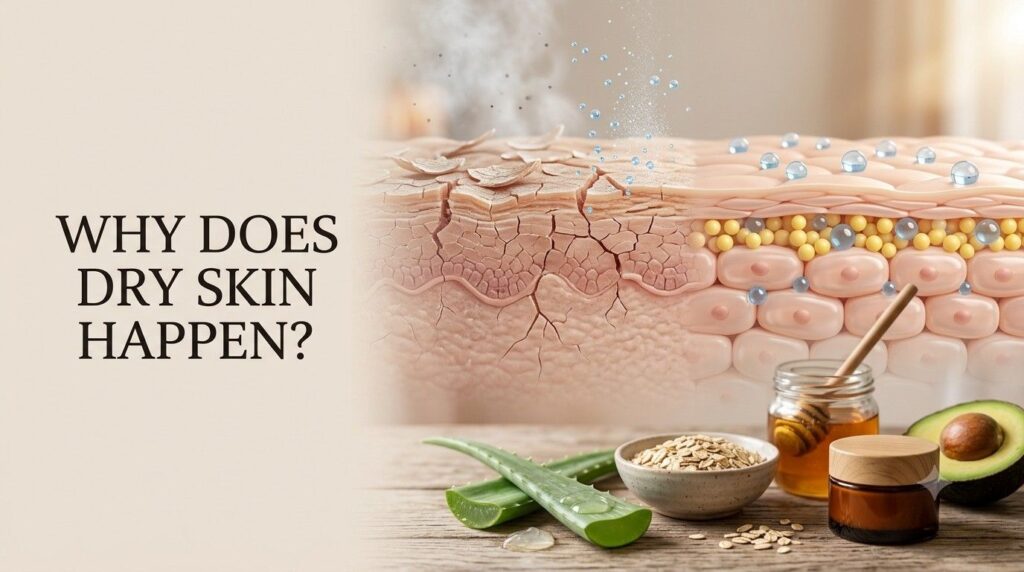
Several everyday habits and environmental factors can gradually damage this protective barrier without you realizing it. Taking long hot showers, washing your face too frequently, using harsh soaps or cleansers containing sulfates and alcohol, and over-exfoliating can strip away the skin’s natural oils that keep it soft and hydrated. Weather also plays a major role—cold temperatures, low humidity, air conditioning, and indoor heating reduce moisture in the air, making it easier for water to evaporate from your skin. In addition, dehydration, a diet lacking essential nutrients like omega-3 fatty acids, vitamins A, C, and E, natural aging, hormonal changes, and certain medical conditions such as eczema, psoriasis, hypothyroidism, and diabetes can all contribute to persistent dryness by affecting the skin’s ability to repair and maintain its barrier.
This is exactly why simply applying any face pack isn’t enough. An effective homemade face pack for dry skin should do more than provide temporary hydration—it should help strengthen the skin barrier, reduce moisture loss, soothe inflammation, and supply the skin with antioxidants, healthy fats, and skin-supporting nutrients. Ingredients such as raw honey, oatmeal, aloe vera, avocado, banana, and milk cream (malai) are particularly beneficial because they contain natural humectants, emollients, vitamins, and antioxidants that nourish the skin while supporting its natural repair process. When combined with a gentle skincare routine, regular moisturising, daily sunscreen, and adequate water intake, these homemade remedies can help restore soft, smooth, and healthy-looking skin over time rather than providing only short-term relief.
10 Best Homemade Face Packs for Dry Skin
1. Honey and Banana Face Pack – Best for Deep Hydration and Repairing Dry Skin
If your skin feels tight, flaky, or rough after cleansing, this is one of the best homemade face packs to restore lost moisture. Dry skin often develops because the skin barrier becomes damaged and allows water to escape more quickly. This honey and banana face pack helps replenish hydration while supporting the skin’s natural repair process.
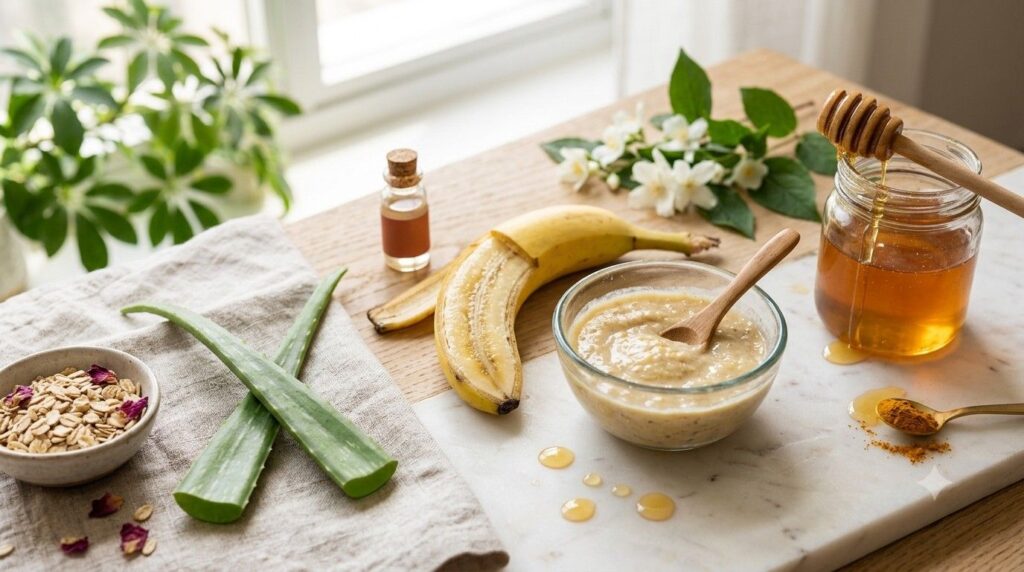
Raw honey is a natural humectant, meaning it attracts moisture from the environment and helps lock it into the skin. It also contains antioxidants and enzymes that soothe minor irritation and support healthy-looking skin. Banana complements honey by providing potassium, vitamin B6, vitamin C, and natural sugars that soften rough patches and improve skin texture. Together, these ingredients leave the skin feeling smoother, plumper, and more comfortable after every application.
Ingredients
- ½ ripe banana
- 1 tablespoon raw honey
- 4–5 drops of rose water (optional)
How to Prepare and Apply
Mash the banana until it becomes completely smooth, then mix in the honey to form a creamy paste. Apply an even layer to freshly cleansed skin, avoiding the eye area. Leave it on for 15–20 minutes, allowing the nutrients to absorb into the skin. Rinse with lukewarm water and gently pat your face dry. Finish with a fragrance-free moisturizer while your skin is still slightly damp to lock in hydration.
Who Should Use This Face Pack?
This face pack is ideal for people with dry, dehydrated, or normal skin, especially during winter or after prolonged exposure to air conditioning. If you have acne-prone skin, use only a thin layer of honey and patch-test first.
Expected Benefits
With regular use 1–2 times a week, this face pack can reduce dryness, soften flaky patches, improve skin smoothness, and give the skin a healthier, naturally radiant appearance. While it won’t permanently cure dry skin, it works well as part of a skincare routine that also includes a gentle cleanser, moisturizer, and daily sunscreen.
Pro Tip: For extremely dry skin, add 1 teaspoon of fresh milk cream (malai) to this recipe. The natural fats provide extra nourishment and help strengthen the skin barrier
2. Avocado and Olive Oil Face Pack – Best for Severely Dry and Flaky Skin
If your skin feels rough, flaky, tight, or uncomfortable even after applying a moisturizer, your skin barrier may need more than just surface hydration. This avocado and olive oil face pack is an excellent choice for deeply nourishing dry skin because it provides healthy fats, antioxidants, and natural emollients that help replenish lost lipids and reduce moisture loss. Rather than simply adding water to the skin, this face pack helps strengthen the skin’s protective barrier, allowing it to retain moisture for longer and feel softer over time.
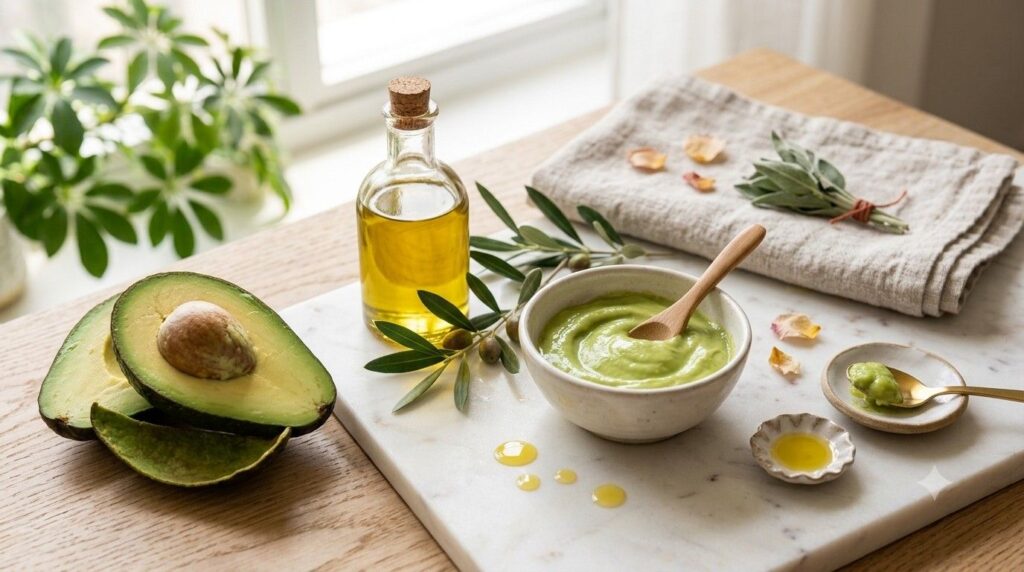
Avocado is naturally rich in vitamin E, vitamin C, biotin, and monounsaturated fatty acids, all of which support healthy skin. These nutrients help protect skin cells from oxidative stress, improve elasticity, and soften rough patches caused by dryness. Olive oil contains oleic acid and squalene, two natural emollients that create a protective layer on the skin, reducing transepidermal water loss (TEWL) and preventing further dehydration. Adding raw honey enhances the benefits by acting as a natural humectant that attracts moisture to the skin while providing antioxidant support. Together, these ingredients leave the skin feeling deeply nourished, smoother, and more comfortable, especially during winter or in dry climates.
Ingredients
- ½ ripe avocado
- 1 teaspoon extra virgin olive oil
- 1 teaspoon raw honey
How to Prepare and Apply
Mash the avocado until it forms a smooth, lump-free paste. Mix in the olive oil and honey until you achieve a creamy consistency. Apply a generous layer to clean, slightly damp skin, avoiding the eye area. Leave the face pack on for 15–20 minutes, then rinse with lukewarm water using gentle circular motions. Pat your skin dry and immediately apply a moisturizer to lock in hydration.
For best results, use this face pack once or twice a week. It is particularly beneficial for people with very dry, mature, or winter-damaged skin. If your skin is acne-prone or naturally oily, use olive oil cautiously, as heavier oils may not suit everyone. With regular use alongside a gentle cleanser, daily moisturizer, and sunscreen, this face pack can help reduce flakiness, improve skin texture, restore softness, and give dull, dry skin a healthier, more radiant appearance.
3. Milk Cream (Malai) and Saffron Face Pack – Best for Dry, Dull, and Winter-Damaged Skin
The milk cream (malai) and saffron face pack is one of the most trusted traditional skincare remedies in Indian households, especially for people struggling with dry, rough, or lacklustre skin. Unlike face packs that only provide temporary hydration, this combination helps nourish the skin with natural fats, proteins, and antioxidants that support the skin’s moisture barrier. Dry skin often loses its natural oils, making it appear flaky, tight, and dull. The healthy fats present in fresh malai help replenish these lost lipids, leaving the skin softer, smoother, and more comfortable after every use.
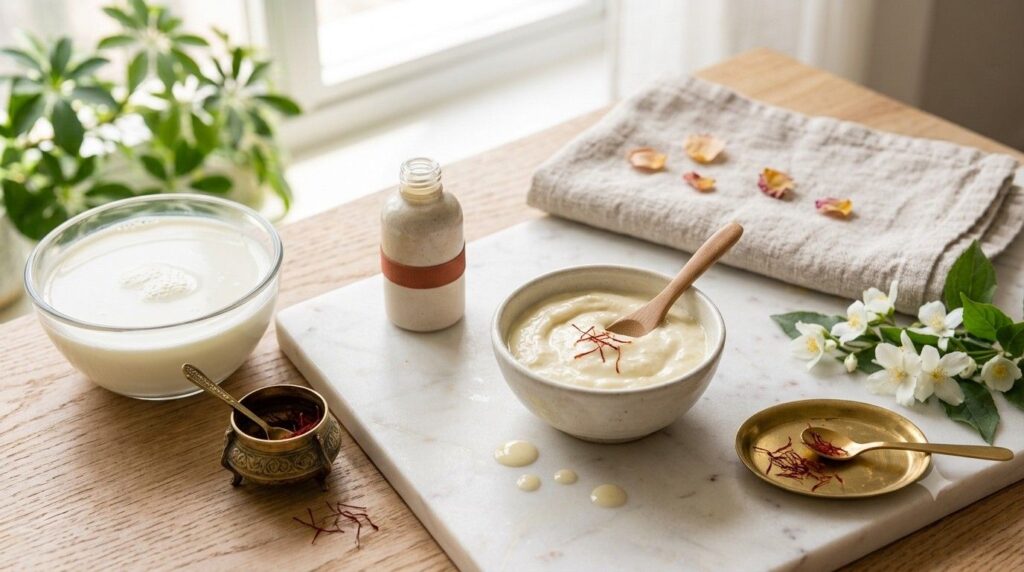
Milk cream is naturally rich in lactic acid, milk proteins, and essential lipids. Lactic acid is a gentle alpha hydroxy acid (AHA) that helps loosen dead skin cells without over-drying the skin, allowing fresh, healthier-looking skin to appear brighter and smoother. The natural fats and proteins deeply nourish the outer layer of the skin, helping reduce roughness and improve elasticity. Saffron contains powerful plant compounds such as crocin, crocetin, and safranal, which have antioxidant properties that help protect the skin from environmental stress caused by pollution and UV exposure. Raw honey further enhances the face pack by attracting moisture to the skin while helping soothe dryness and support the skin’s natural repair process.
Ingredients
- 2 tablespoons fresh milk cream (malai)
- A pinch of pure saffron strands
- 1 teaspoon raw honey
How to Prepare and Apply
Soak the saffron strands in one teaspoon of warm milk for about 10 minutes to release their natural compounds. Mix the soaked saffron with the fresh malai and raw honey until you achieve a smooth, creamy consistency. Apply an even layer to clean skin and gently massage in circular motions for about one minute to improve absorption. Leave the face pack on for 15–20 minutes, then rinse with cool or lukewarm water and gently pat your face dry. Follow with a moisturizer to help lock in hydration.
This face pack is ideal for dry, mature, and dehydrated skin, particularly during winter when the skin barrier is more prone to moisture loss. With consistent use 1–2 times a week, it can help improve skin softness, reduce flakiness, restore a healthy glow, and make the skin feel more supple. While saffron may gradually enhance overall skin radiance by protecting against oxidative stress, it should not be expected to dramatically lighten skin tone. For best results, combine this remedy with a balanced diet, adequate hydration, a gentle skincare routine, and daily sunscreen to maintain healthy, well-nourished skin.
4. Oatmeal and Yoghurt Face Pack – Best for Sensitive, Dry, and Irritated Skin
If your dry skin feels itchy, easily irritated, or becomes red after cleansing or exposure to cold weather, an oatmeal and yoghurt face pack can help restore comfort while providing gentle hydration. Unlike harsh scrubs that can worsen dryness, oatmeal works by calming the skin and strengthening its natural protective barrier. This face pack not only replenishes moisture but also removes dead skin cells without causing irritation, making it an excellent choice for people with dry, sensitive, or easily reactive skin.
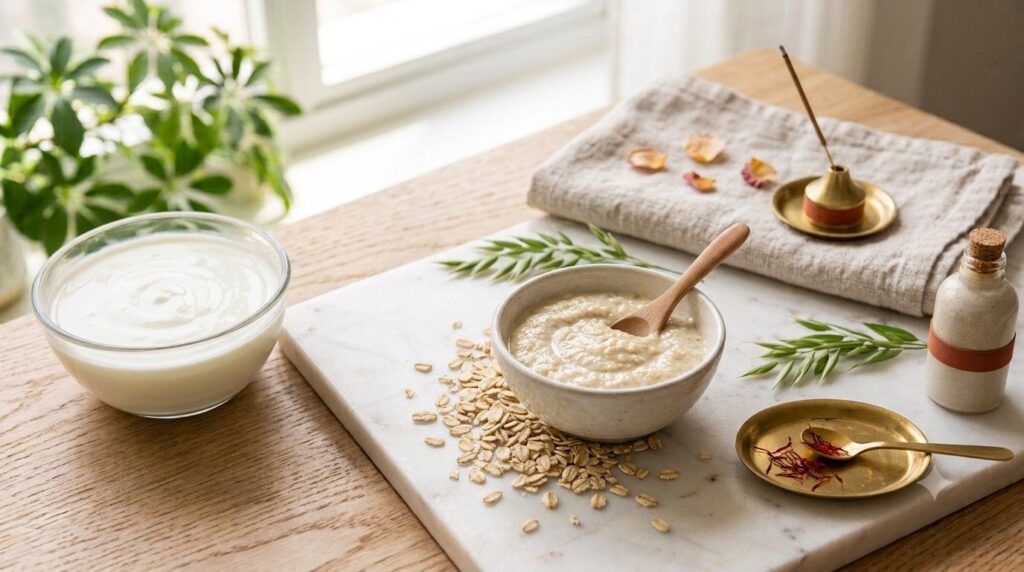
Oatmeal is one of the few natural ingredients recommended by dermatologists for dry and sensitive skin because it contains beta-glucan and avenanthramides, compounds known for their moisturising and anti-inflammatory properties. Beta-glucan forms a protective layer over the skin, helping reduce transepidermal water loss (TEWL) and improving long-lasting hydration, while avenanthramides help soothe redness, itching, and irritation. Full-fat yoghurt complements oatmeal by providing lactic acid, a gentle alpha hydroxy acid (AHA) that dissolves dead skin cells without damaging the skin barrier. It also contains proteins and fats that nourish dry skin, while raw honey acts as a natural humectant, drawing moisture into the skin and leaving it feeling soft and supple after every application.
Ingredients
- 2 tablespoons finely ground oats (colloidal oatmeal)
- 2 tablespoons plain full-fat yoghurt
- 1 teaspoon raw honey
How to Prepare and Apply
Mix the oatmeal, yoghurt, and honey until you obtain a smooth, creamy paste. Apply an even layer to freshly cleansed skin, avoiding the delicate eye area. Leave the face pack on for 15–20 minutes so the ingredients have time to soothe and hydrate the skin. Before rinsing, gently massage your face in circular motions for about 30 seconds to allow the finely ground oats to provide mild exfoliation. Wash off with lukewarm water, pat your skin dry, and apply a moisturizer immediately to seal in hydration.
This face pack is ideal for people with dry, sensitive, mature, or winter-damaged skin and can be used 1–2 times a week as part of a regular skincare routine. With consistent use, it helps reduce flakiness, relieve tightness, improve skin texture, and restore a healthy, natural glow without disrupting the skin barrier. If you have eczema, rosacea, or very sensitive skin, always perform a patch test before applying any homemade face pack, even when using gentle ingredients like oatmeal and yoghurt.
Read this: 5 Homemade face packs for glowing skin in summer
5. Aloe Vera and Coconut Oil Face Pack – Best for Dehydrated and Extremely Dry Skin
If your skin feels dry, tight, or irritated after sun exposure, frequent cleansing, or cold weather, an aloe vera and coconut oil face pack can provide deep nourishment while helping restore the skin’s natural moisture barrier. Dry skin is often caused by a weakened barrier that allows moisture to escape more quickly, leaving the skin vulnerable to irritation and environmental damage. This face pack combines the hydrating properties of aloe vera with the protective benefits of coconut oil, making it particularly suitable for people with very dry, dehydrated, or winter-damaged skin.
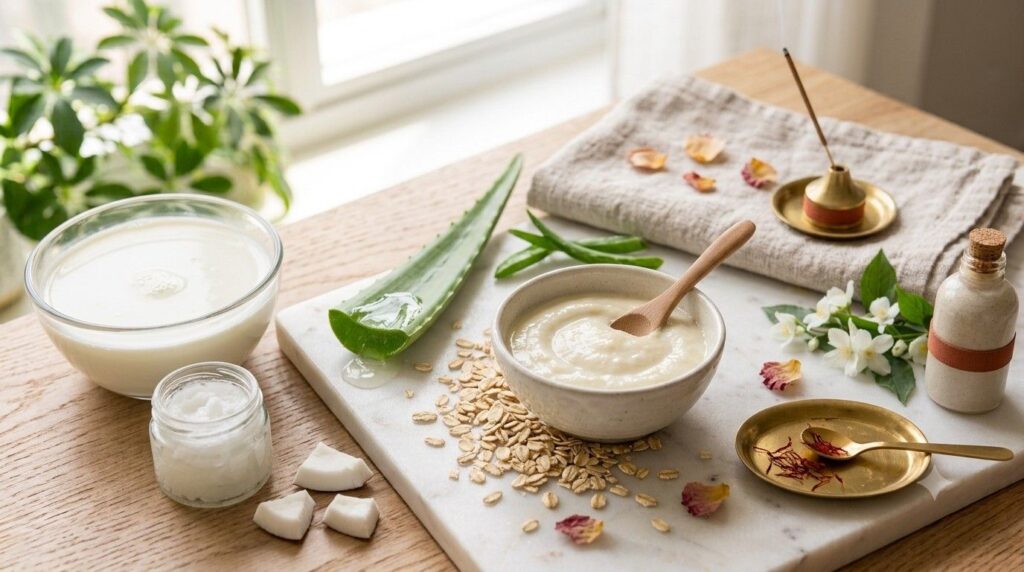
Fresh aloe vera gel contains more than 98% water, along with naturally occurring polysaccharides, vitamins, amino acids, and antioxidants that help improve skin hydration and soothe irritation. It also contains compounds such as acemannan and aloesin, which support the skin’s natural healing process and help calm redness caused by dryness. Virgin coconut oil is rich in lauric acid, capric acid, and medium-chain fatty acids, which act as natural emollients. These lipids help strengthen the skin barrier, reduce transepidermal water loss (TEWL), and lock moisture into the skin for longer-lasting softness. Together, these ingredients work to relieve tightness, reduce flakiness, and improve the overall texture of dry skin without relying on harsh chemicals.
Ingredients
- 2 tablespoons fresh aloe vera gel
- 1 teaspoon virgin coconut oil
- 2–3 drops of lavender essential oil (optional)
How to Prepare and Apply
Blend the fresh aloe vera gel and virgin coconut oil until the mixture becomes smooth and creamy. If desired, add a few drops of lavender essential oil for a pleasant fragrance, but only if your skin tolerates essential oils well. Apply an even layer to clean, slightly damp skin and leave it on for 15–20 minutes before rinsing with cool or lukewarm water. Gently pat your face dry and follow with a moisturizer to seal in hydration. For very dry areas, such as the cheeks or forehead, a thin layer can also be left on overnight after performing a patch test.
This face pack works best for dry, mature, and dehydrated skin, especially during winter or in dry climates. However, people with oily or acne-prone skin should use coconut oil with caution, as it may clog pores in some individuals. With regular use once or twice a week, this face pack can help improve skin softness, reduce rough patches, strengthen the skin barrier, and restore a healthier, more radiant complexion. For long-term results, pair this treatment with a gentle cleanser, a ceramide-based moisturizer, daily sunscreen, and adequate water intake to support skin health from within.
6. Papaya and Honey Face Pack – Best for Dry, Dull, and Rough Skin
If your dry skin has started looking dull, rough, or uneven despite regular moisturising, simply adding more hydration may not be enough. Dead skin cells often accumulate on the surface of dry skin, making it appear lifeless and preventing moisturisers from absorbing effectively. This papaya and honey face pack gently exfoliates these dead cells while replenishing moisture, leaving the skin smoother, softer, and naturally radiant. Unlike harsh physical scrubs that can damage the skin barrier, ripe papaya provides mild enzymatic exfoliation, making it a better option for people with dry skin who want brighter, healthier-looking skin without excessive irritation.
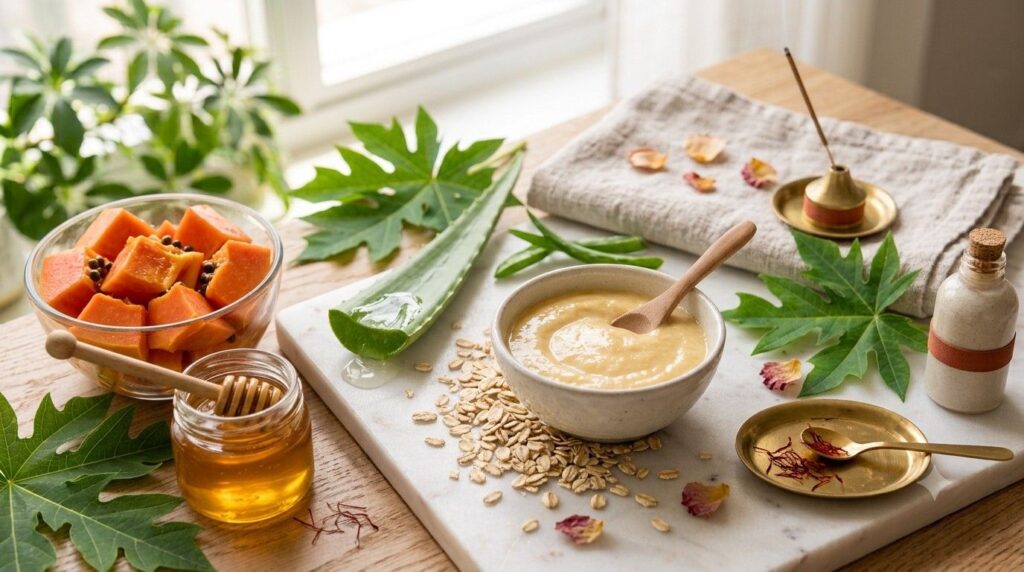
Papaya contains papain, a naturally occurring enzyme that helps dissolve the bonds between dead skin cells, allowing them to shed more easily. This gentle exfoliation encourages healthier skin cell turnover, improves skin texture, and enhances the absorption of moisturisers applied afterward. Papaya is also a good source of vitamin C, vitamin A (beta-carotene), and antioxidants, which help protect the skin from free radical damage caused by pollution and UV exposure. Raw honey complements papaya by acting as a natural humectant that attracts moisture to the skin while helping maintain a healthy skin barrier. If your skin tolerates it well, a small amount of fresh lemon juice can provide additional vitamin C, but it isn’t essential and should be avoided if you have sensitive, irritated, or compromised skin, as it may increase irritation.
Ingredients
- 4–5 small chunks of ripe papaya
- 1 tablespoon raw honey
- ½ teaspoon fresh lemon juice (optional and only for non-sensitive skin)
How to Prepare and Apply
Mash or blend the ripe papaya until it forms a smooth pulp, then mix in the honey. Add the lemon juice only if your skin is not sensitive and you have previously tolerated citrus-based skincare. Apply an even layer to clean, dry skin, avoiding the eye area, and leave it on for 15–20 minutes. Rinse with lukewarm water using gentle circular motions, then apply a fragrance-free moisturiser while your skin is still slightly damp to help lock in hydration.
This face pack is best suited for dry, normal, or combination skin that appears dull or rough due to a buildup of dead skin cells. Using it once a week is usually enough to improve skin texture, reduce flakiness, and restore a healthy glow without over-exfoliating. If you have very sensitive skin, active eczema, rosacea, or broken skin, skip the lemon juice entirely and perform a patch test before using the face pack. Regular use, combined with a gentle skincare routine, daily sunscreen, and adequate hydration, can help your skin look brighter, smoother, and more refreshed over time without compromising its natural protective barrier.
Read this: Homemade Face Cleanser for Daily Use and Glowing Skin
7. Rose Petal and Glycerin Face Pack — Gentle and Fragrant
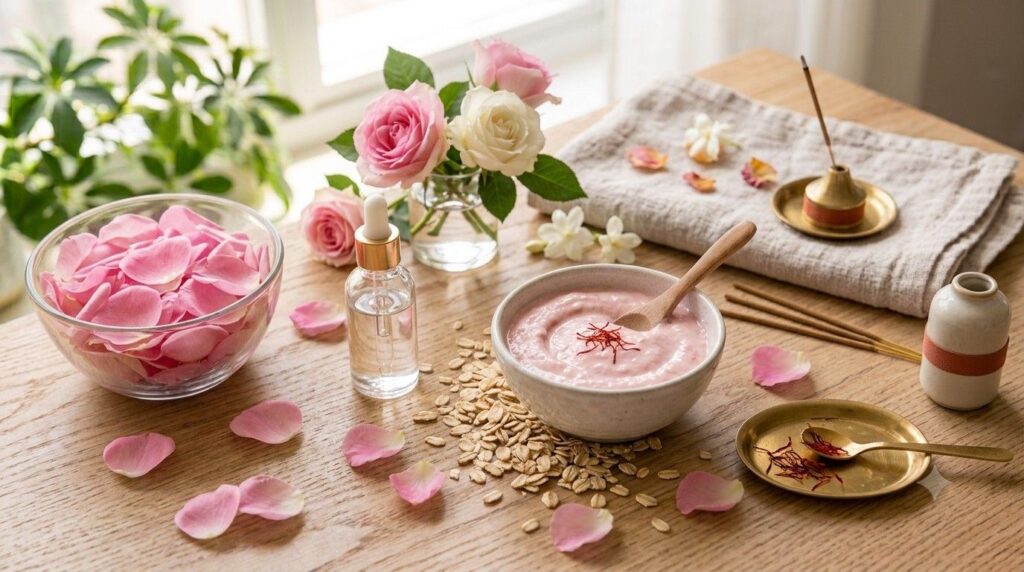
Rose petals contain natural oils and antioxidants that hydrate and calm inflamed, dry skin. Glycerin is a powerful humectant that attracts water molecules and holds them in the skin. Together, they make a light yet incredibly effective moisturising face pack.
Ingredients:
• 10-12 fresh rose petals
• 1 tablespoon glycerin
• 1 teaspoon rosewater
How to Apply:
Blend the rose petals with rosewater into a fine paste. Add glycerin and mix well. Apply on face, leave for 15-20 minutes, then wash off. This is an excellent pack for those who prefer a light, non-greasy feel.
8. Egg Yolk and Almond Oil Face Pack — Rich and Repairing
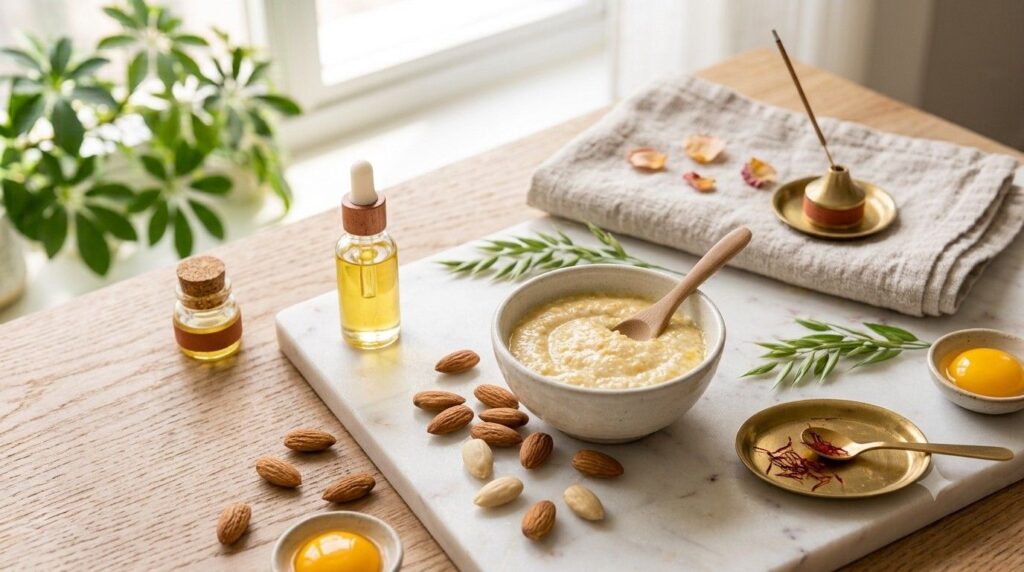
Egg yolk is a skin superfood. It contains lecithin, which is a natural emollient that softens and smoothens dry, rough patches. It also has biotin, Vitamins A and D, and essential fatty acids. Almond oil is lightweight but deeply moisturising, rich in Vitamin E and oleic acid.
Ingredients:
• 1 egg yolk
• 1 teaspoon sweet almond oil
• 1 teaspoon honey
How to Apply:
Whisk the egg yolk and blend in almond oil and honey. Apply on face for 15 minutes. Rinse with cool water (avoid hot water as it can cook the egg). The results are visible after the very first use — softer, plumper skin.
9. Cucumber and Cream Face Pack — Cooling and Refreshing
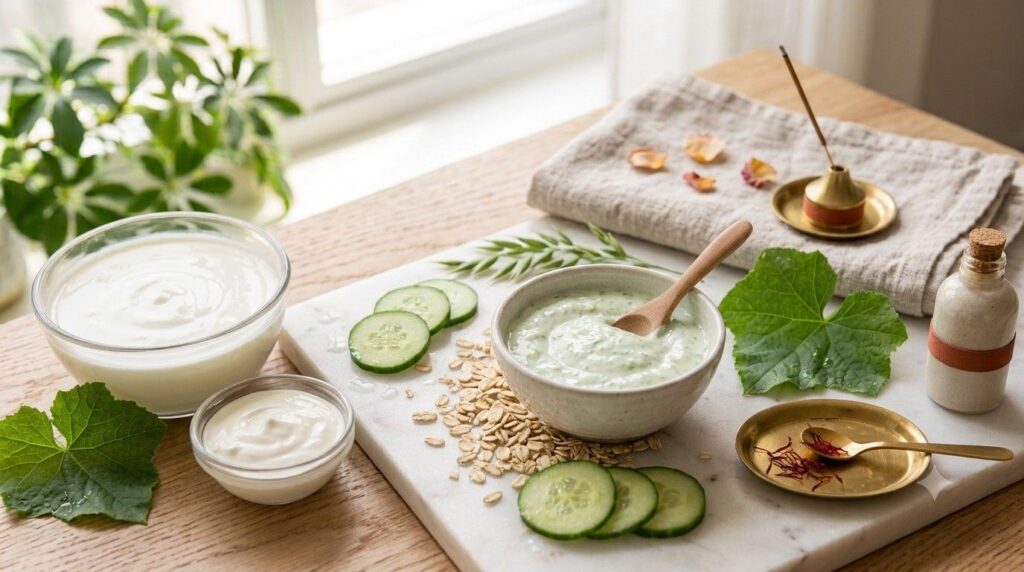
Cucumber is about 96% water and is loaded with caffeic acid and Vitamin C, which hydrate and reduce puffiness. Its cooling effect is fantastic for dry skin that feels tight or irritated. Full-fat cream adds a layer of rich moisture that lasts for hours.
Ingredients:
• 3-4 slices of fresh cucumber (blended)
• 2 tablespoons full-fat cream
• 1 teaspoon aloe vera gel
How to Apply:
Blend or grate cucumber and squeeze out excess water. Mix with cream and aloe vera. Apply as a thick layer and rest for 20 minutes. Rinse off with cool water. Great for summer use or whenever skin feels parched.
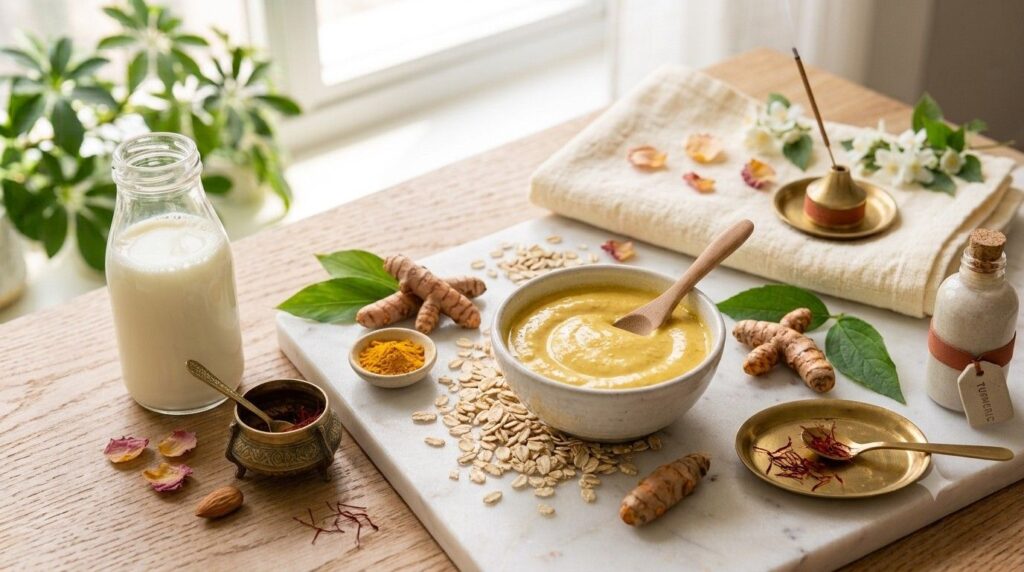
10. Turmeric and Milk Face Pack — Brightening and Healing
Turmeric contains curcumin, a powerful anti-inflammatory and antioxidant compound that has been used in Ayurvedic skin care for thousands of years. It helps soothe dry, irritated skin and reduces hyperpigmentation. Milk softens the skin with its lactic acid content, while also providing proteins and fat.
Ingredients:
• A pinch of turmeric powder (do not use too much)
• 2 tablespoons raw milk or milk cream
• 1 teaspoon honey or besan (chickpea flour)
How to Apply:
Mix all ingredients into a smooth paste. Apply carefully, avoiding areas around the eyes. Leave for 15 minutes and rinse with lukewarm water. Note: Use very little turmeric to avoid temporary yellow staining.
Best Natural Ingredients for Dry Skin — At a Glance
Understanding why these ingredients work can help you customise your own face packs based on what is available at home. Here is a quick overview of the most effective natural ingredients for dry skin:
| Ingredient | Key Benefit for Dry Skin | Active Component |
| Honey | Humectant — locks in moisture | Gluconic acid, antioxidants |
| Banana | Nourishes and softens | Vitamins A, B6, C, potassium |
| Avocado | Deep conditioning | Healthy fats, Vitamin E |
| Oatmeal | Soothes irritation, forms barrier | Beta-glucan, avenanthramides |
| Aloe Vera | Lightweight hydration | Polysaccharides, aloesin |
| Milk Cream | Softens and brightens | Lactic acid, proteins, fat |
| Olive Oil | Repairs skin barrier | Oleic acid, squalene |
| Turmeric | Anti-inflammatory, brightening | Curcumin |
| Glycerin | Draws water into skin | Humectant (trihydroxy alcohol) |
| Egg Yolk | Smoothens rough texture | Lecithin, biotin, Vitamin D |
How to Get the Best Results from Your Homemade Face Pack
Even the best face pack will not give good results if applied incorrectly. Follow these simple tips to maximise the benefits:

• Always cleanse your face before applying a face pack. Dirty skin blocks absorption.
• Do a patch test on your inner arm before trying any new ingredient — especially if you have sensitive skin.
• Use fresh, organic ingredients wherever possible for the best nutrient content.
• Apply in gentle, circular motions for better absorption and circulation.
• Never leave a face pack on for too long. 15-20 minutes is usually ideal.
• Rinse off with cool or lukewarm water — never hot, as it strips natural oils.
• Follow up with a good moisturiser while skin is still slightly damp to lock in hydration.
• Consistency is key. Use face packs 2-3 times a week for visible results within 2-3 weeks.
• Store any leftover pack in the fridge for up to 24 hours, but fresh is always better.
• Drink plenty of water alongside your skincare routine for inside-out hydration.
Read this: Homemade Face Scrub for Blackheads:5 Proven DIY Recipes That Actually Clear Your Pores
Important Precautions and Safety Tips
While homemade face packs are generally safe, there are a few important precautions to keep in mind:
• Lemon juice can cause photosensitivity — avoid sun exposure right after using it.
• Turmeric can temporarily stain skin yellow — use sparingly and rinse thoroughly.
• People with egg allergies should skip egg-based packs entirely.
• Coconut oil may clog pores for acne-prone individuals — use only if your skin is purely dry.
• If you experience redness, burning, or irritation, remove the pack immediately and rinse.
• Consult a dermatologist if you have chronic dry skin conditions like eczema or psoriasis before using DIY packs.
Frequently Asked Questions (FAQs)
Q: How often should I use a homemade face pack for dry skin?
A: For dry skin, using a moisturising face pack 2 to 3 times a week is ideal. Using it every day can over-hydrate and upset your skin’s natural oil balance. On off days, stick to a gentle cleanser and a good moisturiser.
Q: Can I use a homemade face pack on sensitive dry skin?
A: Yes, but choose gentle packs. The oatmeal and yoghurt pack, aloe vera and coconut oil pack, or the rose petal and glycerin pack are all excellent choices for sensitive skin. Always do a patch test first.
Q: How long does it take to see results from homemade face packs?
A: Most people notice softer, more hydrated skin after the very first use. Significant improvement in texture, flakiness, and glow typically becomes visible within 2 to 3 weeks of consistent use.
Q: Can I mix multiple ingredients together in one pack?
A: Yes, many of the recipes above already combine multiple ingredients. Just be careful not to mix acidic ingredients (like lemon) with active ones (like turmeric) as they can sometimes cause irritation. Stick to the tested combinations listed in this guide.
Q: Is honey face pack good for dry skin in summer?
A: Absolutely. Honey is one of the best year-round ingredients for dry skin because it is a humectant — it draws moisture from the environment into your skin. In summer, pair it with lighter ingredients like aloe vera or cucumber instead of heavy oils.
Conclusion: Nourish Your Skin the Natural Way
Taking care of dry skin does not have to be expensive or complicated. The 10 homemade face packs for dry skin covered in this guide are made from natural, easily available ingredients that are kind to your skin and gentle on your pocket. Whether you prefer the classic honey-banana combo, the rich avocado-olive oil pack, or the traditional malai and saffron recipe — there is a perfect option for every skin need and every season.
The key to healthy, glowing skin is consistency. Pick one or two recipes that resonate with you, gather the ingredients, and commit to a regular skincare ritual. Combine your face pack routine with proper hydration, a balanced diet, and a good moisturiser, and you will notice a real transformation in how your skin looks and feels.

 Admin
Admin
[…] Read this: Homemade face pack for dry skin […]
[…] Read this: Homemade face pack for dry skin […]
[…] Read this: Homemade face pack for dry skin […]